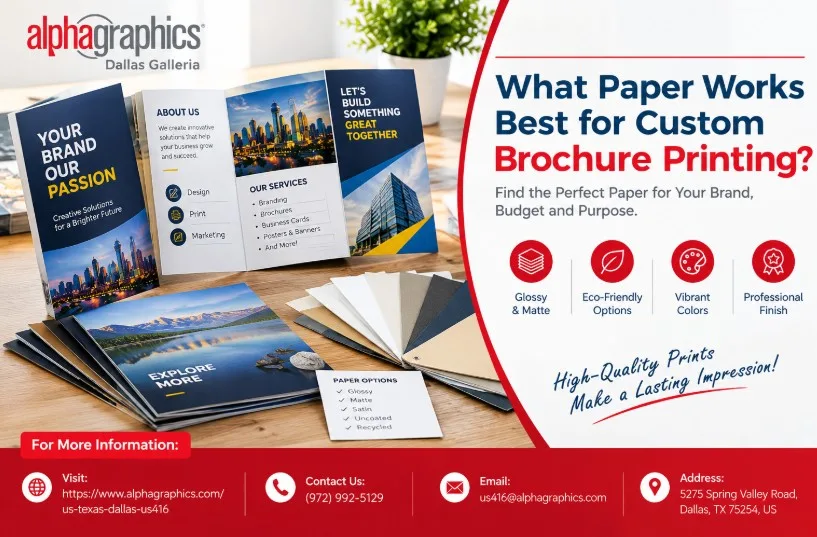
Choosing the right paper can change how a brochure looks, feels, and performs. Glossy, matte, and uncoated paper each suit different brochure goals. Glossy stock makes colors appear bright and photographs more vivid. Matte stock creates a softer, professional appearance with less glare. Uncoated paper offers a natural texture that works well for simple, readable designs. Therefore, the best choice depends on your design, audience, and purpose. Before ordering custom brochure printing, consider the paper weight, finish, folding style, and content. These factors help create a brochure that feels polished and communicates your message clearly.
Which Paper Finish Is Best for Brochures?
The paper finish affects both appearance and usability. Therefore, consider how readers will handle your brochure.
Glossy paper works well for brochures with photographs, colorful graphics, and product images. Its smooth coating reflects light and enhances color contrast. However, fingerprints and glare can sometimes affect readability.
Matte paper provides a smoother, more refined appearance. It reduces glare and makes longer text easier to read. Consequently, many businesses choose matte stock for professional brochures.
Uncoated paper has a natural feel and absorbs ink differently. It suits minimalist designs, formal information, and brochures that require handwritten notes.
For most marketing materials, matte offers a balanced combination of appearance and readability. However, the right finish should always match the brochure's purpose.
How Does Paper Weight Affect Custom Brochure Printing?
Paper weight influences durability, folding, and overall quality. Lightweight stock feels flexible and works well for simple handouts. Meanwhile, heavier stock creates a sturdier and more premium impression.
For many brochures, medium-weight paper provides a practical balance. It feels substantial without becoming difficult to fold or distribute. Additionally, heavier paper can work well for presentation folders and premium marketing pieces.
However, paper weight should match the folding method. A very thick sheet may not fold cleanly without proper scoring. Therefore, discuss your folding requirements with your printer before selecting the final stock.
A professional print shop Dallas businesses use can also recommend suitable paper based on the finished size and folding style.
Should You Choose Glossy or Matte Paper for Marketing Brochures?
The choice between glossy and matte depends largely on your content.
Glossy paper works particularly well when images drive the brochure's message. For example, restaurants, real estate businesses, and travel companies may benefit from vibrant photography.
On the other hand, matte paper suits brochures containing detailed information. It offers a comfortable reading experience under different lighting conditions. Moreover, matte finishes often complement clean and modern layouts.
Think about where people will read the brochure. If customers will handle it outdoors or under strong lighting, glare can become distracting. In that case, matte may offer a more practical solution.
Furthermore, your visual identity should influence the decision. A skilled graphic design Dallas TX team can help match typography, imagery, colors, and paper finish.
What Paper Should You Use for Different Brochure Purposes?
Different brochure purposes call for different paper choices.
Product brochures: Glossy stock can enhance product photography and vibrant colors.
Corporate brochures: Matte stock often creates a polished and professional appearance.
Event brochures: Glossy or silk finishes can make colorful promotional graphics stand out.
Informational brochures: Matte or uncoated paper can improve reading comfort.
Luxury brochures: Heavier matte stock can create a more substantial physical experience.
However, these are guidelines rather than strict rules. Your design, budget, distribution method, and brand style should guide the final decision.
When planning custom brochure printing, consider the complete experience rather than paper alone. Folding, dimensions, ink coverage, and finishing can all affect the result.
How Can a Print Shop Help You Select the Right Paper?
Paper selection becomes easier when you understand the final application. However, printers can also provide useful recommendations based on production requirements.
A reliable printer can explain how different stocks handle colors and folding. They can also help you compare samples before committing to a larger order.
For businesses seeking professional guidance, AlphaGraphics Dallas Galleria can help evaluate printing requirements and material options. Their experience with business printing can help you make practical choices based on your project.
Moreover, reviewing physical paper samples can prevent unexpected results. Screen colors may differ from printed colors. Likewise, paper texture can look different digitally than it feels in person.
The best brochure paper depends on your content, design, audience, and distribution method. Glossy stock emphasizes vibrant imagery, while matte supports comfortable reading. Uncoated paper offers a natural and understated feel.
Therefore, review the entire project before making your choice. Consider paper weight, finish, folding, and printing requirements together. For expert guidance, AlphaGraphics Dallas Galleria can help you explore suitable options for your next brochure project.
A carefully selected paper stock can make your printed marketing material feel more professional and purposeful. Before placing your order, compare samples and discuss your design with an experienced printing team.
FAQ
What is the best paper for business brochures?
Matte paper is a versatile choice for many business brochures. It provides good readability and a professional finish.
Is glossy paper good for brochures?
Yes. Glossy paper works well for colorful brochures with photographs and detailed graphics. It can make images appear more vibrant.
Is thicker paper better for brochures?
Not always. Thicker stock feels more durable, but it may affect folding and cost. Choose a weight that suits the brochure's purpose.
What paper is easiest to read?
Matte and uncoated papers generally provide comfortable reading surfaces. They produce less glare than highly glossy finishes.
Should I request paper samples before printing?
Yes. Samples let you evaluate texture, thickness, color appearance, and overall feel. This step can help you avoid costly surprises.