Who takes responsibility when a legal notice reaches a company, but the owner never opens the notification? That question deserves attention before selecting a business registered agent. Accepting documents starts the process. The company still needs a dependable way to access them, assign responsibility, and arrange a response.
For owners choosing an LLC registered agent, the service agreement should explain what happens between receipt and delivery. A portal alone cannot answer that question. Notification methods, document quality, contact records, and procedures for delivery problems determine whether the arrangement supports the business when a notice requires action.
What Happens Between Document Receipt and Notification?
Owners should ask providers to describe their process from the moment they accept legal papers. Who records the receipt? When does scanning begin? What information accompanies the notification?
A business registered agent should explain the difference between accepting a document, uploading a copy, and notifying the designated contact. These are separate steps. Confirmation of an upload does not establish that someone inside the company has reviewed the notice.
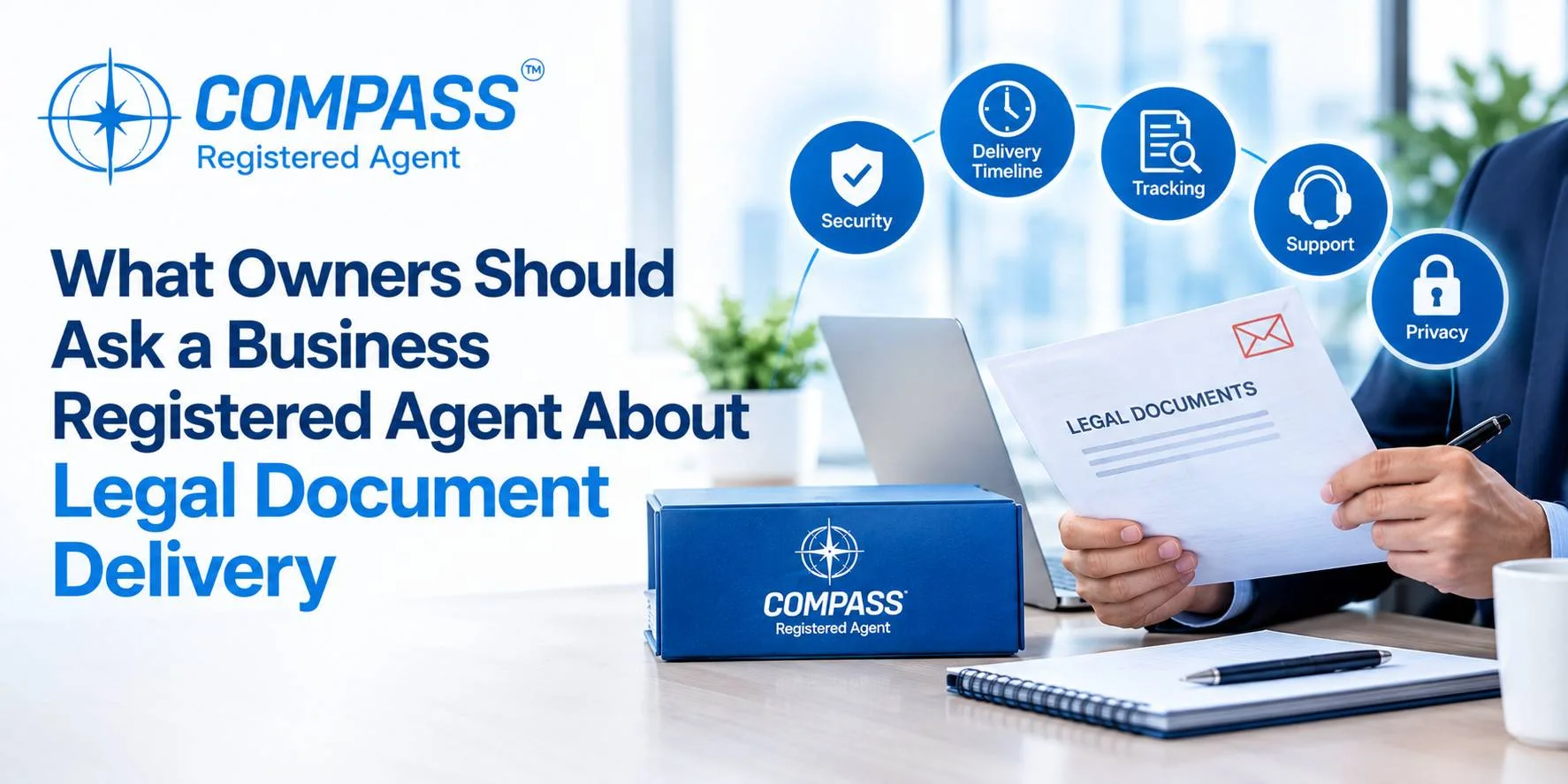
Compass Registered Agent describes a process that includes document scanning and digital delivery, with same-day handling where feasible.
That qualification belongs in the evaluation. Owners should ask their LLC registered agent about processing expectations, exceptions, and how staff handle documents that require attention. Written service terms offer a firmer basis for comparison than a broad promise of fast delivery.
How Does the Provider Handle Failed Notifications?
An outdated email address can interrupt an otherwise organized delivery process. Staff departures create another problem: the provider may continue sending notices to someone who no longer manages company records.
Owners need to establish how the service handles these situations before they occur. The discussion should cover specific questions:
- Contact changes: Who can update notification details, and how does the provider verify the request?
- Delivery failures: What happens when an email returns as undeliverable?
- Backup recipients: Can the business nominate another contact for important notices?
- Unreviewed documents: Does the service track access or offer follow-up, and does the selected plan include either?
- Support access: Who can investigate a missing alert or an unavailable document?
These questions distinguish available features from assumptions. An owner may expect a telephone call after missing an email, while the agreement promises email notification alone. Resolving that difference before appointment prevents confusion during a time-sensitive exchange.
What Should the Digital Document Record Include?
A notification has limited use when its attachment omits a page or obscures part of the text. Owners should ask how the provider checks scan quality and resolves incomplete uploads.
A business registered agent should explain whether its records identify the receiving entity, receipt date, and associated attachments. Companies with similar names need particular care because employees can send a document to the wrong internal team.
When evaluating an LLC registered agent, owners should also ask about downloads, retention periods, and access after the service ends. A portal provides access under the provider’s terms; the company needs its own recordkeeping arrangements.
For example, a business might retain downloaded notices with its internal correspondence and counsel’s instructions. That approach helps employees reconstruct what arrived and what action followed, without relying on memory or scattered inboxes.
How Does Document Handling Work Across Multiple Companies?
Managing several entities creates a different administrative problem. The same owner may oversee each company, but each notice belongs to a particular legal entity. Employees need enough information to identify that entity before circulating the document.
Compass Registered Agent supports multi-state and multi-entity administration through a centralized account, helping owners organize accepted records across their businesses.
Owners should ask how the account distinguishes entities and what access arrangements the service supports. A shared account should not lead staff to assume that everyone needs every document.
The company also needs an internal allocation process. A designated employee can review incoming records, identify the responsible manager, and arrange referral to counsel when appropriate. Central access helps with retrieval. Clear assignments establish who handles the next step.
Which Services Does the Agreement Cover?
Document delivery, routine mail forwarding, filing reminders, and annual report preparation involve different tasks. Owners should avoid treating them as a single service.
The agreement should identify accepted document categories, delivery methods, optional support, and any charges outside the selected package. It should also explain how the provider handles original papers and requests for physical forwarding.
Existing businesses have another question to resolve when changing providers: how will they preserve access to earlier records? Downloading documents, updating contacts, and confirming the transition arrangements deserve attention before the previous service ends.
Clear Delivery Terms Support Accountable Follow-Up
Choosing a business registered agent requires more than confirming an address and annual fee. Owners need a documented route from acceptance to notification, accessible records, and a process for resolving delivery problems.
The same standard applies when selecting an LLC registered agent for a new company. A suitable arrangement defines the provider’s responsibilities and leaves the business with a clear internal assignment for review and response. That division makes document handling easier to supervise throughout the service relationship.