Few foods have traveled the world as successfully as Neapolitan pizza, and yet none of its imitators have ever quite matched the original. The answer to why lies in a combination of heritage, precision, and ingredients that simply cannot be faked. When done correctly, a proper neapolitan pizza is not just a meal. It is an experience rooted in centuries of Italian culinary tradition.
The History That Makes Neapolitan Pizza So Meaningful
Neapolitan pizza originated in Naples, Italy, where street vendors began selling flatbreads topped with tomatoes, cheese, and herbs to working-class people who needed an affordable and satisfying meal. Over time, the craft evolved. Bakers began experimenting with dough fermentation, oven temperatures, and ingredient combinations, gradually developing the precise standards that define the style today.
Why 00 Flour Is Non-Negotiable
The type of flour used in Neapolitan dough is not a minor detail. Italian 00 flour is finely milled, creating a smooth, elastic dough that stretches without tearing and develops a complex flavor during fermentation. At Flour Dust Pizza in Roseville, CA, the dough is made with premium Italian 00 flour imported directly from Italy. The dough then undergoes a carefully controlled three-day fermentation before it ever touches the oven.
The Science of Three-Day Fermentation
Fermentation is what separates a mediocre pizza from a truly great one. Over three days, yeast slowly breaks down the flour's starches, producing organic acids and carbon dioxide that create a light, airy, and deeply flavorful crust. The result is a pizza that is easier to digest and far more complex in taste than anything produced through a quick-rise method.
The Wood-Fired Oven: Where the Magic Happens
A margherita pizza cooked in a gas oven and one cooked in a wood-fired oven at nearly 800 degrees are completely different products. The wood oven creates intense, radiant heat that cooks the pizza in minutes, charring the edges slightly while keeping the center soft and supple. This combination of textures is the hallmark of authentic Neapolitan pizza and cannot be reproduced by conventional cooking methods.
How Flour Dust Honors Neapolitan Tradition
Owner Mano Vrapi did not simply read about Neapolitan pizza making. He trained at the Bivero Pizza Academy in Florence, Italy, under skilled instructors who taught him the exact methods developed over generations. Before opening Flour Dust Pizza Company, he even built his own pizza oven in his backyard to practice. That level of dedication shows in every single pie.
What Goes on Top: Ingredients That Define Quality
The toppings on an authentic Neapolitan pizza are chosen for flavor, freshness, and compatibility. Certified San Marzano tomatoes from Italy provide a sauce that is naturally sweet and barely acidic. Mozzarella adds creaminess. Fresh basil adds a herbaceous lift. Every ingredient at Flour Dust is selected with care, including produce sourced weekly from local farmers markets in Roseville.
Besi Marashi: The Dough Master Behind Every Pizza
Besi Marashi, Flour Dust's Head Pizzaiolo and Dough Master, has been with the restaurant since the beginning. He was raised in Albania where his family owned a farm, and freshness was never a luxury but simply a standard. Besi also lived in Italy for four years, making him deeply familiar with the traditions that define true Neapolitan pizza making. His hands touch every pizza before it reaches your table.
The Role of Leoparding in a Perfect Neapolitan PizzaLeoparding refers to the dark spots that appear on the edges of a properly made Neapolitan pizza crust. These spots are caused by the high fermentation activity in the dough reacting with the extreme heat of the wood-fired oven. They signal that the dough was properly prepared and cooked at the right temperature. Many diners unfamiliar with Neapolitan pizza mistake these spots for burning, but they are actually the mark of mastery.
Beyond the Pizza: What Else Flour Dust Offers
- Artisanal pastas made with the same care as the pizzas.
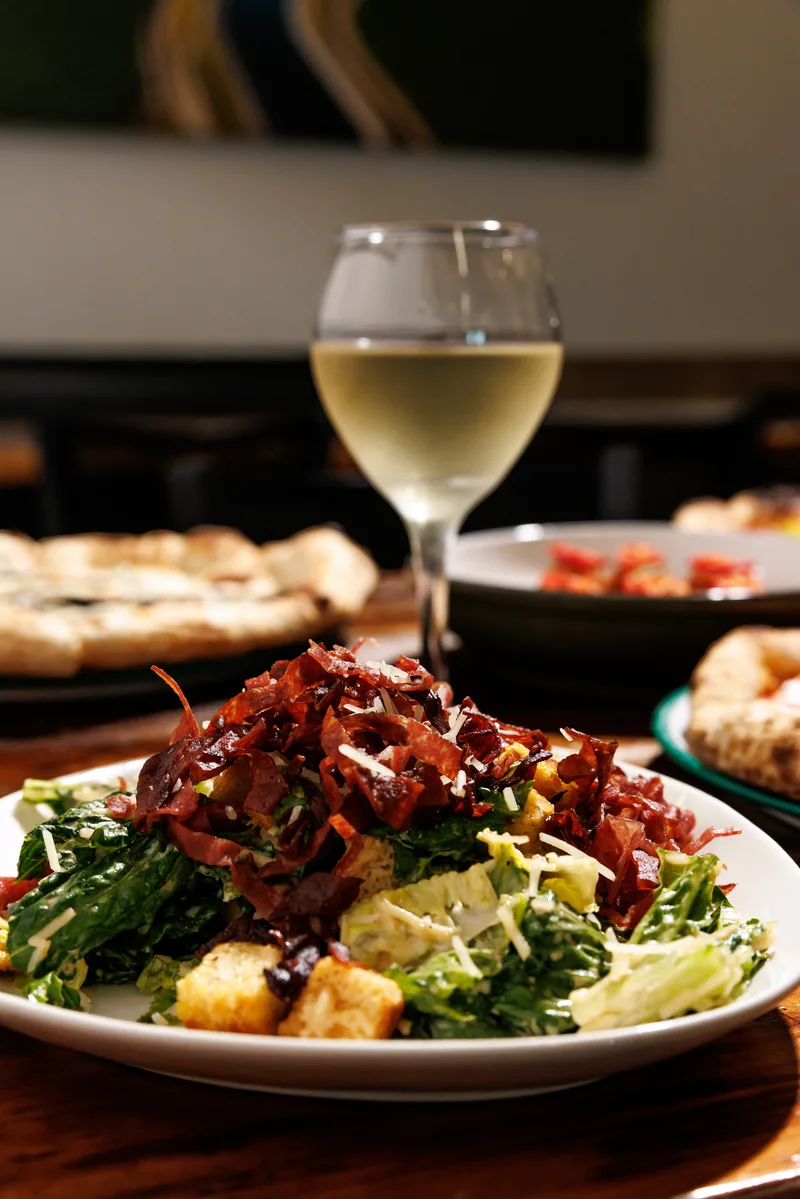
- Seasonal salads featuring locally sourced produce.
- Crafted sandwiches using fresh, high-quality ingredients.
- Appetizers that include creative, chef-driven dishes.
- A covered outdoor patio that is perfect for group dining.
Conclusion
Neapolitan pizza is not just a style. It is a living tradition that demands skill, patience, and the finest ingredients. Flour Dust Pizza brings that tradition to Roseville, CA, with genuine care and no shortcuts. Every crust, every sauce, every topping reflects a commitment to doing things the right way. If you want to understand what pizza can truly be, this is where to start.