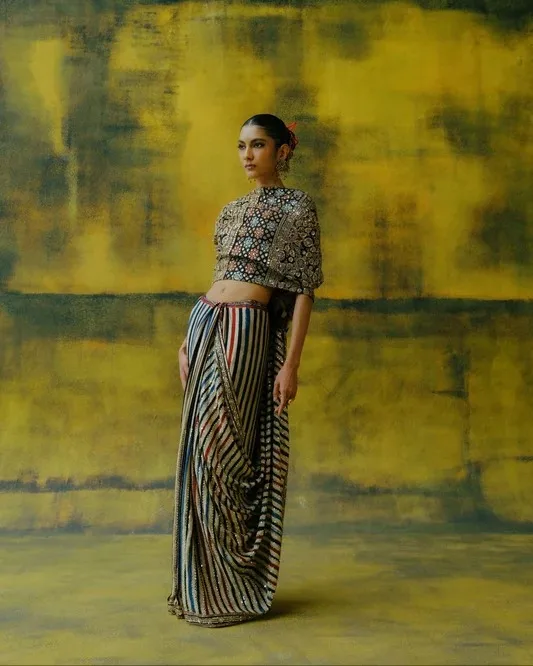
An Ajrakh saree is a beautiful expression of India’s traditional textile heritage, combining detailed block printing, distinctive patterns, and rich colors. Known for its handcrafted appearance, Ajrakh has become increasingly popular among people who appreciate traditional textiles with a contemporary appeal. From festive occasions to cultural gatherings, an Ajrakh saree can offer an elegant alternative to heavily embellished sarees.
What Is an Ajrakh Saree?
An Ajrakh saree is inspired by the traditional Ajrakh textile-printing craft, which is strongly associated with the Kutch region of Gujarat and the Sindh region. The craft is known for intricate geometric patterns, symmetrical motifs, and carefully layered colors.
Traditional Ajrakh printing involves several stages, including washing, dyeing, resist printing, and block printing. Artisans use carved wooden blocks to create repeating patterns on fabric. The process requires precision because multiple layers of printing and dyeing contribute to the final design.
Traditional Ajrakh textiles commonly feature colors such as indigo, red, black, and earthy shades. Modern interpretations may introduce additional colors while retaining the characteristic handcrafted aesthetic.
Why Is the Ajrakh Saree Popular?
One of the main reasons for the popularity of a Designer Ajrakh saree is its distinctive visual identity. Unlike sarees that depend primarily on embroidery or embellishments, Ajrakh designs allow the printed textile itself to become the focal point.
The repetitive motifs and structured patterns create a balanced appearance. At the same time, small variations associated with handcrafted printing can give each piece an individual character.
Ajrakh sarees are also versatile. Depending on their fabric, colors, and styling, they can be worn for festive celebrations, cultural events, family functions, work-related occasions, and intimate gatherings.
How Can You Style an Ajrakh Saree?
Styling an Ajrakh saree can be relatively simple because the print already provides visual interest. Traditional accessories such as oxidized silver jewelry, jhumkas, bangles, or handcrafted necklaces can complement the heritage-inspired look.
For a contemporary appearance, minimal jewelry and understated footwear can create a more refined combination. A solid-colored blouse can also help balance a heavily patterned saree.
The choice of blouse color can either coordinate with one of the shades in the Ajrakh print or create a subtle contrast. For a more traditional appearance, earthy shades and classic silhouettes work well, while modern blouse cuts can give the outfit a contemporary character.
What Should You Consider When Buying an Ajrakh Saree?
When choosing an Ajrakh saree, pay attention to the quality and clarity of its prints. Well-defined motifs and balanced patterns contribute to the overall appearance of the textile.
Fabric is another important consideration. Cotton-based sarees can be comfortable for everyday and daytime wear, while silk blends and other dressier fabrics may be better suited to formal occasions.
It is also useful to consider the color palette and pattern scale. Larger motifs can create a bold visual effect, whereas smaller repeating patterns may offer a more subtle appearance.
Geethika Kanumilli explores Indian textile influences through contemporary occasion wear, making the brand relevant for those interested in modern interpretations of traditional Indian fashion.
Why Does Ajrakh Remain Relevant in Modern Fashion?
The continued interest in the Ajrakh saree highlights the growing appreciation for traditional Indian crafts in contemporary wardrobes. Its combination of geometric patterns, handcrafted techniques, and heritage-inspired colors allows it to work across different styles and occasions.
Rather than being limited to traditional dressing, Ajrakh can be styled in modern ways through blouse designs, accessories, draping techniques, and footwear choices. This flexibility makes the textile appealing to both traditional-fashion enthusiasts and those looking for distinctive contemporary outfits.