When a customer needs a plumber, electrician, or cleaning professional, finding someone reliable can take time. They may need to compare prices, call several service providers, and wait for a response before confirming an appointment. A well-planned home services app can make this process easier by bringing service listings, bookings, and customer communication into one place.
For businesses, the opportunity goes beyond putting local professionals online. A useful home service booking platform needs to help customers find suitable services while giving professionals a practical way to manage requests and appointments.
Start With a Specific Customer Need
A common mistake is trying to offer every household service from the beginning. Cleaning, plumbing, electrical repairs, appliance maintenance, and pest control each have different booking requirements.
A business can start with one service category or a specific location, learn what customers expect, and expand as demand grows. For example, cleaning appointments may need fixed packages and time slots, while plumbing repairs may require customers to describe the issue and request a price estimate.
Defining the initial service area and audience also helps businesses decide which features are necessary for the first version of the app.
Make Booking Simple for Customers
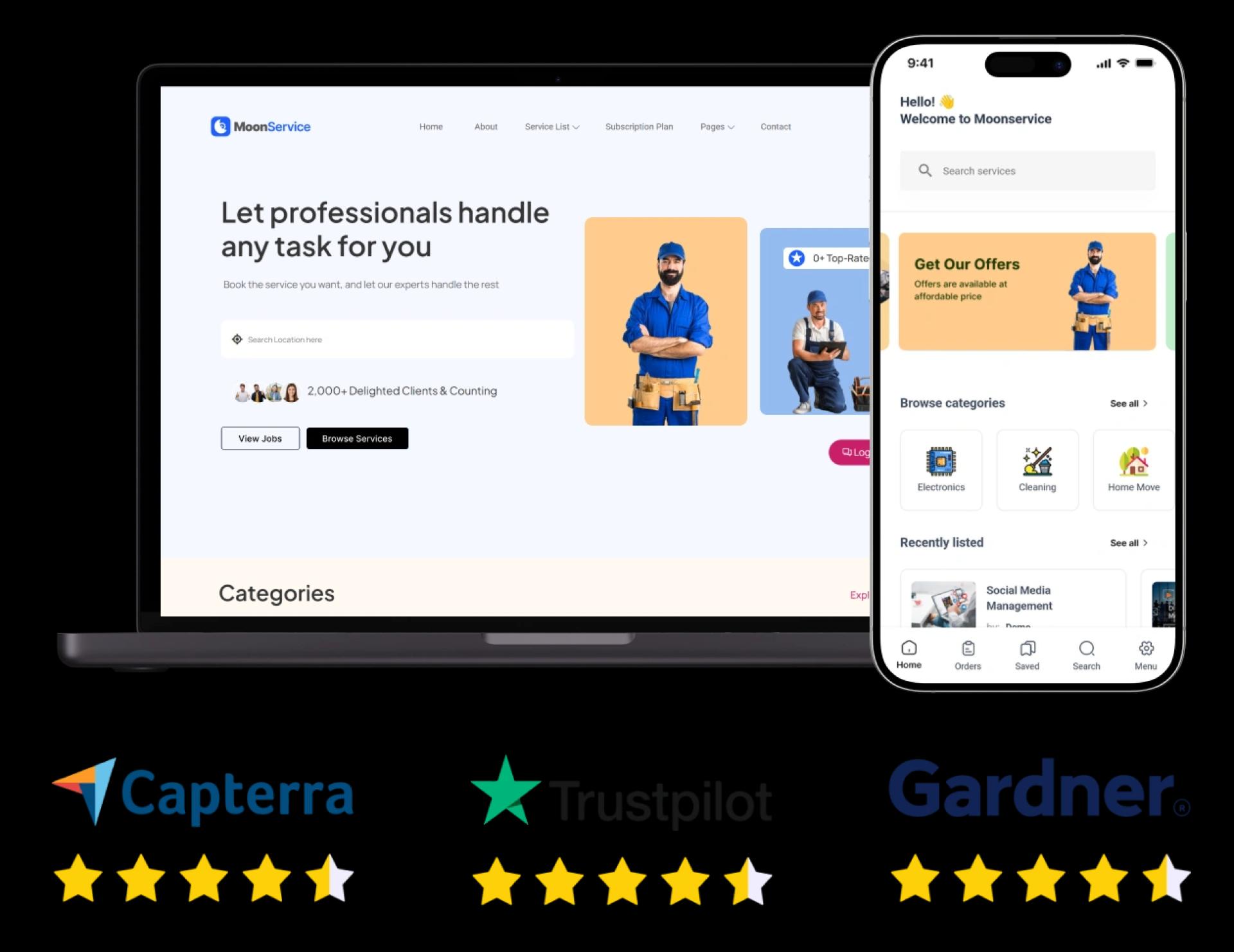
Customers should not have to navigate several screens just to book a service. The app should make it easy to understand what is available, how much it may cost, and when a professional can arrive.
Useful features may include:
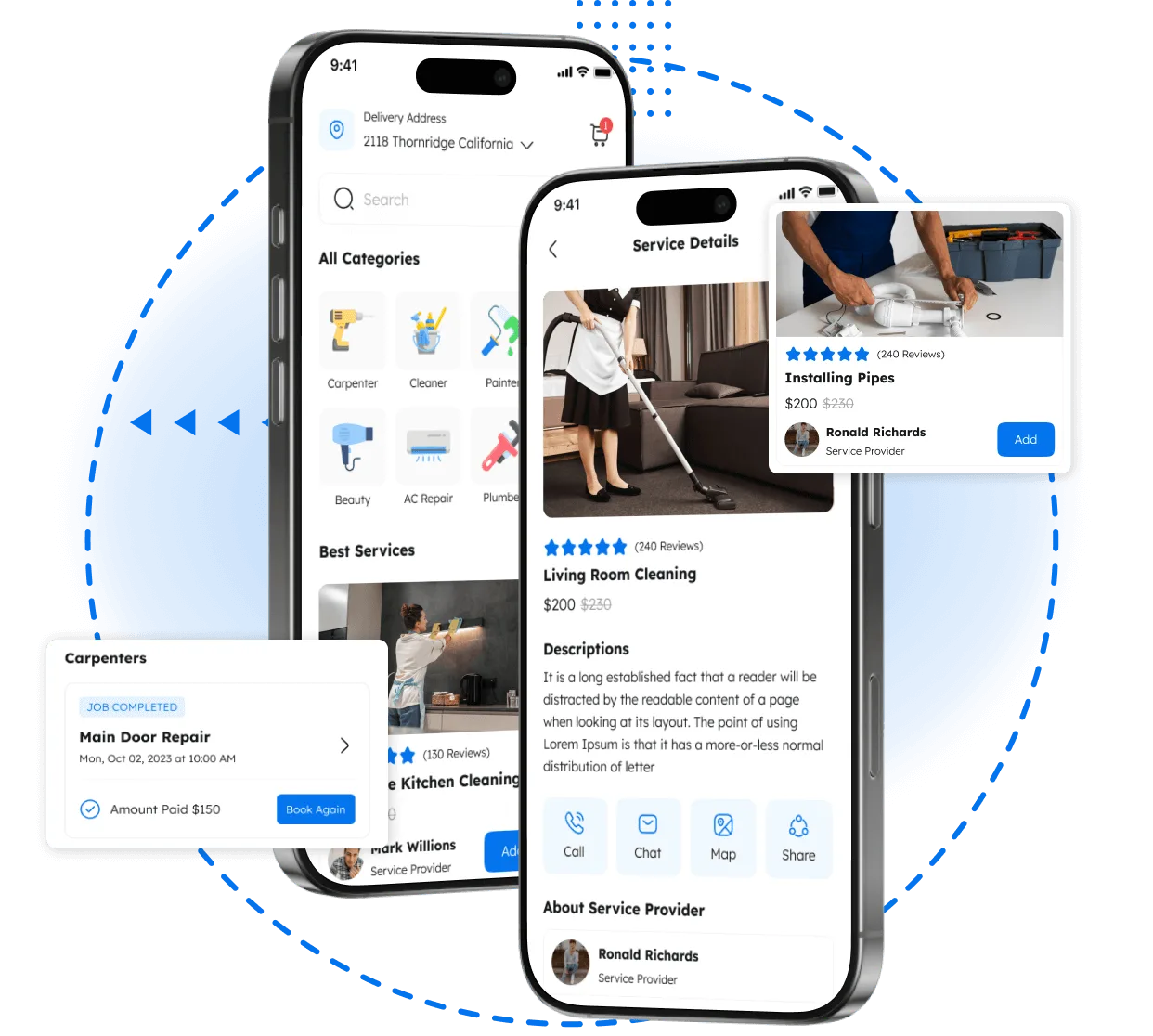
- Service categories with clear descriptions and pricing
- Professional profiles with ratings and customer reviews
- Appointment scheduling and booking confirmation
- Notifications about booking updates and arrival times
- Online payments and access to customer support
The exact features depend on the business model. A platform offering scheduled cleaning may need recurring appointments, while an emergency repair service may need faster booking and direct communication with professionals.
Give Service Professionals a Reason to Join
Customers will struggle to find suitable help if the platform has too few active professionals. Businesses therefore need to consider the service provider's experience alongside the customer's journey.
Professionals should be able to manage their availability, review incoming requests, accept or decline jobs, and track their earnings. Clear information about commissions, payment schedules, and platform fees can also help avoid confusion.
Verification procedures are important, especially for services that involve entering a customer's home. Depending on the location and service category, the business may need identity checks, document verification, or other screening measures.
Choose a Revenue Model That Fits the Business
A home services app can generate revenue in several ways, but the right approach depends on how customers and professionals use the platform.
A commission model allows the business to earn a percentage from completed bookings. Subscription plans can charge professionals a recurring fee for platform access or additional features. A lead-based model charges service providers for customer enquiries, while some businesses earn revenue by providing services directly.
Before choosing a model, businesses should consider operating costs, customer acquisition, payment processing, refunds, and the effort required to maintain service quality. The goal is to create a pricing structure that supports the business without making the platform unattractive to customers or professionals.
Plan the Technology Around the Business
The technology should support the way the service operates rather than add unnecessary complexity. Many platforms need three main components: a customer app for browsing and booking, a professional app for managing jobs, and an admin panel for overseeing users, payments, listings, and complaints.
Businesses exploring home services app development can review different approaches based on their target market, required features, budget, and plans for future expansion.
It is also worth considering how the platform will handle multiple service areas, peak booking periods, payment issues, and customer information. Planning these requirements early can reduce the need for major changes as the business grows.
Build Trust After the Booking Too
A confirmed appointment is only one part of a good customer experience. Customers also need clear communication if a professional is delayed, a booking must be cancelled, or the final price differs from the estimate.
The platform should explain its cancellation and refund policies before customers confirm a booking. It should also provide a clear way to report problems, contact support, and leave feedback after a service is completed.
Customer reviews can help people make informed choices, but businesses should also have a process for reviewing complaints and addressing repeated service issues. Consistent service quality gives customers a reason to return rather than look for another provider the next time they need help.
Build Around What Customers Actually Need
A successful home services app depends on more than its feature list. Customers need a straightforward booking process, professionals need tools that help them manage their work, and the business needs a practical way to maintain service quality and earn revenue.
Starting with a clear service category, testing the booking process, and collecting feedback from both sides can help businesses make better decisions before expanding. As customer needs become clearer, the platform can introduce additional services and features that solve real problems.
The most useful home services apps are built around everyday needs. When booking is simple, expectations are clear, and support is available when something goes wrong, customers have more reasons to trust the platform and use it again.