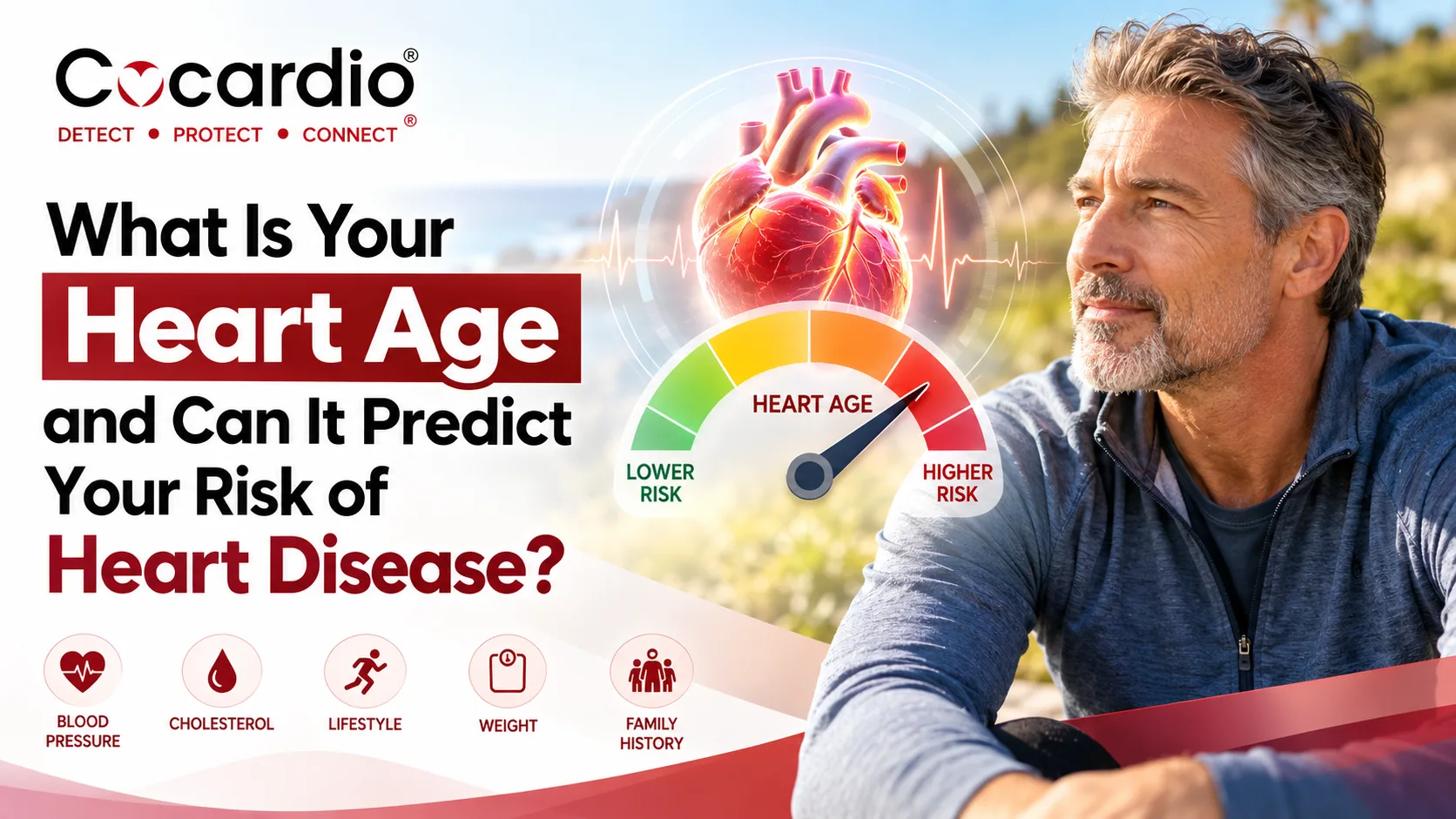
You may know your blood pressure, cholesterol, and blood sugar, but do you know what those factors collectively say about your cardiovascular risk? Heart age is one way of translating selected cardiovascular risk factors into a number that people may find easier to understand. If your calculated heart age is considerably higher than your chronological age, it can indicate that modifiable cardiovascular risk factors deserve attention. It is not a diagnosis, but it can be a useful starting point for a deeper prevention conversation.
How Is Heart Age Calculated?
Different cardiovascular risk tools can use somewhat different inputs, so results may vary depending on the calculator being used. Common factors include chronological age, blood pressure, smoking status, diabetes, cholesterol, weight, and other cardiovascular information. These factors help estimate how your cardiovascular risk compares with that of people at different ages. A heart-age result should therefore be interpreted as a risk-communication tool rather than a literal measurement of how old your heart tissue is.
Why Might Your Heart Be “Older” Than You?
High blood pressure can place additional strain on the cardiovascular system, while elevated LDL cholesterol contributes to atherosclerotic plaque development. Smoking, diabetes, insufficient physical activity, excess weight, and an unhealthy dietary pattern can also increase cardiovascular risk. Some important factors, including chronological age and family history, cannot be modified. Identifying the factors you can change can give you and your healthcare team a practical place to begin.
Is Heart Age Enough to Understand Your Cardiovascular Health?
No single number can provide a complete picture of cardiovascular health. A person with a reassuring heart-age estimate could still develop symptoms that need medical evaluation, while someone with an elevated result may benefit from risk-factor management rather than assuming disease is inevitable. A root cause consultation can provide an opportunity to discuss your symptoms, lifestyle, risk factors, and cardiovascular concerns more broadly. Decisions about diagnostic testing and medical treatment should still be made with appropriately qualified healthcare professionals.
Can Heart Function Be Evaluated More Directly?
When clinically appropriate, cardiovascular assessment can go beyond risk questionnaires. CoCardio® offers heart function testing for people seeking more information about cardiovascular performance and risk. The company also offers Epigenetic biomarker testing within its broader wellness services. These services should complement rather than replace standard diagnostic evaluation and ongoing medical care.
What Is External Counterpulsation Therapy?
External counterpulsation therapy is a noninvasive approach that uses cuffs around the lower extremities that inflate and deflate in coordination with the heartbeat. External counterpulsation therapy is used for certain cardiovascular indications, including chronic angina, and eligibility should be assessed individually. For appropriate patients, External counterpulsation therapy may form part of a broader strategy focused on symptoms, circulation, functional capacity, and cardiovascular wellness. It should not replace medications, procedures, or follow-up recommended by your cardiologist.
People searching for ECP therapy near me may already have coronary artery disease, angina, or concerns about cardiovascular risk. Choosing a provider should involve more than convenience because medical history, symptoms, and treatment goals all matter. Ask what evaluation is completed before treatment and how the service fits alongside your existing medical care. If you develop new or worsening cardiovascular symptoms, seek appropriate medical assessment rather than waiting for a routine therapy appointment.
Can Lifestyle Changes Lower Cardiovascular Risk?
Managing blood pressure, cholesterol, blood sugar, smoking, nutrition, physical activity, sleep, and body weight can help address modifiable cardiovascular risk. People researching a non invasive heart treatment may also benefit from understanding how these everyday factors fit into their overall cardiovascular plan. CoCardio® offers the CoCardio Boost™ Program as part of its approach to cardiovascular wellness. Lifestyle strategies should be individualized, particularly when someone already has coronary artery disease or another diagnosed cardiovascular condition.
What if You Already Have Angina?
Heart age becomes less important than symptom management and individualized cardiovascular care when recurring chest pain is already present. Angina can indicate that the heart muscle is not receiving enough oxygen-rich blood, and changing or worsening symptoms should be taken seriously. If symptoms persist despite prescribed therapy, review What to do when angina medicine is not enough and discuss your symptoms with the clinician managing your heart condition. Never reduce or discontinue prescribed angina medication without medical guidance.
Turn Your Heart Age Into a Reason to Take Action
Your heart age is most useful when it motivates you to understand and address the factors contributing to cardiovascular risk. Rather than focusing on one number, consider your blood pressure, cholesterol, blood sugar, family history, lifestyle, symptoms, and any existing cardiovascular diagnoses together. CoCardio® in Encinitas provides prevention-focused services and noninvasive cardiovascular options designed to complement conventional medical care. Call +1(858) 500-1399 or fill out the CoCardio® form today to share your cardiovascular concerns and request information about the most appropriate next step.