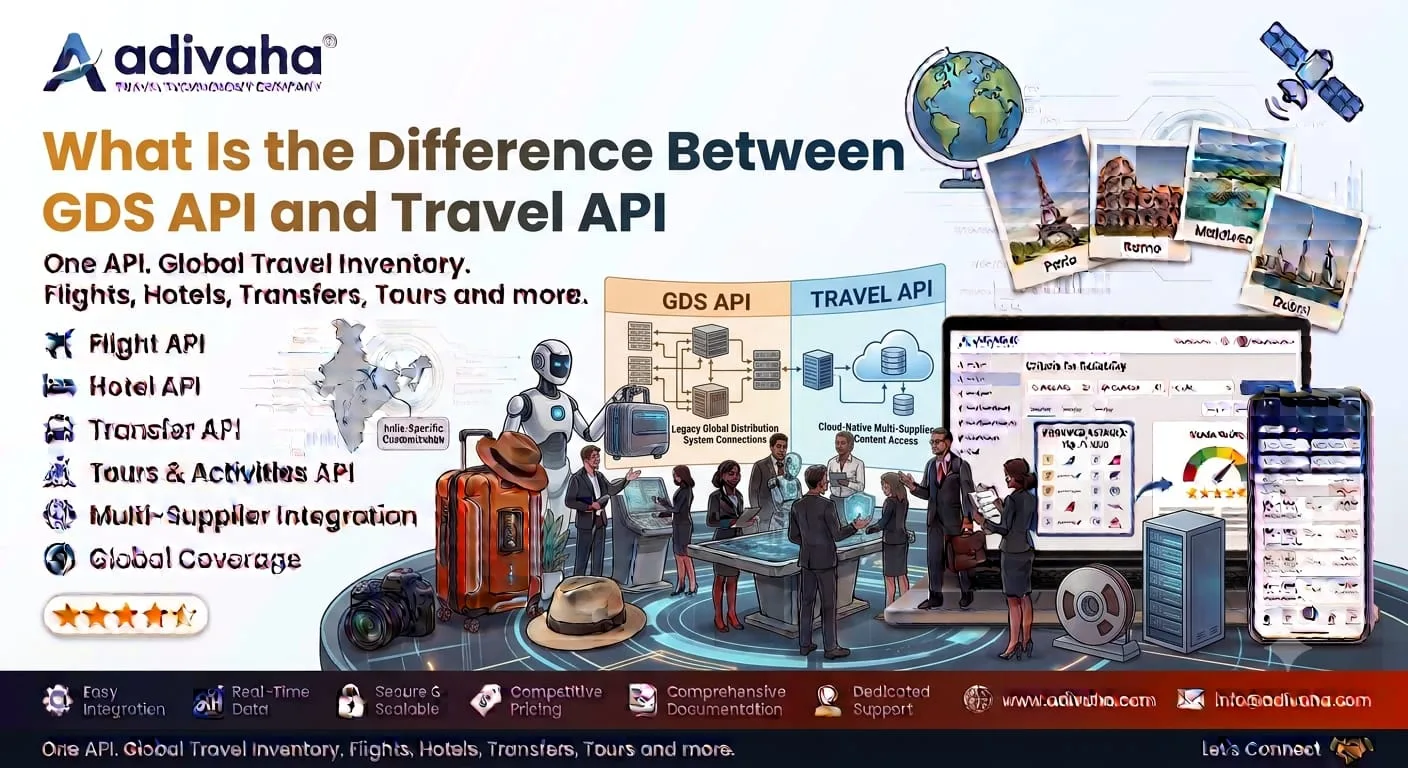
Understanding what is the difference between GDS API and Travel API helps travel agencies choose the right technology for their online booking operations. A GDS API connects travel platforms with Global Distribution Systems that provide access to participating airlines, hotels, car rentals, and other travel inventory. A Travel API is a broader term for software interfaces that connect booking platforms with travel suppliers, aggregators, and distribution systems. While GDS APIs are one way to access travel inventory, Travel APIs may offer direct supplier connections, aggregated content, or specialized booking services. Choosing the appropriate integration depends on business requirements, inventory coverage, and functionality.
Definition: What Is the Difference Between GDS API and Travel API?
The difference between a GDS API and a Travel API lies primarily in their scope and connectivity. A GDS API provides programmatic access to inventory and services available through a Global Distribution System, subject to its agreements and capabilities. A Travel API is a broader category of interfaces that connect travel applications with suppliers, aggregators, GDS platforms, or specialized travel services. It may support flights, hotels, transfers, car rentals, and activities. Therefore, a GDS API can be considered one type of travel technology integration, whereas a Travel API may connect to multiple distribution models depending on the provider.
GDS API Integration
GDS API integration connects a travel agency's website, application, or booking engine with a Global Distribution System. It enables supported operations such as flight availability searches, fare retrieval, reservations, and ticketing, depending on system access and provider capabilities. Some GDS platforms also support hotel and car rental content. Integration typically requires credentials, technical configuration, request validation, and compliance with applicable commercial agreements. Travel agencies use GDS connectivity to access participating suppliers through established distribution infrastructure. Before implementation, businesses should evaluate supplier coverage, booking functions, certification requirements, and ticketing arrangements to determine whether a GDS API meets their operational needs.
Travel API Integration
Travel API integration connects a booking platform with one or more travel service providers. These connections may support flight searches, hotel availability, transfers, activities, reservations, and post-booking management. Unlike an integration limited to one GDS, a broader Travel API strategy can combine different supplier sources or specialized services. The actual scope depends on the APIs selected and the provider's commercial agreements. Travel agencies use these integrations to build customized booking websites, B2B portals, and online travel applications. Successful implementation requires authentication, data mapping, error handling, pricing validation, and testing to maintain reliable communication between the booking interface and connected inventory sources.
Global Distribution System in Travel
A Global Distribution System, commonly called a GDS, is a travel distribution platform that connects travel sellers with participating suppliers and their available services. Systems such as Amadeus, Sabre, and Travelport provide distribution capabilities used by travel agencies and other authorized businesses. Depending on the system and access arrangements, available content can include flights, hotels, and car rentals. A GDS API enables software applications to interact with supported services programmatically. Travel businesses may use GDS connectivity to retrieve inventory, manage reservations, and access applicable fare or booking information. Coverage and functionality vary by supplier, market, and contractual arrangement.
Flight Booking API
A Flight Booking API allows a travel platform to search for flights, retrieve fares, verify availability, and create reservations through a connected provider. It may connect directly to an airline, a GDS, a consolidator, or an aggregator. This means a Flight Booking API describes a booking capability rather than one specific distribution model. Travel agencies should assess supported airlines, fare types, ticketing access, booking rules, and post-booking services before selecting an integration. When comparing a GDS API with another Flight Booking API, the most important considerations are inventory coverage, commercial terms, technical requirements, and how well each solution supports the agency's booking workflow.
Travel Aggregator API
A Travel Aggregator API connects a booking platform to travel content collected from multiple suppliers or distribution sources. Depending on the provider, it can combine inventory from airlines, hotels, transfer companies, or other travel businesses through a single integration. This approach can simplify supplier connectivity and reduce the need to implement every connection separately. However, aggregated inventory does not automatically guarantee complete coverage, identical fares, or access to every booking function. Travel agencies should examine supplier sources, availability accuracy, duplicate results, booking confirmation, cancellation rules, and support arrangements. An aggregator API may complement GDS connectivity when additional inventory or specialized services are required.
Benefits
Better Technology Selection : Understanding the difference between GDS API and Travel API helps travel agencies choose the right technology for their booking requirements. A GDS API provides access to airline inventory, fares, schedules, and reservation systems through global distribution networks. A Travel API can offer broader connectivity to flights, hotels, transfers, and other travel services through multiple suppliers. By comparing integration needs, supplier coverage, costs, and scalability, businesses can select the most suitable solution to improve booking efficiency and support future growth.
Wider Inventory Options : The difference between GDS API and Travel API is evident in their inventory options. A GDS API primarily connects travel businesses with airline, hotel, and car rental inventory available through Global Distribution Systems. A Travel API can provide broader connectivity by integrating multiple suppliers, including airlines, hotels, transfers, and activities. This flexibility helps travel agencies compare prices, access diverse booking options, improve customer choice, and build comprehensive travel booking platforms tailored to different business requirements.
Simplified Integration Planning : Understanding the difference between GDS API and Travel API helps travel businesses plan integration more effectively. A GDS API connects booking systems with global distribution systems for accessing airline, hotel, and other travel inventory, while a Travel API may connect directly with suppliers or multiple travel services. By evaluating business requirements, supplier connectivity, booking workflows, and technical compatibility, travel agencies can select the appropriate integration approach, reduce development complexity, improve booking efficiency, and build scalable travel booking platforms that support future business growth.
Improved Booking Efficiency : Understanding the difference between GDS API and Travel API helps travel agencies improve booking efficiency. A GDS API connects businesses to global distribution systems for accessing airline fares, schedules, and availability, while a Travel API can connect multiple travel suppliers, including airlines, hotels, and transfers. Both solutions support automated searches, faster reservations, and streamlined booking workflows. Choosing the right API helps travel businesses reduce manual tasks, improve response times, manage bookings effectively, and deliver a smoother booking experience to customers.
Greater Business Flexibility : Understanding the difference between GDS API and Travel API helps travel businesses choose flexible technology solutions based on their operational needs. A GDS API provides access to airline, hotel, and other travel inventory through global distribution systems, while a Travel API can connect multiple suppliers and travel services through different integrations. This flexibility enables travel agencies to customize booking platforms, expand inventory options, adapt to changing customer demands, and develop scalable travel booking solutions for long-term business growth.
Features
Inventory Connectivity : Inventory connectivity is a key difference between GDS APIs and Travel APIs. A GDS API connects travel businesses with centralized airline, hotel, and other travel inventory available through global distribution systems. In contrast, a Travel API can connect multiple suppliers, including airlines, hotels, car rentals, and activity providers, depending on the integration. This broader connectivity helps travel agencies compare availability, retrieve pricing, and manage bookings across different sources, supporting flexible inventory access and streamlined travel booking operations.
Search and Pricing : In the difference between GDS API and Travel API, search and pricing determine how travel inventory and fares are retrieved. A GDS API provides access to airline schedules, availability, and fares through global distribution systems. A Travel API may connect multiple suppliers, including airlines, hotels, and other travel services, depending on the provider. Both APIs support travel search and price comparison, but their coverage and pricing methods vary. The right solution depends on business requirements, supplier connectivity, and booking needs.
Reservation Management : Reservation management in the context of GDS API and Travel API integration helps travel agencies organize, monitor, and manage bookings efficiently. A GDS API connects agencies with global distribution systems to access airline schedules, fares, availability, and reservation records. A Travel API can provide broader connectivity to flights, hotels, transfers, and other travel services, depending on the supplier. Both support booking updates, cancellations, and modifications, helping travel businesses streamline operations, improve booking accuracy, and deliver better customer service.
Supplier Integration : Supplier integration is an important aspect of understanding the difference between GDS API and Travel API. A GDS API connects travel businesses with global distribution systems that provide airline, hotel, and other travel inventory. A Travel API can connect directly with multiple suppliers, including airlines, hotels, car rentals, and transfer providers. Both integration methods help travel agencies retrieve availability, compare prices, and manage bookings. The right integration depends on supplier coverage, business requirements, connectivity, and booking management needs.
Booking Servicing : Booking servicing in the context of GDS API and Travel API refers to managing reservations after a flight booking is confirmed. GDS APIs support services such as ticket modifications, cancellations, rebooking, and PNR management through global distribution systems. Travel APIs may offer similar functions depending on the connected suppliers and integration capabilities. Understanding these differences helps travel agencies choose suitable technology for post-booking operations, improve customer support, manage reservation changes efficiently, and streamline flight booking workflows across their travel platforms.
Services
GDS API Integration : GDS API Integration connects travel booking platforms with Global Distribution Systems such as Amadeus, Sabre, and Travelport to access airline fares, schedules, seat availability, and reservation services. In understanding the difference between GDS API and Travel API, GDS integration focuses on connecting with established distribution systems, while a Travel API may combine multiple suppliers and services, including flights, hotels, and transfers. This integration helps travel agencies automate flight searches, manage bookings, compare fares, and streamline reservation operations efficiently.
Multi-Supplier API Integration : Multi-supplier API integration connects multiple travel service providers through a single booking platform, allowing travel businesses to access flights, hotels, and other travel services from different suppliers. Understanding the difference between GDS API and Travel API helps businesses choose the right integration approach. A GDS API primarily connects with global distribution systems, while travel APIs may connect directly with airlines, hotels, aggregators, and other suppliers. Multi-supplier integration improves inventory coverage, supports fare comparison, and provides greater flexibility for online travel agencies.
Booking Engine Development : Booking engine development based on the difference between GDS API and Travel API focuses on creating an efficient online reservation system. A GDS API connects travel businesses with global distribution systems for airline fares, schedules, and availability, while a Travel API can provide access to multiple travel services through different suppliers. Integrating these APIs into a booking engine enables real-time flight searches, fare comparisons, secure reservations, and automated booking workflows, helping travel agencies improve operational efficiency and customer experience.
API Testing and Configuration : API testing and configuration are essential for understanding the difference between GDS API and Travel API integration. GDS API testing verifies connectivity with global distribution systems, including flight availability, fares, reservations, and ticketing responses. Travel API testing checks connections with multiple travel suppliers, such as airlines, hotels, transfers, and activity providers. Proper configuration ensures accurate data mapping, secure authentication, reliable responses, and smooth booking workflows. Thorough testing helps travel businesses minimize errors and deliver a consistent booking experience.
Technical Maintenance : Technical maintenance for GDS API and Travel API integration ensures that travel booking systems operate smoothly, securely, and efficiently. It includes monitoring API performance, resolving connectivity issues, updating integration settings, fixing booking errors, and maintaining data accuracy. GDS APIs connect platforms with global distribution systems, while Travel APIs may connect multiple travel suppliers. Regular maintenance helps travel agencies maintain reliable flight searches, accurate fares, real-time availability, and uninterrupted booking workflows while improving system stability and overall operational efficiency.
Package Details
Starter Package : The Starter Package for understanding the difference between GDS API and Travel API is ideal for travel agencies beginning their digital booking journey. It provides basic integration options to connect with travel inventory, including flights and hotels, depending on supplier access. A GDS API connects agencies to global distribution systems, while a Travel API can connect multiple travel suppliers through different interfaces. This package helps businesses compare connectivity options, simplify booking operations, and choose a suitable API solution for their travel technology requirements.
Business Package : The Business Package for understanding the difference between GDS API and Travel API helps travel agencies connect with essential booking systems and travel service providers. A GDS API provides access to airline fares, flight availability, and reservation systems, while a Travel API can connect flights, hotels, transfers, and other travel services. This package supports API integration, booking automation, centralized management, and efficient travel inventory access, helping travel businesses streamline operations, improve booking experiences, and expand their online travel services.
Enterprise Package : The Enterprise Package for understanding the difference between GDS API and Travel API supports large travel businesses with advanced integration capabilities, scalable booking systems, and centralized inventory management. GDS API integration provides access to flight schedules, fares, and availability through global distribution systems, while Travel API integration can connect multiple suppliers for flights, hotels, transfers, and other travel services. This package helps enterprises streamline booking operations, improve connectivity, automate workflows, and build flexible travel platforms tailored to complex business requirements.
Custom Package : The Custom Package for understanding the difference between GDS API and Travel API offers tailored integration solutions based on specific business requirements. It helps travel agencies and online travel platforms connect with GDS systems, airline suppliers, hotel providers, and other travel services. Businesses can select suitable features, booking workflows, and supplier connections according to their operational needs. This flexible approach supports customized travel inventory access, efficient booking management, scalable platform development, and improved connectivity for growing travel technology businesses.
Conclusion
Understanding what is the difference between GDS API and Travel API helps travel agencies make informed technology decisions. A GDS API provides access to participating distribution-system content, while a broader Travel API can connect with GDS platforms, direct suppliers, and aggregators. Both options can support automated booking operations, depending on their capabilities and access terms. Agencies should compare inventory coverage, integration complexity, ticketing support, scalability, and commercial requirements before choosing a solution. Evaluate your business needs and select an integration that supports your booking strategy. A well-planned API implementation can establish a flexible foundation for future travel technology growth.