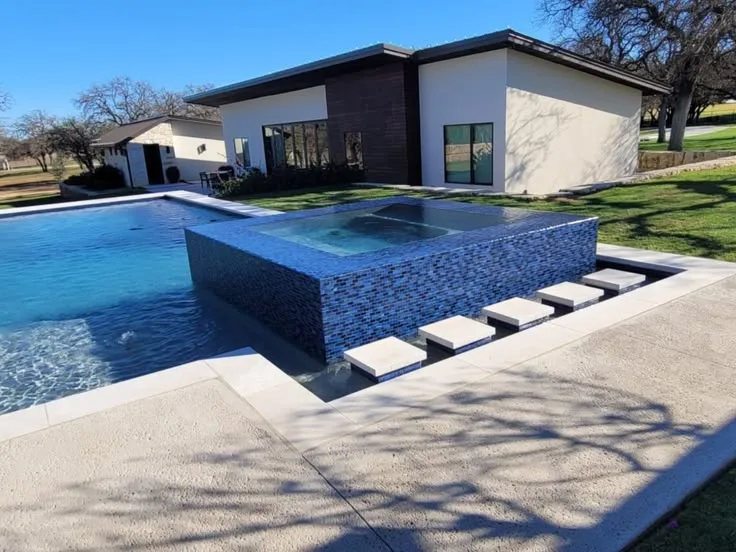
One of the best ways to turn your backyard into a beautiful, relaxing outdoor living space is to build a custom swimming pool. Whether it’s a modern swimming pool, a luxury pool with an attached spa, or an extraordinary backyard with a lazy river and outdoor entertainment area, a custom pool can bring your vision to life.
But before starting construction, most homeowners want to know two things: how much does a custom pool cost in Texas, and how long does it take to build?
Cost and construction timeline are influenced by pool size, construction materials, design complexity, property conditions and additional features.
Lazy River Company has put together this guide to help you plan your dream backyard, including the approximate cost of building a custom pool in Texas, typical construction timelines, popular design options, and important considerations.
How Much Does a Custom Pool Cost in Texas?
How much does it cost to build a custom swimming pool in Texas? The cost will vary depending on the design, materials, property conditions, and features you choose.
A simple custom in-ground pool might run you $60,000 to $80,000 for a very rough 2026 budget estimate. Mid-range custom pools can cost anywhere from $80,000 to $110,000, with premium and luxury projects topping $175,000.
Here’s a general look at budgets for building custom pools:
- Basic custom in-ground swimming pool: $60,000-$80,000
- Custom swimming pool, mid-range: $80,000-$110,000
- Custom pool with upgrades: $100,000-$140,000
- Premium custom swimming pool: $130,000-$175,000+
- Luxury pool and outdoor living project: $175,000-$250,000+
These are preliminary planning estimates, not firm construction prices. Actual costs vary based on location, excavation requirements, construction method, equipment and materials, and project specifications.
The final budget should be determined after the professional evaluation of the property and the homeowners should have a detailed estimate.
Factors that Impact the Cost of Building a Custom Pool in Texas
There are a number of factors that affect the total cost of building a custom pool. Understanding these elements can assist homeowners in prioritizing their needs and making informed design decisions.
1. Pool Size & DesignThe size and shape of your swimming pool are major cost factors. For larger pools, that usually means more digging, more construction materials, more plumbing, more equipment and more finishing.
But the design is important, too. Geometric pools, freeform pools, infinity-edge pools and pools with multiple elevations may require additional planning and specialized construction.
A custom design allows homeowners to create a swimming pool that fits their home’s architecture and available backyard space.
2. Pool Construction MaterialsThe construction method can influence the initial investment, design freedom and the long-term maintenance requirements.
Concrete and gunite pools are a favorite for homeowners who want custom shapes, varying depths for swimming, built-in spas and unique water features.
Fiberglass pools have pre-made designs and installation choices. Vinyl liner pools are another option for homeowners to think about construction techniques and costs.
What works best for you depends on your property, the look you want, your budget and how much you want to maintain.
3. Water Features and Luxury EnhancementsWith a few extras, a basic swimming pool can become a beautiful backyard destination.
Popular custom upgrades for pools include:
- Fountains and decorative waterfalls
- Spas and hot tubs built-in
- LED lighting for underwater
- Beach access and sunbathing ledges
- Decorative spillways and water jets
- Automated pool controls
- Swimming pool heaters
- High quality tile & stone finishes
These features add character and function to a swimming pool. Including them early in the design process can also help to build a more coordinated construction plan.
4. Outdoor Living Features and Pool DeckingA swimming pool should be an integral part of the whole backyard, not a separate element.
Many homeowners in Texas choose to add custom patios, outdoor kitchens, covered seating areas, fire features, landscaping, and entertainment spaces.
These additional features raise the overall investment in the project, but may provide a more comfortable and functional outdoor environment.
5. Excavation and Property ConditionsEach property has different building requirements.
Excavation and construction costs can be affected by sloped yards, difficult equipment access, underground utilities, drainage challenges, and soil conditions.
A professional site evaluation can identify potential problems before construction begins, and help the project team develop a realistic budget.
How Long to Build a Custom Pool in Texas?
Most custom swimming pool construction projects take anywhere from about 8 to 16 weeks after construction has started. Larger and more complex projects, however, may take longer time.
It is important to know that the construction period is not the entire project schedule. There can be weeks of design, engineering, permits, homeowners association approvals and scheduling before anything gets built.
Here’s a general overview of the process of building a custom pool.
1. Design and Planning: 1-3 Weeks
The first step is to understand your ideas, assess your property and design you a custom pool.
At this stage, homeowners make decisions about size, shape, depth, materials, finishes, water features and other amenities.
Proper planning helps to define the scope of the project, design expectations and estimated budget.
2. Permits and Approvals – 1 to 4 weeks or more
Depending on your Texas municipality, you may need construction permits, inspections and other approvals.
In some residential communities, construction cannot begin without approval from the homeowners association.
How long approvals take can depend on local regulations, paperwork, and the scope of the project being proposed.
3. Excavation and structural prep: 1-2 weeks
Once the necessary approvals are completed, the construction site is setup and excavation starts.
The pool shape and depth is determined, then plumbing, electrical work and structural reinforcement are done.
This stage provides the foundation for the swimming pool.
4. Install Concrete or Gunite
The shell is the concrete or gunite that is poured to form the structural base of the pool.
Proper installation and curing procedures are important for long term durability. Schedule may be impacted by weather conditions, construction specifications and engineering requirements.
5. Tiling, Coping and Decking: 2-4 Weeks
As structural work progresses, crews install waterline tile, coping, decking and decorative finishes.
These elements add a lot to the final appearance of the pool.
Custom masonry, large patios and other outdoor construction can extend this phase.
6. Interior Finish Out and Equipment Installation: 1-2 Weeks
The final construction stages involve installing the interior finish, connecting the equipment, filling the pool and balancing the water.
Before the final start-up procedure, pumps, filtration systems, lighting and other equipment are checked.
After the necessary inspections and startup procedures have been completed, the swimming pool can be readied for use.
What is the Best Type of Custom Pool for a Texas Backyard?
There are many options for Texas homeowners who want to design a custom swimming pool. The best choice depends on available space, lifestyle, architectural likes and budget.
Modern Geometric Swimming Pools
Modern geometric pools are all about clean lines, defined shapes and contemporary designs. They pair nicely with modern homes and structured landscaping.
Freeform Swimming Pools
Freeform pools are those with flowing curves and natural shapes. They can provide a casual feel and complement the outdoor surroundings with landscaping and natural stone.
Attached Spa Luxury Pools
An attached spa adds a level of comfort and functionality. Homeowners can enjoy swimming in the warmer months and heated water all year round.
Custom Lazy River Pools
For homeowners looking for something truly special, a custom lazy river can transform a so-so backyard into a one-of-a-kind outdoor destination.
A lazy river can include flowing water, landscaping, decorative features and built-in swimming areas. Feasibility and investment depend on available property space, engineering and desired design.
How to Effectively Plan Your Custom Pool Project
There are some key recommendations for homeowners to consider before the construction begins.
Budget realistically: include construction, equipment, decking, landscaping, permits and any additional features.
Design the whole yard: Besides the swimming pool, include outdoor kitchens, patios, seating space, shade, and landscaping.
Choose good materials: Construction methods, finishes and equipment can affect durability, performance and maintenance.
Texas weather, think about: Shade structures, efficient equipment, pool heating, and comfortable outdoor spaces can make your backyard more enjoyable all year long.
Choose an experienced builder: Ask to see previous projects, discuss the building process, check on insurance and get a detailed written proposal.
Make critical design decisions early: Making choices before you start building can help avoid unnecessary changes and delays in your schedule.
Why Lazy River Company For Your Custom Outdoor Build?
Choosing a swimming pool design is only part of building a great backyard. It calls for meticulous planning, creative ideas and attention to construction details.
Lazy River Company specializes in unique pools, spas, lazy rivers, outdoor kitchens and custom outdoor living environments.
Founder Mark Davis brings more than 30 years of experience in unique building projects and a passion for creativity and craftsmanship to projects designed around the individual visions of homeowners.
The company’s philosophy is simple: Life is too short not to do what you love.
Lazy River Company doesn’t take a one-size-fits-all approach but works to create distinctive spaces that represent each homeowner’s ideas and enhance their property.
Whether you are dreaming of a custom swimming pool, a perfectly integrated spa, a beautiful lazy river, or an entire outdoor entertainment area, the goal is to create something special that you can enjoy for years.
Begin Designing Your Dream Custom Pool in Texas
A custom swimming pool can be the centerpiece of your backyard, a place to relax, entertain and create lasting memories with family and friends.
If you want a custom pool in Texas, the first thing you should know is how much it will cost and how long it will take to build.
Every decision you make, from selecting the right pool design to the materials and planning the outdoor features, contributes to the end result.
Lazy River Company is passionate about creating unique pools, spas, lazy rivers and custom outdoor living projects from creative building ideas.
Want to turn your backyard into something awesome?
Talk with Lazy River Company today about your ideas and what’s possible for your custom outdoor project.
Start Here: Call (214) 883-2779
Frequently Asked Questions
1. How much does a custom pool cost in Texas in 2026?
A simple install for custom swimming pools in Texas can cost $60K or more. Mid-range projects might run $80,000 to $110,000, with luxury pools with spas, high-end finishes and outdoor living features topping $175,000. Costs will vary depending on design, materials, property conditions and other features.
2. How long does it take to build a custom pool in Texas?
Most custom pool building projects can take from 2 to 4 months once construction starts. Design, permits, HOA approvals, weather and complicated construction features, however, can add to the overall timeline.
3. What is the best swimming pool for a Texas home?
Concrete or gunite pools are a great option for home owners wanting customized shapes, depths, integrated spas and water features. Fiberglass and vinyl liner pools are also worth considering depending on the homeowner’s budget, property, and design preferences.
4. Can I get a lazy river in my custom pool design?
Yes. Custom backyard projects can include a lazy river, attached spa, waterfalls and other flowing water features. But the design calls for careful planning, enough property space, proper engineering and an appropriate construction budget.