Why Continuous Sandwich Panels Are Changing Modern Construction
The construction industry is changing rapidly. Today, builders and industrial developers are looking for materials that save time, reduce construction costs and provide better insulation. One such solution gaining popularity is Continuous Sandwich Panels.
These panels are widely used in warehouses, factories, cold storage facilities and commercial buildings. They offer a combination of insulation, strength and a clean finish, making them a practical choice for modern construction projects.
Let's understand what continuous sandwich panels are and why they are becoming an important part of the construction industry.
What Are Continuous Sandwich Panels?
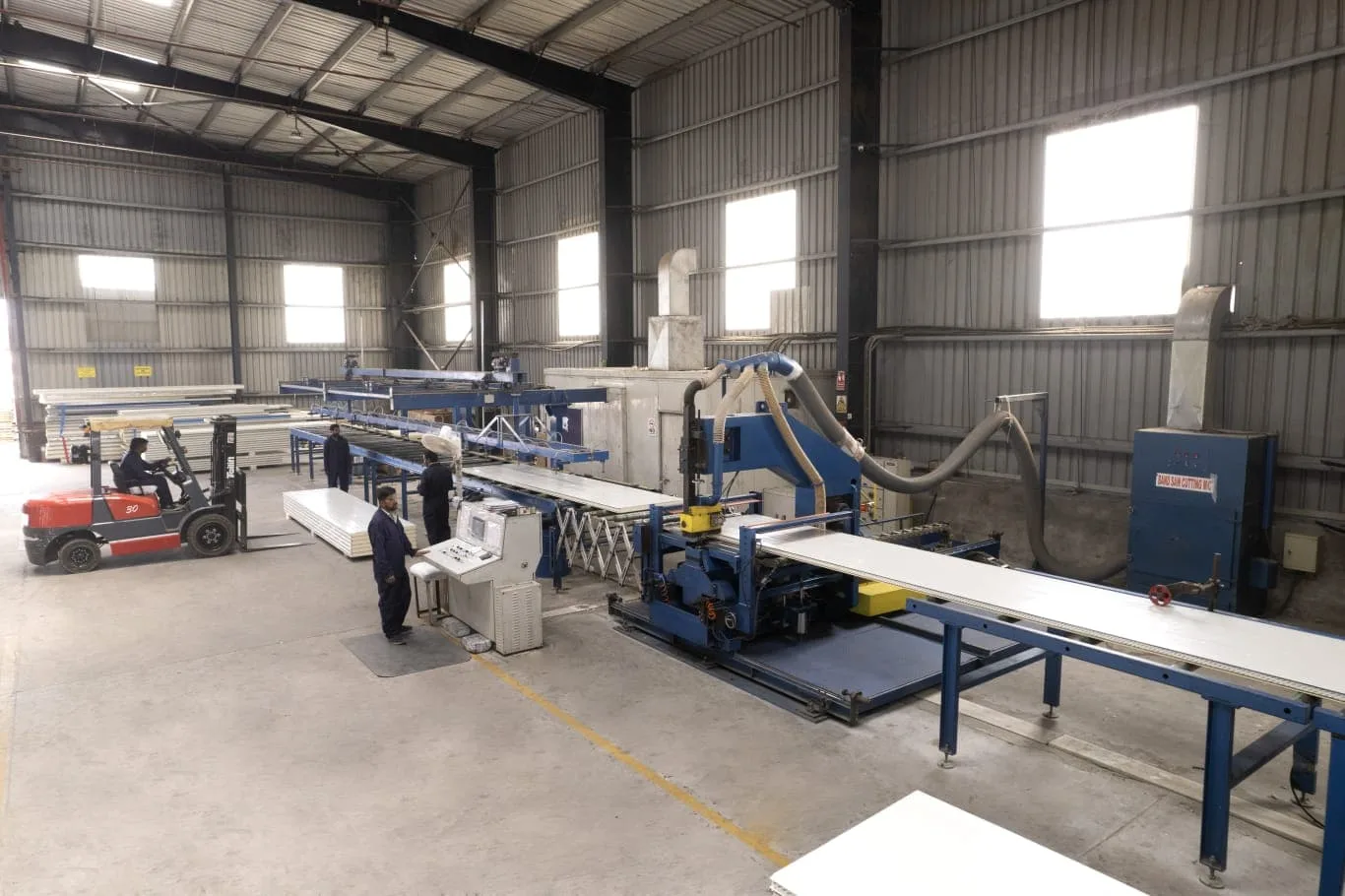
Continuous sandwich panels are insulated building panels manufactured using an automated production line.
They generally consist of three layers:
- An outer metal sheet.
- An insulating core in the middle.
- An inner metal sheet.
The insulating core is commonly made from PUF (Polyurethane Foam), PIR (Polyisocyanurate) or other suitable insulation materials.
These three layers work together to provide insulation, strength and protection.
The term "continuous" refers to the manufacturing process. The panels are produced on a continuous production line and cut according to the required length.

How Are Continuous Sandwich Panels Manufactured?
The manufacturing process is designed to maintain consistent quality and reduce manual work.
Here are the main steps:
1. Metal Sheet Preparation
Metal coils are fed into the production line and shaped according to the required panel design.
2. Surface Preparation
The metal sheets are prepared under controlled conditions to support proper bonding with the insulation core.
3. Insulation Injection
The insulating material is injected between the two metal sheets. It expands and fills the space to create an insulated core.
4. Pressing and Curing
The panel passes through a double-belt press, where the material cures and bonds with the metal sheets.
5. Cutting and Packaging
Finally, the panels are cut to the required length, checked for quality and prepared for delivery.
This automated process helps manufacturers produce panels with consistent quality and finish.
Major Benefits of Continuous Sandwich Panels
Continuous sandwich panels offer several advantages over traditional construction materials.
1. Better Thermal Insulation
The insulated core helps reduce heat transfer between the inside and outside of a building. This makes it useful for temperature-controlled spaces, factories and warehouses.
2. Faster Construction
These panels are manufactured and supplied ready for installation. This reduces the need for multiple construction activities and helps complete projects faster.
3. Lightweight Construction
Sandwich panels are lighter than many traditional wall construction materials. Their lower weight can help reduce the load on the building structure.
4. Clean and Attractive Finish
The metal surfaces provide a neat and professional appearance. Additional plastering and painting are generally not required.
5. Flexible Panel Lengths
Continuous production allows panels to be manufactured in different lengths according to project requirements, subject to production and transportation limitations.
6. Reduced Maintenance
With proper installation and suitable material selection, these panels can provide long-term performance with relatively low maintenance.
Where Are Continuous Sandwich Panels Used?
Continuous sandwich panels are suitable for different types of industrial and commercial applications.
Some common applications include:
- Industrial Buildings: Insulated walls and roofs for factories and manufacturing units.
- Cold Storage Facilities: Maintaining controlled temperatures for food, dairy and pharmaceutical products.
- Warehouses: Providing insulated roofing and wall solutions.
- Food Processing Units: Supporting temperature-controlled and hygienic environments.
- Clean Rooms: Creating controlled environments for pharmaceutical and other specialised industries.
- Commercial Buildings: Providing modern and energy-efficient building envelopes.
The right panel type and thickness depend on the building design and its insulation requirements.
Continuous vs Discontinuous Sandwich Panels: What Is the Difference?
Both manufacturing methods produce insulated sandwich panels, but their production processes are different.
In continuous manufacturing, panels are produced through an automated production line. In discontinuous manufacturing, panels are produced individually using moulds or presses.
How to Choose the Right Sandwich Panel?
Before selecting sandwich panels for your project, consider these important factors:
- Insulation Requirements: Select the core material and thickness according to the required temperature conditions.
- Fire Safety: Check the applicable fire safety requirements and ask for relevant test certificates.
- Panel Thickness: Choose the thickness according to the building application.
- Metal Quality: Check the steel thickness, coating and corrosion protection.
- Joint Design: Proper joint connections help improve insulation and reduce air or water leakage.
- Manufacturer Experience: Choose a manufacturer that can provide technical support, product specifications and installation guidance.
Making the right selection can improve the overall performance and life of your building.
Why Choose an Experienced Sandwich Panel Manufacturer?
The quality of a sandwich panel depends on several factors, including raw materials, manufacturing technology, bonding quality and quality control.
Working with an experienced manufacturer helps ensure that the panels meet the technical requirements of your project.
BNAL Prefabs Pvt. Ltd. is an Indian manufacturer of PUF sandwich panels and prefabricated building solutions. The company offers insulated panel solutions for industrial and commercial applications.
If you want to understand the manufacturing process and technical details in more depth, read this guide on continuous sandwich panels and their manufacturing process.
Conclusion
Continuous sandwich panels are becoming an important solution in modern construction because they combine insulation, strength and a finished surface in one product.
They help reduce construction time, improve thermal performance and provide flexibility for different industrial and commercial applications.
Whether you are planning a warehouse, factory, cold storage facility or commercial building, choosing the right sandwich panel can make a significant difference to your project.
Always compare the technical specifications and select a suitable panel manufacturer before making your final decision.