
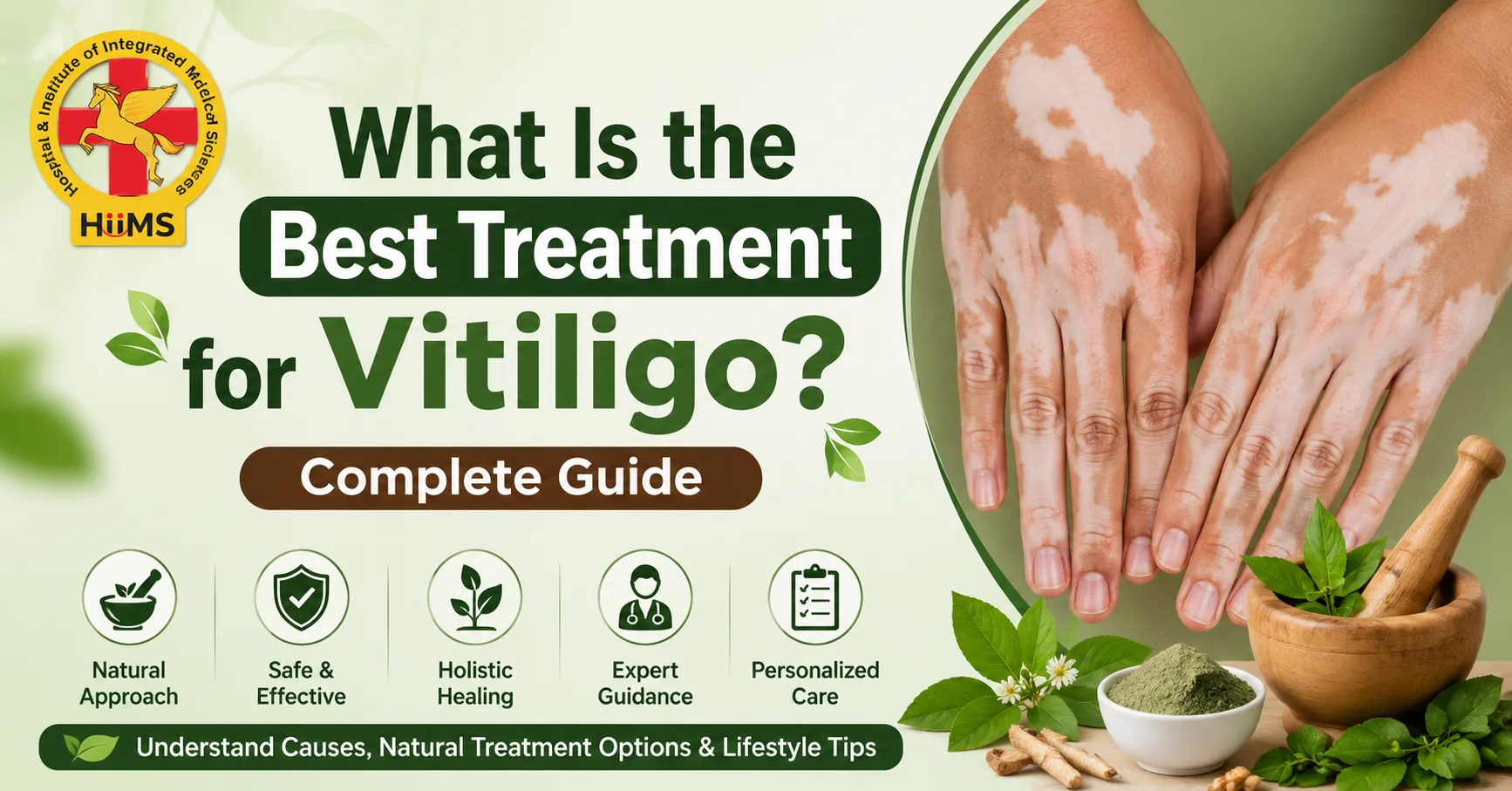
Vitiligo is a skin condition in which certain areas of the skin lose their natural colour, leading to white or lighter patches. It can affect people of any age and may appear on the face, hands, feet, arms, legs, or other parts of the body. Although vitiligo is not generally contagious, its visible appearance can affect confidence and emotional well-being.
Finding the right approach to vitiligo requires understanding its possible causes, identifying individual triggers, and following a consistent care plan. This complete guide explains vitiligo, its symptoms, contributing factors and vitiligo treatment approaches, and lifestyle considerations, with a focus on the holistic care approach followed at Jeena Sikho HiiMS.
What Is Vitiligo?
Vitiligo is a condition associated with the loss or reduced functioning of pigment-producing cells called melanocytes. When these cells do not produce enough melanin, certain areas of the skin can become noticeably lighter.
Vitiligo may develop gradually or become visible over a relatively short period. The extent and progression can vary considerably from one person to another. Some individuals may have a few small patches, while others may experience more widespread depigmentation.
Vitiligo can sometimes remain stable for long periods, while in other cases new patches may develop.
What Are the Common Symptoms of Vitiligo?
The most noticeable sign of vitiligo is the appearance of lighter or white patches on the skin. Common features may include:
- Pale or white patches with clearly noticeable borders
- Loss of colour around the mouth, eyes, nose, or other facial areas
- Changes in skin colour on the hands, fingers, elbows, knees, or feet
- Premature whitening or greying of hair in some individuals
- Loss of colour in areas affected by repeated friction or minor skin injury
- Changes involving areas such as the lips or inside of the mouth in some cases
Vitiligo generally does not cause significant pain, although some people may experience itching before or during the development of a new patch.
What Causes Vitiligo?
The exact cause of vitiligo is not completely understood. Several factors may contribute to its development or progression. These can include changes involving pigment-producing cells, immune-related processes, genetic susceptibility, oxidative stress, and environmental influences.
Some people may also notice changes following physical or emotional stress, skin injuries, or other triggers. However, triggers can differ from person to person.
Because there is no single cause that explains every case, understanding an individual's overall health, lifestyle, nutrition, digestion, stress levels, and skin history can be an important part of developing a personalised care plan.
Is Vitiligo Curable?
Vitiligo can be a long-term condition, and the response to care varies from person to person. Some individuals may experience stabilisation of existing patches, while others may notice gradual changes in pigmentation.
There is no universal treatment that works identically for everyone. The outcome can depend on factors such as the type and extent of vitiligo, duration of the condition, location of patches, overall health, and consistency with the recommended care plan.
Therefore, it is important to avoid unrealistic claims about instant or guaranteed recovery. A qualified healthcare professional should assess the condition and guide an appropriate approach.
What Is the Best Treatment for Vitiligo?
The best approach to vitiligo is generally one that is personalised according to the individual's condition rather than relying on a single remedy.
At Jeena Sikho HiiMS, the approach to health care focuses on understanding the individual as a whole. Depending on the person's health profile, the care plan may consider diet, daily routine, digestion, lifestyle habits, stress management, and overall wellness along with specific support for the skin condition.
The goal is to develop a structured and individualised plan rather than treating every person with the same routine.
Ayurvedic Approach to Vitiligo Care
Ayurveda considers skin health in relation to the body's overall balance, nutrition, digestion, lifestyle, and individual constitution. In Ayurvedic care, skin-related concerns may be assessed from a broader perspective rather than focusing only on the visible patches.
At Jeena Sikho HiiMS, Ayurvedic care may be personalised according to an individual's health requirements. The approach can include appropriate dietary guidance, lifestyle recommendations, internal wellness support, and other traditional Ayurvedic measures when considered suitable by qualified practitioners.
Treatment should always be personalised rather than self-prescribed, particularly when herbal preparations or specialised procedures are involved.
Importance of Diet in Vitiligo Management
A balanced diet can support overall skin and body health. Although food alone should not be considered a guaranteed cure for vitiligo, maintaining adequate nutrition is an important part of general wellness.
A healthy dietary pattern may include:
- Fresh seasonal fruits and vegetables
- Adequate sources of protein
- Whole grains and fibre-rich foods
- Appropriate healthy fats
- Sufficient water throughout the day
- Nutrient-rich foods selected according to individual needs
Highly processed foods, excessive sugary foods, and irregular eating habits may be reduced as part of a healthier lifestyle.
If nutritional deficiencies are suspected, appropriate assessment can help determine whether dietary changes or supplementation are required.
Can Stress Affect Vitiligo?
Stress does not necessarily cause vitiligo, but emotional and physical stress may influence overall health and can be associated with changes in some individuals.
Practising stress-management techniques can therefore be useful as part of a comprehensive wellness routine. Activities such as meditation, breathing exercises, yoga, adequate sleep, spending time outdoors, and maintaining a regular daily schedule may support emotional well-being.
Managing stress should complement professional care rather than replace it.
Lifestyle Tips for People With Vitiligo
A consistent lifestyle can help support overall health while managing vitiligo. Consider the following habits:
- Maintain a regular sleep schedule.
- Eat fresh and balanced meals.
- Stay physically active according to your capacity.
- Practise relaxation or mindfulness techniques.
- Avoid unnecessary skin irritation and repeated friction.
- Follow professional skin-care recommendations.
- Protect depigmented skin from excessive sun exposure.
- Avoid frequently changing treatments without professional guidance.
- Monitor changes in existing patches and the appearance of new ones.
Why Personalised Care Matters?
Vitiligo can differ significantly between individuals. Two people with apparently similar patches may have different patterns, durations, triggers, and responses to care.
For this reason, a personalised assessment can be more useful than following generic internet remedies. At Jeena Sikho HiiMS, individual health factors can be considered while developing a suitable wellness and care plan.
Patients should also share information about previous treatments, supplements, allergies, dietary habits, existing health concerns, and changes in their skin condition so that care can be planned appropriately.
When Should You Consult a Professional?
You should consider professional evaluation when you notice new white patches, rapidly changing pigmentation, widespread depigmentation, or uncertainty about whether a patch is actually vitiligo.
Early assessment can help distinguish vitiligo from other conditions that may cause changes in skin colour. A professional can also assess the pattern and extent of the condition and provide appropriate guidance.
Avoid using strong or unknown preparations on the skin without professional advice, as inappropriate products may cause irritation or make the skin more sensitive.
Final Thoughts
The best treatment for vitiligo depends on the individual's condition, pattern of pigmentation loss, lifestyle, nutritional status, and overall health. Rather than looking for a single instant solution, long-term and consistent care can be a more practical approach.
Jeena Sikho HiiMS focuses on personalised health care and an Ayurvedic approach that considers the individual as a whole. Along with professional guidance, maintaining a balanced diet, healthy routine, adequate sleep, stress management, and proper skin care can support overall well-being.
If you notice changes in skin pigmentation, seek an appropriate evaluation and follow a care plan suited to your individual needs. Vitiligo can be managed with patience, consistency, and informed professional guidance.