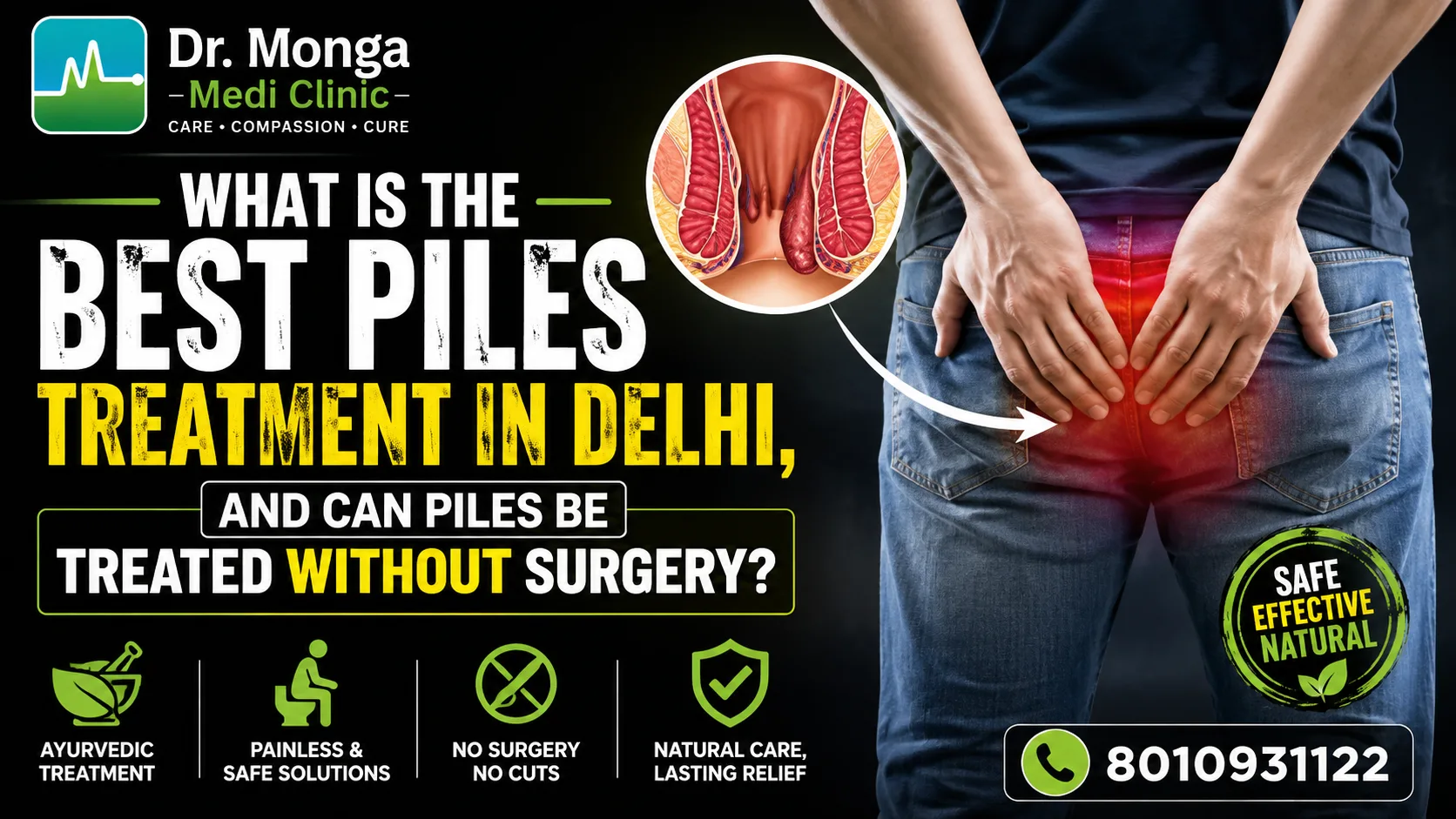
Piles, also known as hemorrhoids, are swollen and inflamed blood vessels around the anus or lower rectum. They are a common condition that can cause symptoms such as bleeding during bowel movements, pain, itching, irritation, swelling, or a feeling of discomfort while sitting.
For people searching for the best piles treatment in Delhi, the most important question is not simply which treatment is the best, but which treatment is appropriate for their type and severity of piles. Early-stage piles can often be managed with lifestyle changes, medicines, and appropriate non-surgical treatment, while advanced cases may require a different approach.
At Dr. Monga Medi Clinic, patients can receive an assessment based on their symptoms and condition to understand suitable treatment options for piles.
What Causes Piles?
Piles can develop when increased pressure is placed on the blood vessels in the lower rectum and anus. Several factors can contribute to this pressure, including:
- Chronic constipation
- Straining during bowel movements
- Sitting on the toilet for a long time
- A low-fibre diet
- Insufficient water intake
- Prolonged sitting or a sedentary lifestyle
- Pregnancy
- Repeated episodes of diarrhoea
- Obesity or being overweight
- Heavy lifting in some individuals
Identifying and managing these contributing factors is an important part of effective piles management.
What Are the Common Symptoms of Piles?
Piles can cause different symptoms depending on whether they are internal or external and how advanced they are.
Common symptoms include:
- Bright-red bleeding during or after passing stool
- Pain or discomfort around the anus
- Itching or irritation
- Swelling around the anal area
- A lump or tissue protruding from the anus
- Difficulty or discomfort while sitting
- Mucus or irritation around the anal region
Rectal bleeding should not automatically be assumed to be caused by piles. Other conditions can also cause bleeding, so persistent or unexplained symptoms should be evaluated by a qualified healthcare professional.
Can Piles Be Treated Without Surgery?
Yes, piles treatment in Delhi without surgery may be possible in many cases, particularly when the condition is identified at an early or moderate stage.
The appropriate treatment depends on the type, grade, symptoms, and overall health of the patient. Non-surgical management may include dietary changes, improving bowel habits, medicines where appropriate, and other conservative or minimally invasive approaches depending on the individual case.
Some commonly recommended measures include:
1. Increase Fibre Intake
A fibre-rich diet can help make stools softer and easier to pass. Fruits, vegetables, whole grains, legumes, and other fibre-containing foods can be included as part of a balanced diet.
2. Drink Enough Water
Adequate fluid intake can support softer stools and may help reduce constipation. However, individual fluid requirements can vary depending on age, activity level, and health conditions.
3. Avoid Straining
Excessive straining during bowel movements can increase pressure on hemorrhoidal blood vessels. Avoid spending unnecessary time on the toilet and respond to the body's natural urge to pass stool.
4. Maintain Regular Physical Activity
Regular movement and exercise can support healthy bowel function and help prevent constipation. Even simple activities such as walking can be useful for people with sedentary routines.
5. Follow Appropriate Medical Treatment
Depending on the symptoms and diagnosis, a doctor may recommend medicines or other treatment approaches. Self-medicating for persistent bleeding or pain is not advisable because similar symptoms can occur with other conditions.
Which Piles Treatment Is Suitable for You?
There is no single treatment that is the best piles treatment in Delhi for every patient. Treatment selection should depend on factors such as:
- Grade or severity of piles
- Duration of symptoms
- Presence and amount of bleeding
- Pain or swelling
- Whether piles are internal or external
- Whether the piles prolapse
- Previous treatment history
- Other digestive or bowel-related problems
For this reason, an evaluation is important before deciding on a treatment plan.
Why Early Treatment of Piles Matters
Many people ignore piles because the symptoms may initially be mild or occasional. However, repeatedly ignoring bleeding, pain, constipation, or a protruding lump can allow the problem to persist or worsen.
Early evaluation can help identify the cause of symptoms and determine whether conservative treatment is appropriate. It can also help rule out other conditions that may produce similar symptoms.
If symptoms continue despite dietary and lifestyle changes, professional medical evaluation becomes particularly important.
Piles Treatment in Delhi at Dr. Monga Medi Clinic
People looking for piles treatment in Delhi often want an approach that is focused on their symptoms, condition, and preference for avoiding unnecessary procedures.
Dr. Monga Medi Clinic provides consultation and treatment guidance for patients experiencing piles and related digestive or bowel concerns. The treatment approach can be planned after understanding the patient's symptoms and evaluating the condition.
For patients specifically looking for piles treatment in Delhi without surgery, discussing the condition with a qualified doctor can help determine whether non-surgical management is suitable for their particular case.
The goal should always be to select an appropriate treatment rather than choosing a procedure simply because it is advertised as the fastest option.
When Should You See a Doctor for Piles?
You should consider medical evaluation if you experience:
- Repeated rectal bleeding
- Persistent or severe anal pain
- A lump that does not improve
- Piles that repeatedly protrude
- Symptoms that continue despite lifestyle changes
- Significant changes in bowel habits
- Unexplained weight loss along with bowel symptoms
- Heavy or persistent bleeding
Sudden severe pain or significant bleeding requires prompt medical attention.
Frequently Asked Questions
Is piles treatment possible without surgery?
In many cases, particularly early or moderate piles, symptoms can be managed without conventional surgery. However, treatment depends on the grade, type, and severity of the condition.
What is the best treatment for piles?
The best treatment varies from person to person. A proper assessment can help determine whether lifestyle changes, medicines, non-surgical treatment, or another approach is appropriate.
Can piles go away on their own?
Mild piles may improve when constipation, straining, and other contributing factors are addressed. Persistent or recurring symptoms should be evaluated rather than repeatedly ignored.
Is bleeding always caused by piles?
No. Rectal bleeding can have several causes. If bleeding is recurrent, heavy, unexplained, or associated with other concerning symptoms, medical evaluation is important.
Final Takeaway
If you are searching for the best piles treatment in Delhi, focus on finding an appropriate treatment plan rather than simply looking for a quick solution. Piles can range from mild symptoms that respond to lifestyle measures to more advanced conditions requiring specialized treatment.
For people interested in piles treatment in Delhi without surgery, early assessment may help determine whether a non-surgical approach is suitable. Dr. Monga Medi Clinic can provide consultation and personalized treatment guidance based on the patient's symptoms and condition.
Do not ignore recurrent bleeding, persistent pain, or a protruding lump. Getting the condition evaluated can help you understand the cause and choose the right treatment approach.