Fatty liver is becoming increasingly common due to unhealthy eating habits, lack of physical activity, obesity, diabetes, high cholesterol and other lifestyle-related factors. In this condition, excess fat builds up in the liver. Many people do not experience noticeable symptoms in the early stages, which is why fatty liver is often detected during a routine ultrasound or health check-up.
Timely attention to fatty liver is important because early lifestyle changes and appropriate medical guidance can help manage the condition and support better liver health. Ayurvedic treatment for fatty liver may be considered as part of a personalized approach that focuses on diet, digestion, lifestyle and overall well-being.
At Dr. Monga Medi Clinic, Ayurvedic care is planned according to the individual's health condition, symptoms, medical history and lifestyle.
What Is Fatty Liver?
The liver normally contains a small amount of fat. When the amount of fat becomes excessive, it is known as fatty liver or hepatic steatosis.
Fatty liver can develop due to several factors, including excess body weight, insulin resistance, diabetes, high cholesterol, unhealthy eating habits, physical inactivity and alcohol consumption. Some medications and other medical conditions can also contribute to fat accumulation in the liver.
Fatty liver does not always cause symptoms, so a person may have it without realizing it. When symptoms do occur, they can include tiredness, indigestion, bloating or discomfort in the upper-right side of the abdomen. These symptoms can have many other causes, so proper evaluation is important.
What Does Grade 1 Fatty Liver Mean?
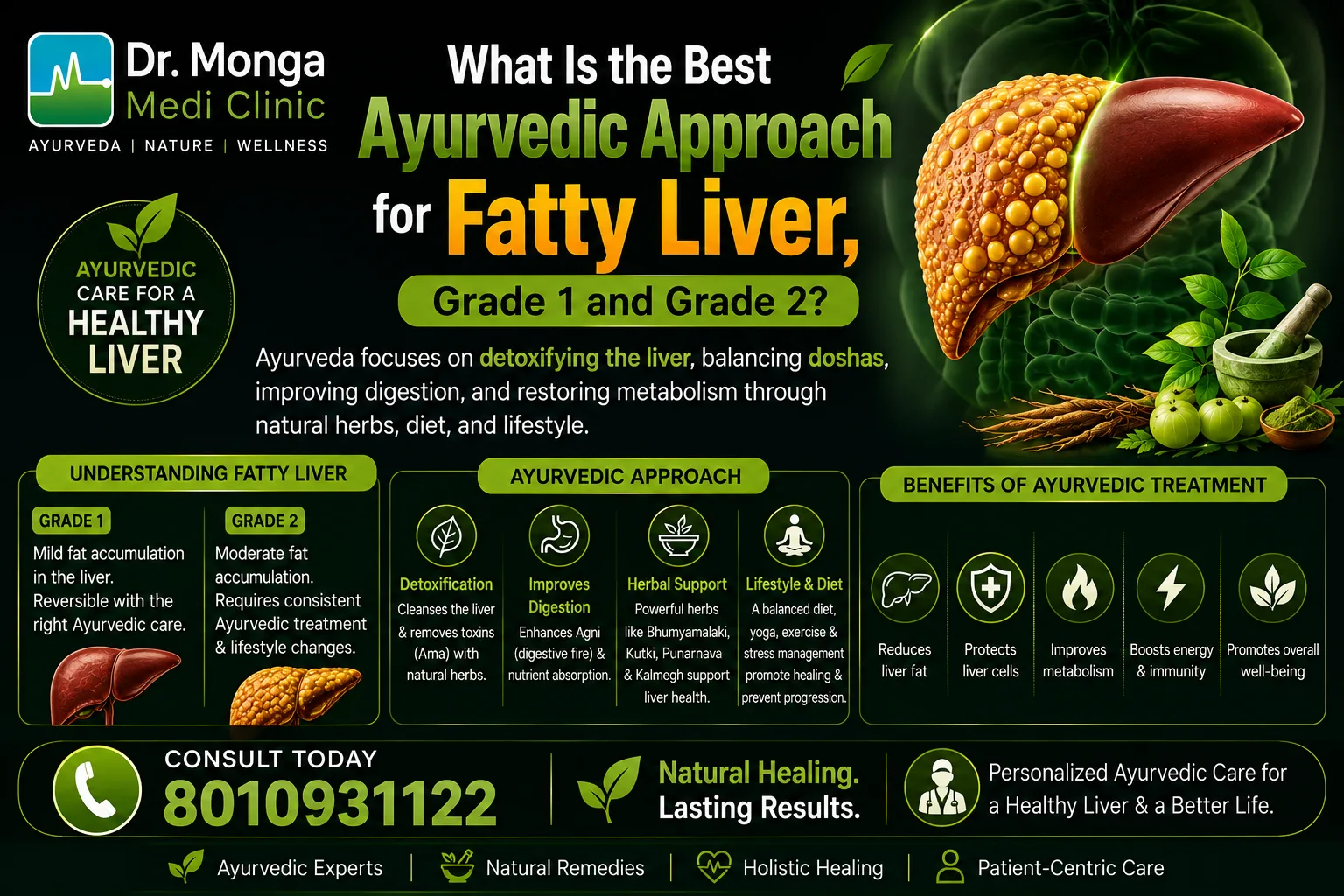
Grade 1 fatty liver generally refers to mild fat accumulation in the liver. It is often detected through an abdominal ultrasound, sometimes when the person is being tested for another health concern.
At this stage, many people have no specific symptoms. However, grade 1 fatty liver should not simply be ignored. It can be an opportunity to identify and address factors such as excess weight, poor diet, diabetes, high cholesterol and lack of exercise.
Improving dietary habits, increasing physical activity and achieving gradual weight management when appropriate can help support liver health.
What Does Fatty Liver Grade 2 Mean?
Fatty liver grade 2 indicates a greater degree of fat accumulation compared with grade 1. Although ultrasound grading describes the amount of fat seen on imaging, it does not by itself tell whether there is liver inflammation or fibrosis.
People diagnosed with grade 2 fatty liver should discuss their report with a qualified healthcare professional. Depending on their symptoms and risk factors, additional tests such as liver function tests, blood sugar testing, lipid profile or other assessments may be recommended.
Grade 2 fatty liver should be taken seriously, particularly when it occurs along with obesity, diabetes, high cholesterol or other metabolic conditions.
What Causes Fatty Liver?
Fatty liver can have several causes and risk factors. Some of the most common include:
- Being overweight or having excess abdominal fat
- Lack of regular physical activity
- Frequent consumption of processed or high-sugar foods
- Diabetes and insulin resistance
- High cholesterol or triglyceride levels
- Excessive alcohol consumption
- Certain medications or medical conditions
In many people, lifestyle and metabolic factors play an important role. Identifying these factors is an important part of managing fatty liver.
What Is Ayurvedic Treatment for Fatty Liver?
Ayurvedic treatment for fatty liver generally follows an individualized and holistic approach. The focus may include improving dietary habits, supporting healthy digestion and metabolism, encouraging an appropriate daily routine and addressing lifestyle factors associated with liver health.
At Dr. Monga Medi Clinic, Ayurvedic consultation may involve understanding the patient's health history, food habits, lifestyle, symptoms and existing health conditions before recommending an appropriate care plan.
Depending on the individual's needs, the overall approach may include:
- Personalized dietary guidance
- Healthy lifestyle and daily routine recommendations
- Guidance for regular physical activity
- Support for healthy digestion and metabolism
- Weight-management guidance where appropriate
- Personalized Ayurvedic care based on the individual's condition
Ayurvedic treatment should be personalized rather than using the same remedy for everyone. People should also avoid starting herbal or Ayurvedic medicines on their own, particularly if they have existing liver disease or are taking other medications.
How Does Diet Help Manage Fatty Liver?
Diet plays an important role in overall liver health. A balanced eating pattern can include vegetables, whole grains, pulses, appropriate portions of fruits, lean protein and healthy sources of fat.
It is generally helpful to reduce excessive intake of:
- Sugary drinks and packaged beverages
- Sweets and foods high in added sugar
- Highly processed foods
- Excessively fried foods
- Large portions of refined carbohydrates
- Excess calories that contribute to weight gain
If a person is overweight, gradual and sustainable weight loss may help reduce liver fat. Crash diets and extreme fasting should be avoided unless recommended and supervised by a healthcare professional.
Why Is Exercise Important for Fatty Liver?
Regular physical activity can support weight management, metabolic health and overall liver health. Activities such as brisk walking, cycling, swimming or other suitable forms of exercise can be included according to an individual's fitness level and health condition.
Even when significant weight loss does not occur, regular physical activity can still be beneficial for metabolic health.
People who have diabetes, heart disease, severe obesity or other health concerns should discuss an appropriate exercise routine with their healthcare professional.
When Should You Consult a Doctor for Fatty Liver?
Fatty liver may remain silent for a long time, so professional advice is particularly important when an ultrasound shows fatty liver or when liver-related blood tests are abnormal.
Consult a healthcare professional if you have:
- A report showing grade 1 or grade 2 fatty liver
- Abnormal liver function tests
- Diabetes or high blood sugar
- High cholesterol or triglycerides
- Excess body weight
- Persistent digestive symptoms
- A history of regular alcohol consumption
Urgent medical attention is required for concerning symptoms such as yellowing of the skin or eyes, severe abdominal swelling, vomiting blood, confusion or significant deterioration in health.
Why Choose Dr. Monga Medi Clinic for Ayurvedic Fatty Liver Care?
Dr. Monga Medi Clinic provides personalized Ayurvedic consultation for fatty liver and related digestive and lifestyle concerns. The approach focuses on understanding the individual's condition rather than following a one-size-fits-all treatment plan.
Whether you have grade 1 fatty liver, fatty liver grade 2, or have recently discovered fatty liver during an ultrasound, proper assessment can help you understand the condition and take appropriate steps for better liver health.
Ayurvedic care may be used as part of a broader health-management plan that includes appropriate medical evaluation, healthy nutrition, regular physical activity and lifestyle changes.
Conclusion
Fatty liver is a common condition that should not be ignored, even when there are no noticeable symptoms. Grade 1 fatty liver represents an earlier stage of fat accumulation, while fatty liver grade 2 indicates a greater degree of fat accumulation and may require closer evaluation depending on the individual's risk factors.
A healthy diet, regular physical activity, weight management and professional guidance are important parts of fatty liver management. Ayurvedic treatment for fatty liver may offer a personalized approach focused on diet, digestion, lifestyle and overall health.
If you have been diagnosed with fatty liver, consult a qualified healthcare professional to understand your condition and determine an appropriate care plan.
Dr. Monga Medi Clinic offers personalized Ayurvedic consultation and guidance for fatty liver and related digestive health concerns. Book a consultation to discuss your condition and receive guidance based on your individual health needs.
Frequently Asked Questions (FAQs)
1. What is the best Ayurvedic treatment for fatty liver?
Ayurvedic care may focus on personalized diet, digestion, lifestyle, weight management and overall liver health. Treatment should be based on individual needs.
2. Is grade 1 fatty liver reversible?
Yes, grade 1 fatty liver can often improve with healthy diet, regular exercise, gradual weight management and proper medical guidance.
3. Is fatty liver grade 2 serious?
Grade 2 indicates more fat accumulation than grade 1. It should be evaluated properly, especially if diabetes, obesity or abnormal liver tests are also present.
4. What should I eat with fatty liver?
Choose vegetables, whole grains, pulses, lean protein and appropriate portions of fruit. Limit sugary drinks, processed foods, excess sweets and fried foods.
5. Does Ayurvedic treatment help with fatty liver?
Ayurvedic treatment may support overall liver health through personalized dietary, lifestyle and treatment guidance. It should not replace necessary medical evaluation.