Think about the last time you needed a product or service. Maybe you were looking for a restaurant nearby, a digital marketing agency, or a reliable interior designer. What was the first thing you did?
Most likely, you searched on Google.
- Now imagine someone searching for exactly what your business offers, but your website doesn't appear in the search results. Instead, they find your competitors.
- That's where Search Engine Optimisation (SEO) makes a difference.
- SEO helps your business become more visible online, reach people who are already looking for your services, and turn website visitors into potential customers.
- Whether you run a small local business or a growing company, understanding SEO can help you build a stronger online presence.
What Is Search Engine Optimization?
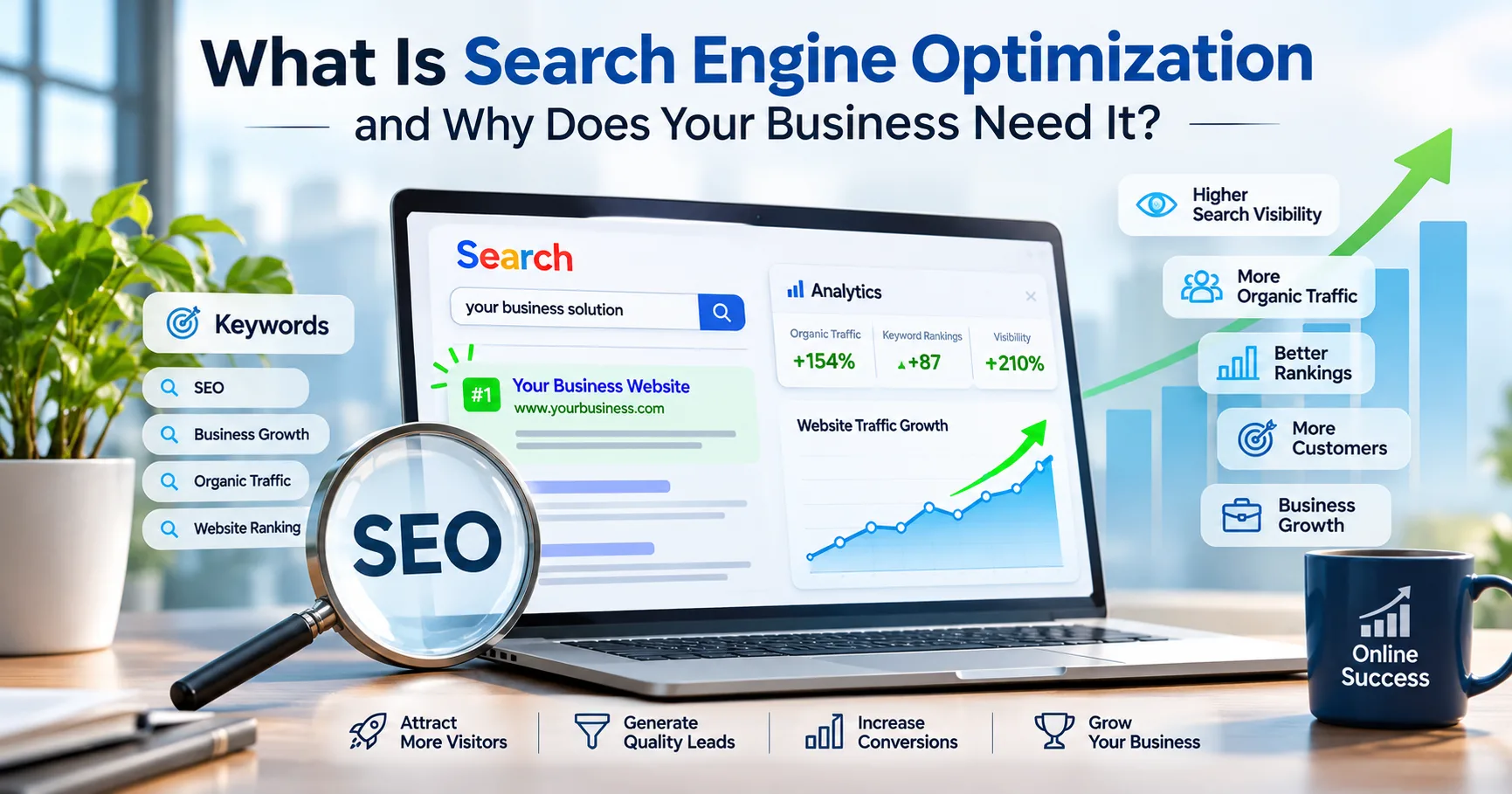
- Search Engine Optimization, commonly known as SEO, is the process of improving your website so that it can appear more prominently in search engine results.
- In simple terms, SEO helps people find your business when they search for something related to your products or services.
- For example, imagine you own an interior design company in Bangalore.
- When someone searches for "interior designers in Bangalore" or "modular kitchen designers near me," you would want your website to appear among the relevant results.
- SEO helps improve your chances of being discovered through these searches.
- Unlike Google Ads, where businesses pay for advertising placements, SEO focuses on bringing visitors to your website through organic search results.
- You don't pay Google for every organic click, but achieving good results requires consistent work, useful content, and proper website optimization.
How Does SEO Actually Work?
- Google wants to show users information that is relevant, useful, and trustworthy.
- When someone types a question into Google, its systems evaluate available web pages to identify results that may best answer the search.
- SEO helps your website communicate what your business offers and why your content is useful.
- Here are three important parts of the process.
1. Crawling
- Google uses automated programs to discover pages across the internet.
- These programs follow links and explore websites to find new or updated content.
- If your website has a clear structure and working links, it becomes easier for search engines to discover your pages.
2. Indexing
- After discovering a page, Google may analyze its content and add it to its search index.
- This is why your website should have clear headings, meaningful content, and proper technical settings.
3. Ranking
- When someone searches for a keyword, Google evaluates relevant pages and decides which results to display.
- Your website's relevance, content quality, usability, and other factors can influence its search visibility.
- SEO focuses on improving these areas so your website has a better opportunity to reach the right audience.
Why Does Your Business Need SEO?
- Having a website is important, but a website alone doesn't guarantee customers will find you.
- Your potential customers are searching online every day. The question is whether they're discovering your business or someone else's.
- Here are some reasons SEO matters for business growth.
1. Your Customers Are Already Searching for You
- People often turn to Google when they need something.
- They search for nearby hospitals, restaurants, fitness centres, marketing agencies, and almost every other type of service.
- For example, someone searching for "best digital marketing agency in Bangalore" may already be interested in hiring an agency.
- If your website provides useful information about your services, SEO can help you connect with people who have a genuine interest in what you offer.
- Instead of reaching random audiences, you're attracting people who are already looking for a solution.
2. SEO Helps Build Trust in Your Business
- Imagine searching for a service and finding a company that has a professional website, helpful articles, clear service information, and genuine customer reviews.
- You would probably feel more comfortable exploring that business.
- SEO supports this process by encouraging businesses to create useful content and improve their websites.
- When customers can easily find answers to their questions, they have more opportunities to understand your business before contacting you.
- Over time, this can help build familiarity and trust.
3. It Can Bring Visitors Without Paying for Every Click
- Paid advertising can be effective, especially when you want to reach potential customers quickly.
- However, advertising traffic generally depends on how long your campaigns remain active.
- SEO works differently.
- A helpful blog or well-optimized service page may continue attracting visitors through organic search over time.
- For example, a blog answering "How much does interior design cost in Bangalore?" could attract people researching interior design services.
- Some of those readers may eventually become customers.
- SEO still requires an investment in content, technical improvements, and maintenance, but you aren't charged for each organic search click.
4. SEO Helps Small Businesses Compete Online
- You don't always need to be the biggest company in your industry to attract customers through Google.
- Small businesses can benefit by focusing on specific services, locations, and customer needs.
- For instance, a local supplement store in Sanjaynagar can optimize its website and Google Business Profile for searches such as "supplement store in Sanjaynagar."
- A nearby customer searching for that service may discover the business without already knowing its name.
- This is especially useful for businesses that depend on customers from a particular location.
5. SEO Can Support Better Quality Leads
- Getting thousands of website visitors sounds exciting, but traffic alone doesn't grow a business.
- What matters is attracting visitors who are genuinely interested in your products or services.
- Someone searching for "what is digital marketing" may simply be learning about the topic.
- But someone searching for "SEO services for small businesses in Bangalore" might be closer to choosing a service provider.
- A good SEO strategy considers these differences and creates content for people at different stages of their decision-making process.
- When the right visitors land on a useful page with a clear call to action, they're more likely to enquire about your services.
What Are the Different Types of SEO?
- SEO isn't just about adding keywords to your website.
- Several activities work together to improve your online visibility.
On-Page SEO
- On-page SEO involves improving the content and elements within your website.
- This includes writing useful content, creating clear headings, optimizing page titles, adding internal links, and using relevant keywords naturally.
- For example, if your business offers website development services, your service page should clearly explain what you offer, who it's for, and how customers can contact you.
- The goal is to make every page useful and easy to understand.
Off-Page SEO
- Off-page SEO focuses on activities outside your website that can contribute to its visibility and credibility.
- One important part is earning backlinks from relevant and trustworthy websites.
- When another website links to your useful article or resource, it can help people discover your content and may support your search performance.
- However, quality matters much more than collecting large numbers of unrelated links.
Technical SEO
- Technical SEO deals with how your website functions behind the scenes.
- Even excellent content can struggle if your website is difficult for search engines to access.
- Technical SEO includes improving page loading performance, making your website mobile-friendly, fixing broken links, and ensuring important pages are accessible.
- A technically healthy website also creates a smoother experience for visitors.
Local SEO
- Local SEO helps businesses reach customers searching within a specific area.
- For example, if you operate a hospital in Bangalore, appearing for relevant nearby healthcare searches could help patients discover your services.
- Local SEO includes maintaining an accurate Google Business Profile, displaying correct contact details, providing location-specific information, and collecting genuine customer reviews.
- For businesses with physical locations, local SEO can be especially valuable.
SEO vs Google Ads: What's the Difference?
- Many business owners wonder whether they should invest in SEO or Google Ads.
- The answer depends on their business goals.
- Google Ads allows businesses to display sponsored advertisements for selected searches. This can help generate visibility relatively quickly, but paid traffic generally stops when campaigns are paused.
- SEO, on the other hand, focuses on improving organic search visibility. It usually takes longer to develop, but useful and well-maintained content can continue attracting visitors over time.
- For example, if you're launching a new service and need immediate enquiries, Google Ads may help you reach potential customers.
- At the same time, investing in SEO can help your website build organic visibility for relevant searches.
- Rather than treating them as competitors, businesses can use both as part of a balanced digital marketing strategy.
How Long Does SEO Take to Show Results?
- This is one of the most common questions business owners ask.
- The answer is that SEO takes time, and results vary from one website to another.
- A new website entering a competitive industry may need more work than an established website that already has valuable content and a healthy technical foundation.
- Your results also depend on the keywords you're targeting, your competition, and how consistently your website is improved.
- Some changes may produce noticeable improvements relatively quickly. Other efforts may take several months or longer.
- It's important to understand that SEO isn't about getting your website to rank number one overnight.
- It's about making steady improvements that help your business become more discoverable to relevant audiences.
Common SEO Mistakes Businesses Should Avoid
- Sometimes, businesses put considerable effort into SEO but overlook simple issues that affect their progress.
- One common mistake is adding the same keyword repeatedly throughout a page, hoping it will improve rankings.
- However, content should be written for people first.
- Another mistake is publishing blogs that don't answer real customer questions. If your content doesn't provide useful information, visitors have little reason to stay on your website.
- Some businesses also ignore their website's mobile experience, even though many customers browse on smartphones.
- Poor navigation, slow-loading pages, and unclear contact information can make it difficult for visitors to take the next step.
- Successful SEO is not about using complicated tricks. It's about understanding your audience and creating a website that genuinely helps them.
How Can You Start Improving Your Website's SEO?
- You don't need to change everything on your website at once.
- Start by understanding what your potential customers are searching for.
- Think about the questions they ask, the problems they want to solve, and the words they use when looking for your services.
- Next, review your website.
- Does every important service have a dedicated page? Is your contact information easy to find? Does your content explain your offerings clearly?
- You can then begin creating helpful blog articles around relevant topics.
- For example, a digital marketing agency might publish blogs about local SEO, social media marketing, Google Ads, website development, and lead generation.
- Connecting these articles to relevant service pages through internal links can help readers explore your website.
- You should also use tools such as Google Search Console and Google Analytics to understand how people discover and interact with your content.
- The most important thing is consistency.
- SEO works best when it becomes part of your ongoing marketing efforts rather than a one-time activity.
Frequently Asked Questions About SEO
Is SEO necessary for every business?
SEO can be valuable for most businesses with an online presence, especially when potential customers use search engines to research their products or services.
Can a small business benefit from SEO?
Yes. Small businesses can use local SEO and relevant content to reach customers searching for specific services in their area.
Is SEO better than social media marketing?
Both serve different purposes. SEO helps people discover your business through search, while social media marketing can support brand awareness, engagement, and community building.
Can SEO guarantee first-page rankings?
No. Search engines use complex ranking systems, and no legitimate SEO agency can guarantee a particular organic ranking.
Do blogs help with SEO?
Yes, when they provide original, useful information that matches what people are searching for. Blogs can help answer customer questions and support your website's overall content strategy.
Final Thoughts
- Your customers are searching online, comparing businesses, reading reviews, and looking for answers before making decisions.
- If your business isn't easy to find, you could be missing opportunities to connect with those customers.
- That's why Search Engine Optimization matters.
- SEO helps you improve your website, reach relevant audiences, build credibility, and create opportunities for long-term growth.
- You don't need to understand every technical detail to get started. What matters is having a clear strategy, understanding your customers, and consistently improving your online presence.