
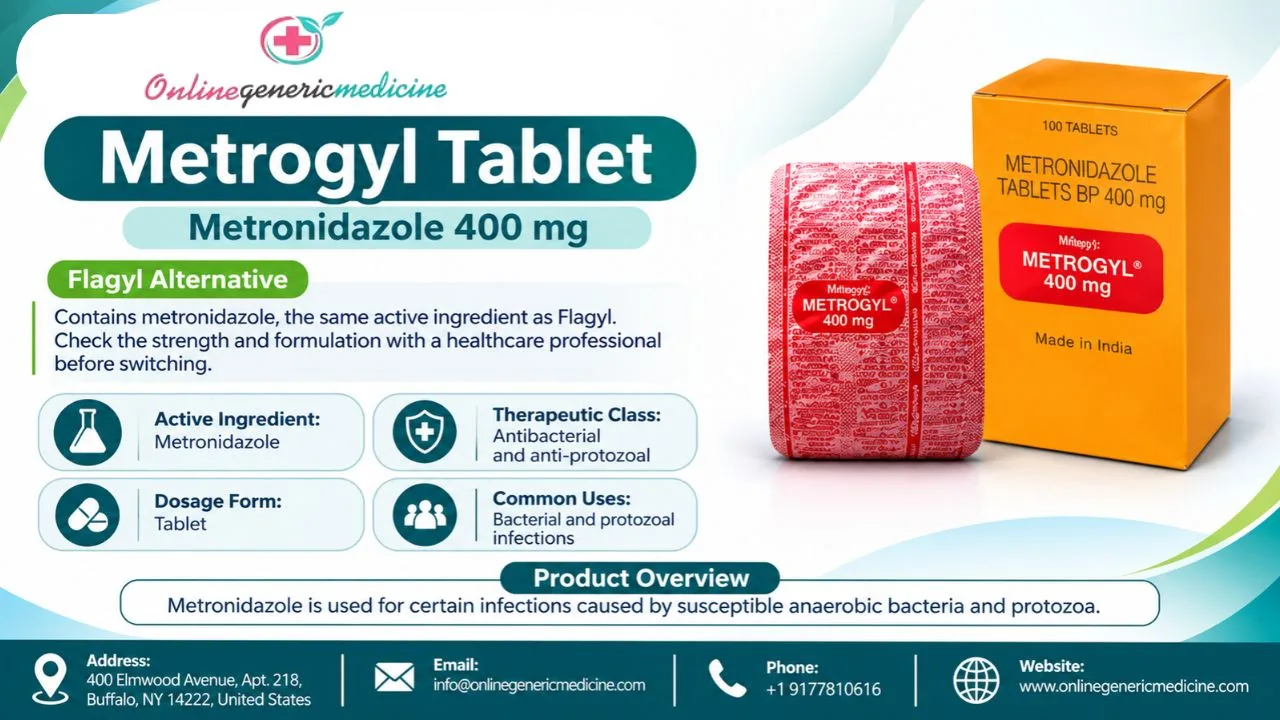
Infections caused by certain bacteria and parasites may affect different parts of the body, including the digestive system, reproductive system, and skin. Metrogyl Tablet is an antibiotic medicine prescribed for specific types of these infections.
If you have come across Metrogyl on a prescription or medicine label, understanding its active ingredient and how it works can help you become more familiar with the treatment.
What Is Metrogyl Tablet?
Metrogyl Tablet contains Metronidazole as its active ingredient. It belongs to a group of medicines called nitroimidazole antibiotics and also has antiprotozoal activity.
Metronidazole is available in different strengths, including 200 mg and 400 mg. The appropriate strength depends on the type of infection and the healthcare professional's prescription.
How Does Metrogyl Tablet Work?
Metronidazole works against certain bacteria and microscopic organisms called protozoa. It enters susceptible microorganisms and interferes with their DNA, preventing them from growing and multiplying.
This action makes it useful for treating selected infections caused by susceptible organisms. However, it does not work against viral infections such as the common cold or flu.
What Is Metrogyl Tablet Used For?
Depending on the diagnosis, a healthcare professional may prescribe metronidazole for certain infections, including:
- Anaerobic bacterial infections: Infections caused by bacteria that can grow without oxygen.
- Amoebiasis: An intestinal or other infection caused by the parasite Entamoeba histolytica.
- Giardiasis: An intestinal infection caused by the parasite Giardia.
- Trichomoniasis: A sexually transmitted infection caused by Trichomonas vaginalis.
- Bacterial vaginosis: A condition involving an imbalance of bacteria in the vagina.
- Certain dental infections: Some infections involving anaerobic bacteria may require metronidazole as part of treatment.
The medicine is prescribed according to the type of infection and the organisms involved. It should not be used without a proper diagnosis.
Important Things to Know Before Taking Metrogyl Tablet
Before starting treatment, discuss your medical history and current medicines with your healthcare professional.
- Follow the prescribed dose: Take Metrogyl exactly as directed.
- Complete the prescribed course: Do not stop treatment early unless your healthcare professional advises you to.
- Avoid alcohol: Do not consume alcohol during treatment. Ask your doctor or pharmacist how long to avoid it after the final dose.
- Discuss liver or nerve conditions: Inform your doctor if you have liver problems or a history of nervous system disorders.
- Check medicine interactions: Tell your healthcare professional about all medicines and supplements you take, particularly blood-thinning medicines such as warfarin.
- Mention pregnancy or breastfeeding: Seek medical advice before using metronidazole in these situations.
Possible Side Effects
Some people may experience side effects while taking Metrogyl Tablet. Commonly reported effects include:
- Nausea or vomiting.
- Metallic taste in the mouth.
- Loss of appetite.
- Stomach discomfort or diarrhoea.
- Headache or dizziness.
Contact your healthcare professional if these symptoms persist or become troublesome. Seek prompt medical attention if you experience severe allergic reactions, numbness or tingling, seizures, or unusual problems with coordination.
Final Thoughts
Metrogyl Tablet contains metronidazole, an antibiotic and antiprotozoal medicine used for selected bacterial and parasitic infections. Its suitability depends on the type of infection, the patient's medical history, and the prescribed strength.
Understanding the active ingredient and its role can help you become more familiar with your treatment. Always use Metrogyl under the guidance of a qualified healthcare professional.
For general information, visit Online Generic Medicine.


