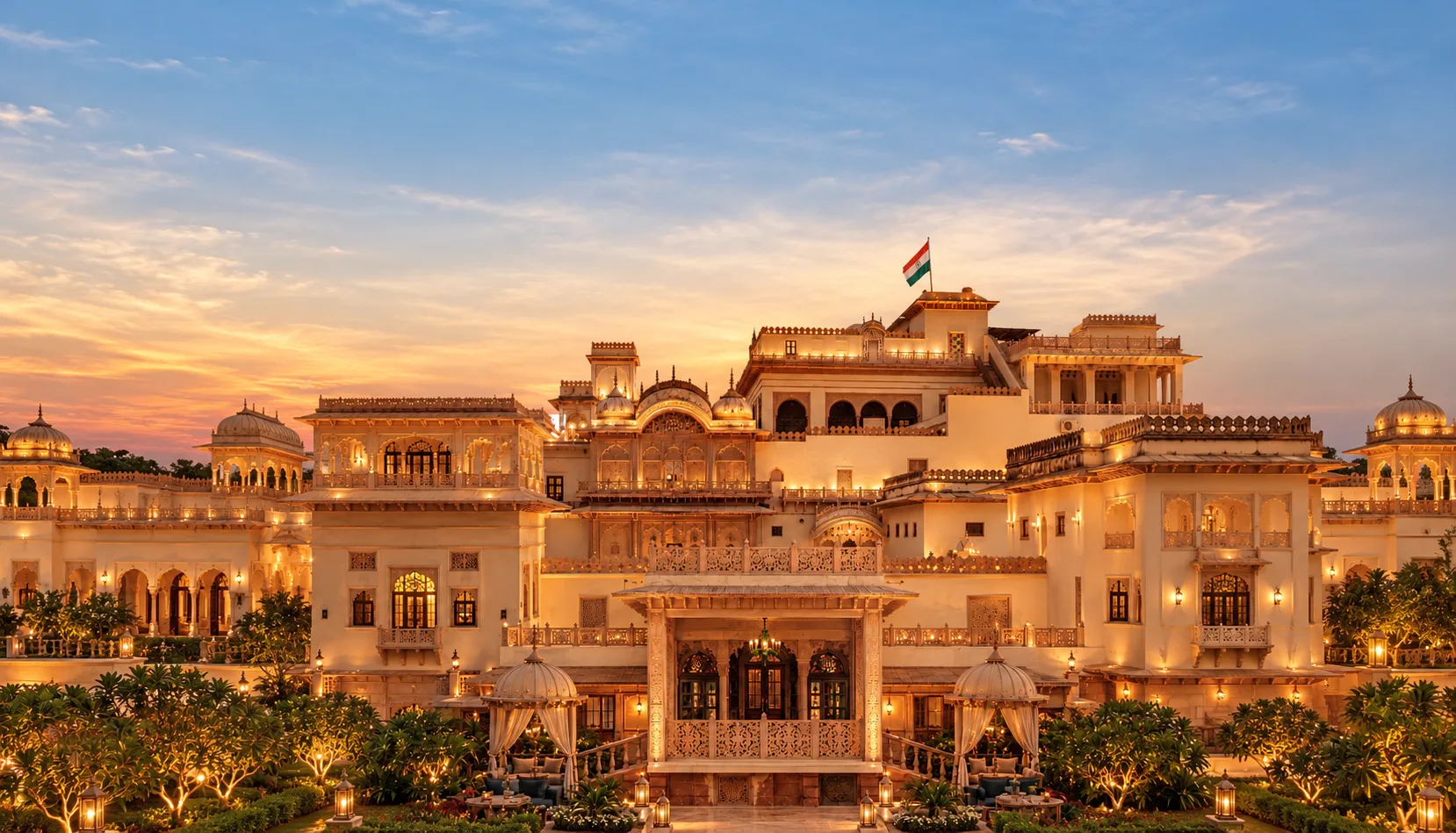
The Palace on Wheels is not simply a method of travelling between destinations. It is a moving hospitality experience in which private accommodation, dining and service remain with guests throughout a 7-night and 8-day journey.
For first-time travellers, the most common questions are not only about the route. They want to know what it feels like to sleep in a moving luxury train, how onboard meals work and how daily life transitions between sightseeing and relaxation.
Understanding this rhythm helps travellers decide whether the journey matches their expectations.
How Does a Typical Day Begin?
Life aboard the train follows the official itinerary. The time at which a day begins may depend on the destination and planned programme.
Guests generally need to prepare before leaving the train, so organising clothes and day bags the previous evening can make mornings more comfortable. Identification, medicines, a camera, comfortable footwear and sun protection should remain easy to access.
Breakfast and departure instructions should be followed according to the onboard schedule. Luxury does not remove the need for punctuality because the train and destination arrangements are coordinated for the complete group.
The exact daily programme should always be confirmed through official information supplied for the relevant departure.
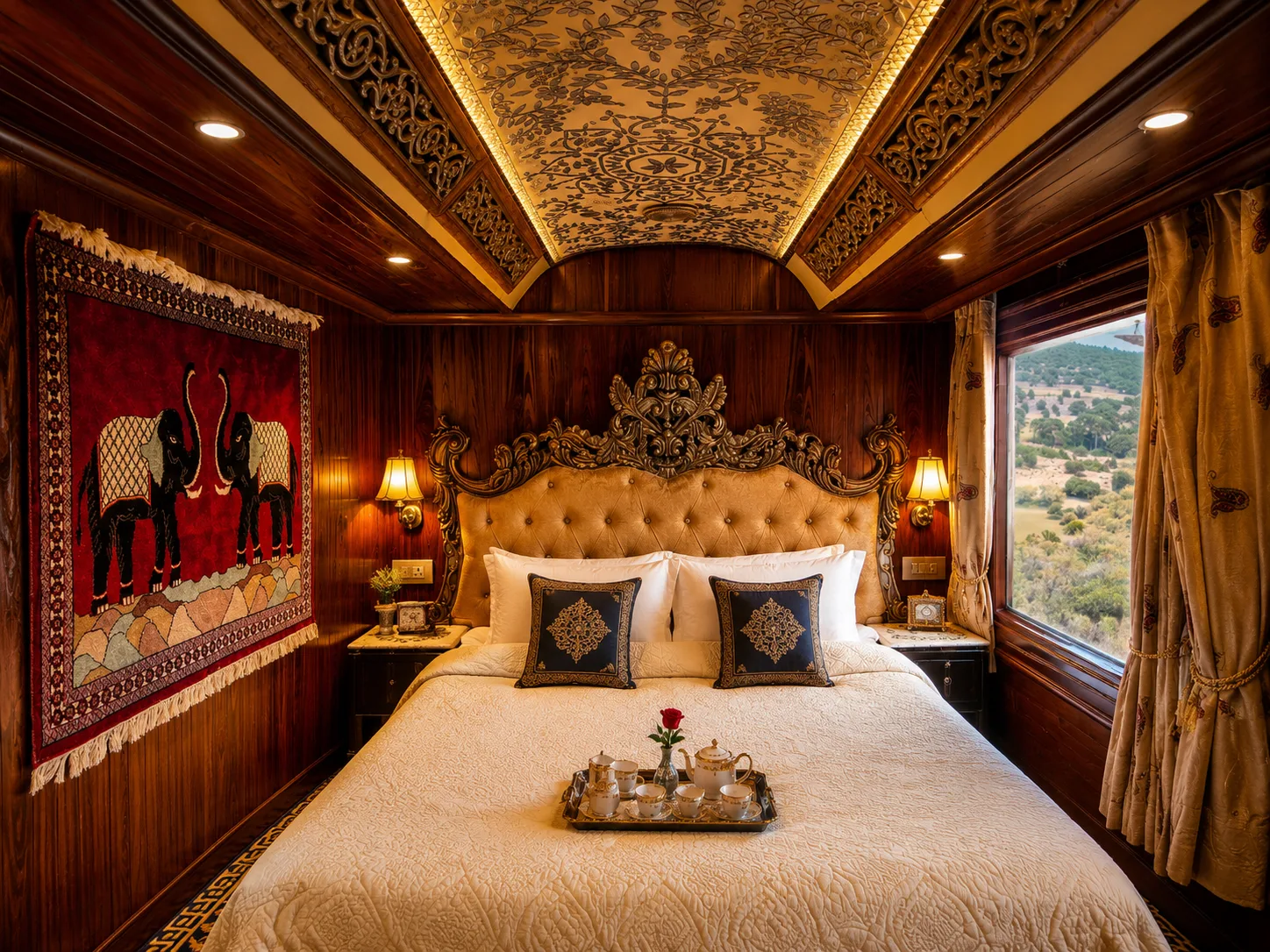
What Are the Cabins Like?
The Palace on Wheels provides 42 guest cabins divided among three accommodation categories:
- 39 Deluxe Cabins
- Two Super Deluxe Cabins
- One Presidential Suite coach
The categories offer different levels of space and experience. The Presidential Suite coach extends to approximately 240 square feet, creating a distinctive accommodation option for travellers seeking additional space and exclusivity.
Guests should review current official cabin descriptions, inclusions and occupancy information before selecting a category. Photographs are helpful, but the final choice should also consider budget, number of travellers and personal space requirements.
Someone evaluating a luxury train journey in India should treat the cabin as both transportation accommodation and a consistent private base throughout the trip.
Does Sleeping on a Luxury Train Feel Different?
Sleeping aboard a moving train naturally feels different from sleeping in a stationary hotel. Gentle motion and the sound of rail travel form part of the experience.
Some travellers may adapt immediately, while others need a little time during the first night. Keeping the cabin organised, following a familiar bedtime routine and avoiding excessive caffeine late in the day may help.
Guests who are sensitive sleepers can pack personal comfort items that do not create inconvenience or conflict with train policies.
The movement should be understood as part of the journey’s character rather than compared directly with a conventional hotel.
How Does Onboard Dining Work?
The Palace on Wheels has two restaurants: Swarn Mahal and Sheesh Mahal. Their names and interiors contribute to the royal identity of the train.
Dining onboard provides continuity. Guests can return from a destination experience and enjoy their meal without searching for a separate restaurant or reorganising transport.
The dining environment also gives travellers opportunities to discuss the day and interact with companions. Couples can review their favourite moments, families can share observations and individual travellers may meet other guests.
Meal schedules should be respected because they are connected with the wider itinerary. Any genuine dietary requirement should be communicated before the journey.
Why Are Swarn Mahal and Sheesh Mahal Important to the Experience?
On a conventional train, dining may be treated as a functional part of transportation. On the Palace on Wheels, the restaurants are an integral part of the hospitality experience.
Swarn Mahal and Sheesh Mahal give meals a defined setting rather than requiring guests to dine casually inside their cabins. This creates a natural distinction between private accommodation and shared onboard spaces.
Their royal-inspired character also supports the train’s larger identity. Guests continue to experience heritage-oriented hospitality even while travelling between destinations.
Travellers considering the best luxury train in India should therefore evaluate the onboard environment in addition to the route.
How Is Time Divided Between the Train and Destinations?
The Palace on Wheels combines two forms of travel: experiences outside the train and hospitality onboard.
Destination visits provide opportunities to engage with history, architecture and culture. Time aboard the train allows guests to rest, dine and prepare for what comes next.
This alternating rhythm is one of the journey’s defining characteristics. Guests do not need to check into a new hotel every day because their cabin moves with them.
The journey feels connected rather than divided into a series of separate bookings. This can reduce logistical stress, particularly for travellers who want to explore several destinations without managing repeated packing and hotel transfers.
Is There Enough Privacy Onboard?
Private cabins provide personal space within the train, while restaurants and shared areas create opportunities for social interaction.
Guests can decide how much they want to participate socially. Some may enjoy meeting other travellers during meals, while others may prefer to spend quieter periods with their partner or family.
Cabin size naturally differs from a large hotel room, so organisation matters. Travellers should bring practical luggage and keep frequently used belongings accessible.
The combination of private and shared environments allows guests to alternate between personal rest and collective experiences.
What Should Couples Expect?
Couples may appreciate the continuity of remaining in one cabin while experiencing several destinations. They can avoid repeated hotel transitions and use onboard time for conversation and relaxation.
A couple’s journey becomes more meaningful when the itinerary is not treated only as a photography checklist. Shared meals in Swarn Mahal and Sheesh Mahal, the changing view from the train and quieter moments between destinations can be equally memorable.
Couples celebrating a honeymoon, anniversary or personal milestone should communicate any specific request before booking and ask what arrangements are currently possible.
Is the Journey Suitable for Families?
Families may value the convenience of having one consistent accommodation base throughout the journey. Parents do not need to repack children’s belongings at every destination.
However, families should consider cabin occupancy, the children’s ages and their ability to follow a structured itinerary. The current booking rules and cabin suitability should be confirmed directly.
Parents can make the journey educational by encouraging children to maintain a travel diary, identify architectural differences and record one new fact from each day.
Children should be supervised aboard the moving train and during destination visits.
How Should Senior Travellers Prepare?
Senior travellers should review the pace of the current itinerary and consider walking requirements before booking.
Medicines, prescriptions and essential health information should remain organised. Any mobility or dietary requirement should be communicated in advance so that the official team can explain what assistance may be possible.
Senior guests may choose to use selected onboard periods for rest rather than trying to participate in every optional moment. The journey should be enjoyed according to personal comfort, not as a competition to complete every activity.
What Makes the Journey Feel Royal?
The royal character emerges from the combination of cabin design, onboard restaurants, hospitality and the heritage-oriented nature of the journey.
No single decorative feature creates the complete experience. Its identity develops across seven nights through accommodation, dining, service and the movement between destinations.
This continuity is why the train itself often becomes as memorable as the places visited.
Travellers exploring the best royal train in India should use the official website to understand current departures, cabin categories and reservation guidance.
Frequently Asked Questions
How many cabins are available aboard the Palace on Wheels?
The train has 42 guest cabins: 39 Deluxe Cabins, two Super Deluxe Cabins and a Presidential Suite coach.
What are the onboard restaurants called?
The Palace on Wheels has two restaurants named Swarn Mahal and Sheesh Mahal.
Do guests change hotels during the journey?
The private cabin remains the guest’s accommodation aboard the train, reducing the need for repeated hotel packing and check-in during the scheduled journey.
Is the Palace on Wheels suitable for first-time luxury train travellers?
Yes, but travellers should understand the structured itinerary, cabin environment and natural motion of a train before booking.
Where should travellers verify current journey information?
Current departures, tariffs, itinerary details and policies should be verified through the official Palace on Wheels website or its authorised official booking process.
Conclusion
Life aboard the Palace on Wheels combines the gentle rhythm of rail travel with private cabins, royal-inspired dining and organised destination experiences.
Guests wake, dine, explore and return to the same train as the journey progresses. This continuity makes the experience fundamentally different from a conventional multi-city holiday. For travellers who value both heritage and convenience, the time spent onboard can become just as significant as the destinations outside it.