
Businesses often have to wait weeks or even months to receive payment after selling goods or services. During this period, the business may still need money to pay employees, suppliers, rent, utilities, and other expenses. This can create a working capital gap, especially for MSMEs.
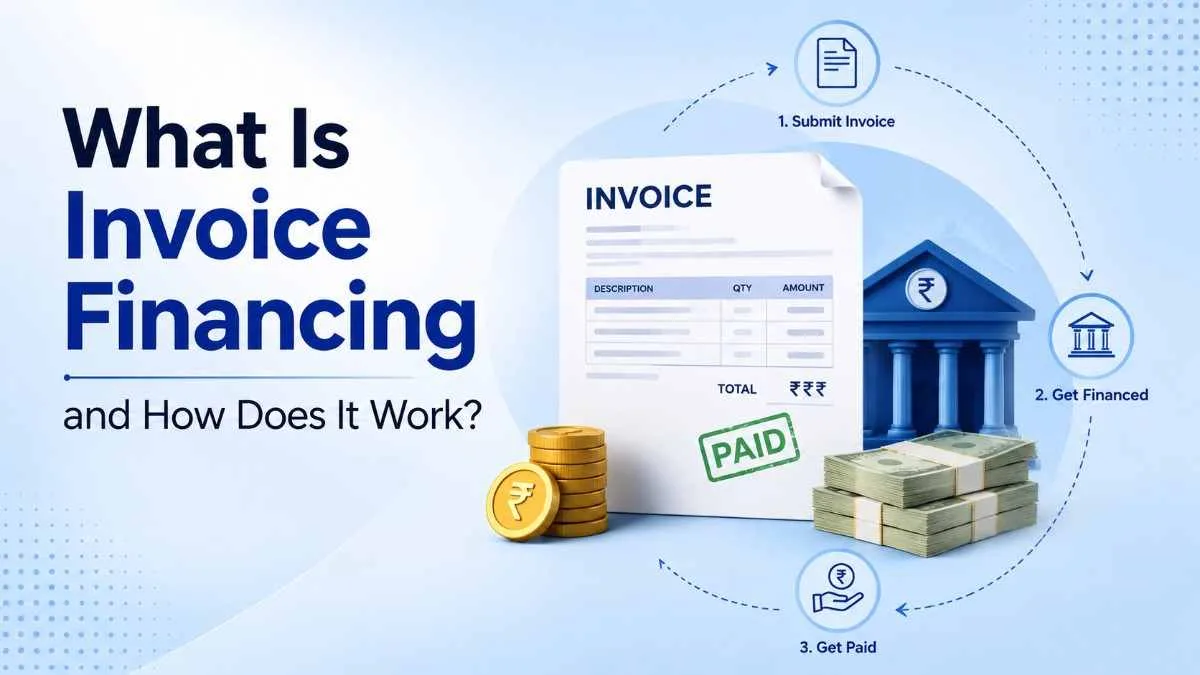
Invoice financing is one way businesses can manage this gap. It allows a business to raise funds against its unpaid invoices instead of waiting for customers to make payments.
In simple terms, invoice financing helps businesses turn their outstanding invoices into working capital.
What Is Invoice Financing?
Invoice financing is a funding method where a business uses its unpaid invoices to access funds before the customer pays the invoice.
For example, suppose an MSME supplies goods worth ₹5 lakh to a corporate buyer. The buyer agrees to pay after 60 days. Instead of waiting for 60 days, the MSME can use the eligible invoice to seek financing.
Once the invoice is financed, the business receives funds based on the value of the invoice, subject to the terms agreed with the financier. The business can then use the funds for its regular business requirements.
When the buyer makes the payment on the due date, the financier receives the amount according to the agreed process.
Invoice financing can therefore help businesses maintain cash flow while continuing to offer credit periods to their customers.
How Does Invoice Financing Work?
The process of invoice financing is fairly simple. The exact process can vary depending on the platform, financier, and type of financing.
1. Business supplies goods or services
The process starts when a business sells goods or provides services to a buyer. The business raises an invoice for the transaction.
The buyer may have an agreed payment period, such as 30, 60, or 90 days.
2. Invoice is submitted for financing
Instead of waiting until the invoice's due date, the seller can submit the eligible invoice for financing through a suitable platform or financier.
The invoice and transaction details may be reviewed before financing is offered.
3. Financier provides funds
If the invoice is accepted for financing, the financier provides funds against the invoice as per the agreed terms.
This gives the seller access to working capital before the buyer makes the payment.
4. Buyer makes payment
The buyer pays the invoice amount on the agreed due date.
Depending on the arrangement, the payment is made to the financier or through the platform as specified in the transaction.
5. Transaction is settled
Once the buyer makes the payment, the financing transaction is settled after adjusting the applicable financing charges.
This allows the business to access funds earlier while the buyer continues with the agreed payment cycle.
Example of Invoice Financing
Consider an MSME that supplies products worth ₹10 lakh to a large company.
The buyer has agreed to pay the invoice after 60 days. However, the MSME needs money immediately to purchase raw materials for its next order.
Instead of waiting for 60 days, the MSME can use the eligible invoice for financing.
If the invoice is accepted, the business receives funds based on the financing terms. It can use this money to purchase raw materials, pay suppliers, manage salaries, or meet other business expenses.
After 60 days, the buyer pays the invoice. The financing transaction is then settled according to the agreed terms.
The key benefit is that the MSME does not have to wait for the entire credit period to access funds.
Why Do Businesses Use Invoice Financing?
Delayed customer payments can put pressure on a business's day-to-day finances. Invoice financing can help businesses manage this situation.
Better cash flow
Businesses can access funds before invoices reach their due dates. This can make it easier to manage regular expenses.
Support for working capital
The funds received against invoices can be used for inventory purchases, supplier payments, salaries, and other working capital needs.
Continue accepting credit sales
Many corporate buyers prefer payment terms of 30, 60, or 90 days. Invoice financing can help suppliers manage their cash flow while continuing to offer these terms.
No need to wait for payment
A business does not always have to wait until the invoice due date to access the value locked in its receivables.
Support business growth
Faster access to funds can help businesses take new orders, increase production, purchase inventory, or manage larger customer requirements.
Is Invoice Financing a Loan?
Invoice financing is different from a conventional business loan because the financing is linked to eligible unpaid invoices.
In a traditional loan, the business generally borrows a specific amount based on its credit profile, repayment capacity, and other factors.
With invoice financing, the focus is on the underlying invoices and the transaction between the seller and buyer. The exact structure, eligibility, charges, and repayment mechanism depend on the financing arrangement.
Businesses should therefore understand the terms offered by the financier before using invoice financing.
Invoice Financing Through TReDS
For MSMEs supplying goods or services to eligible corporate buyers, TReDS (Trade Receivables Electronic Discounting System) can provide a digital platform for invoice financing.
TReDS enables MSMEs to upload eligible trade receivables and get them financed by financiers on the platform.
A typical transaction involves three parties:
- Seller: The MSME that has supplied goods or services and raised the invoice.
- Buyer: The corporate, government department, public sector undertaking, or other eligible buyer that has to make the payment.
- Financier: The bank or financial institution that provides funds against the accepted invoice.
On a TReDS platform such as RXIL, eligible invoices can be presented for financing, allowing participating financiers to offer financing against them.
This can give MSMEs another way to manage working capital without waiting until the buyer's payment date.
RXIL – A Leading Invoice Financing Platform for MSMEs
Receivables Exchange of India Limited (RXIL) operates a TReDS platform that helps eligible MSMEs access financing against their trade receivables.
For MSMEs, one of the key advantages of using a TReDS platform is access to participating financiers through a digital process.
How Invoice Financing Works on RXIL
The process generally starts when an MSME supplies goods or services to an eligible buyer and raises an invoice.
The eligible invoice can then be submitted on the RXIL TReDS platform. Once the buyer accepts the invoice, participating financiers can offer financing against the receivable.
The MSME can choose an appropriate financing offer based on the available terms. Once the transaction is completed, the MSME receives funds as per the agreed arrangement.
The buyer makes the payment on the due date, and the transaction is settled through the applicable process.
Why Consider RXIL for Invoice Financing?
RXIL can help MSMEs manage their working capital by providing a digital platform for financing eligible trade receivables.
Some key benefits include:
- Access to multiple financiers: Eligible invoices can be presented to participating financiers on the platform.
- Digital process: The transaction is handled through a digital TReDS platform.
- Better working capital management: MSMEs can access funds against eligible receivables instead of waiting for the full credit period.
- Support for business operations: The funds can help businesses manage inventory, supplier payments, salaries, and other working capital needs.
- Reduced payment-cycle pressure: Businesses can potentially unlock funds tied up in accepted invoices before the buyer's payment date.
For MSMEs dealing with long payment cycles, RXIL can be considered as an option for managing working capital through invoice financing.
Who Can Benefit From Invoice Financing?
Invoice financing can be useful for businesses that regularly sell to customers on credit.
It may be particularly useful for:
- MSMEs supplying large companies
- Businesses with long customer payment cycles
- Suppliers facing working capital shortages
- B2B businesses with regular invoicing
- Businesses that need funds to fulfil new orders
- Companies looking for alternatives to traditional working capital funding
However, eligibility depends on factors such as the buyer, invoice, transaction, financier, and applicable platform requirements.
Things to Consider Before Using Invoice Financing
Invoice financing can improve cash flow, but businesses should consider the costs and terms before proceeding.
Check the financing charges, repayment conditions, processing fees, eligibility requirements, and other applicable terms.
It is also important to ensure that the invoices submitted for financing are genuine, valid, and accepted by the buyer where required.
Businesses should compare available financing options and choose an arrangement that suits their cash flow requirements.
Invoice Financing vs Waiting for Customer Payment
The main difference is timing.
When a business waits for payment, the money remains tied up in outstanding invoices until the buyer pays. This can restrict the funds available for daily operations.
With invoice financing, the business can access funds against eligible invoices earlier. This can help reduce the pressure caused by delayed payments and improve day-to-day cash flow.
For businesses with regular credit sales, this can make invoice financing a useful working capital option.
Conclusion
Invoice financing helps businesses access funds against unpaid invoices instead of waiting for customers to complete their payment cycle. It can help MSMEs manage working capital, pay suppliers, maintain operations, and take new business opportunities.
The process generally involves raising an invoice, submitting it for financing, receiving funds against the eligible invoice, and settling the transaction when the buyer makes the payment.
For MSMEs selling to corporate buyers, TReDS can provide an organised digital route to invoice financing. Platforms such as RXIL connect sellers with participating financiers, helping eligible businesses unlock funds against their trade receivables.
Before choosing invoice financing, businesses should understand the eligibility requirements, charges, and terms involved. When used appropriately, it can be a practical way to manage cash flow without waiting for every invoice to reach its due date.