When couples face difficulties conceiving, fertility specialists may recommend assisted reproductive treatments such as IVF or ICSI. Although both procedures help fertilisation take place in a laboratory, they use different methods. Understanding these differences can make treatment decisions less confusing.
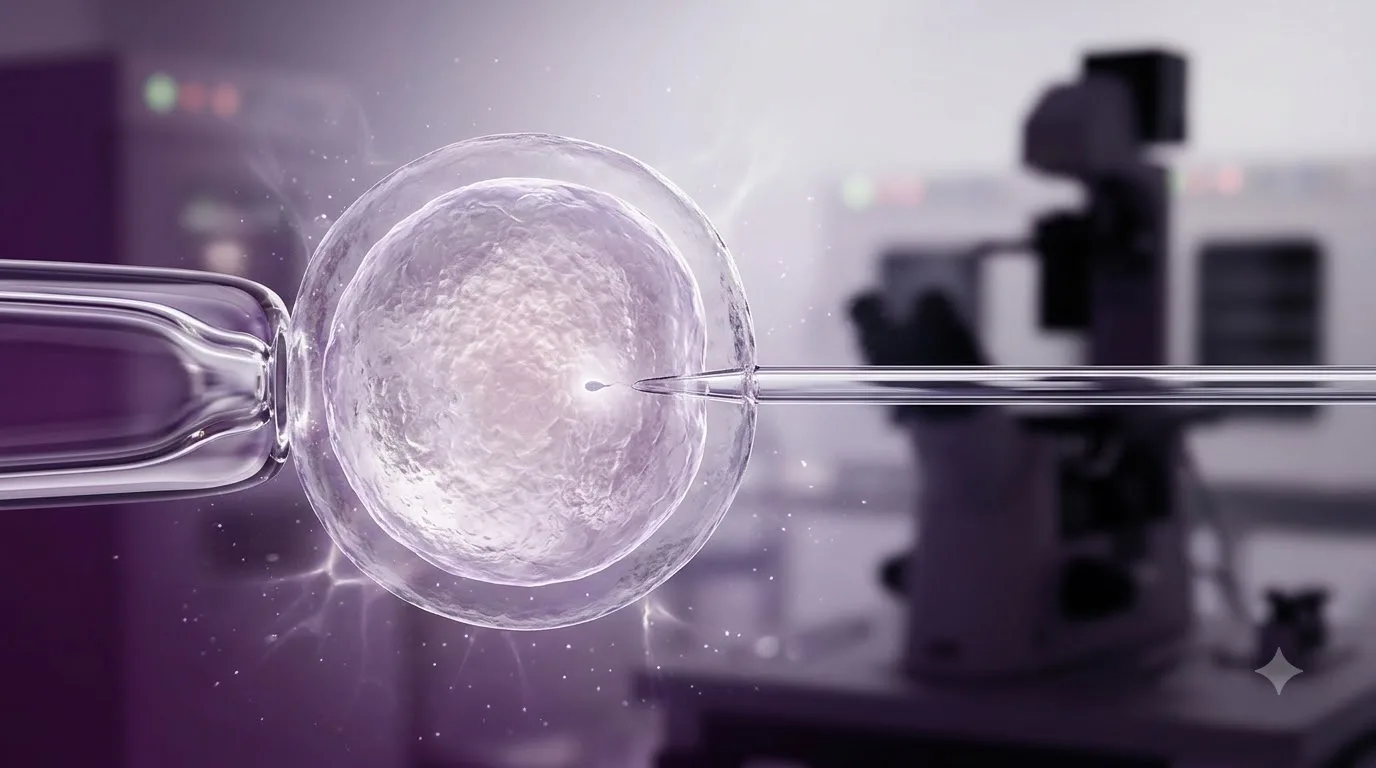
ICSI Treatment is an advanced fertilisation technique in which an embryologist injects a single sperm directly into a mature egg using specialised laboratory equipment. It is commonly considered when male-factor infertility or previous fertilisation difficulties make conventional IVF less suitable.
What Is ICSI and Why Is It Recommended?
ICSI stands for Intracytoplasmic Sperm Injection. It is a laboratory procedure performed as part of an IVF cycle. Instead of placing thousands of sperm around an egg and allowing one to fertilise it naturally in the laboratory, an embryologist selects an individual sperm and injects it directly into the egg.
A fertility specialist may recommend ICSI in situations such as:
- Low sperm count: When the semen sample contains a limited number of sperm.
- Poor sperm motility: When sperm have difficulty swimming towards the egg.
- Abnormal sperm morphology: When a high proportion of sperm have an unusual shape.
- Previous fertilisation failure: When conventional IVF has resulted in little or no fertilisation.
- Surgically retrieved sperm: When sperm are collected directly from the testicle or epididymis.
- Certain fertility treatment circumstances: When the specialist identifies a specific reason to use ICSI.
ICSI is not automatically required for every IVF patient. The recommendation depends on medical history, semen analysis, previous treatment outcomes and the fertility specialist's assessment.
How Does the ICSI Procedure Work?
ICSI involves several laboratory steps within an IVF treatment cycle. The process generally includes the following stages.
1. Ovarian Stimulation
The woman receives prescribed fertility medications to stimulate the ovaries to develop multiple follicles. Ultrasound scans and, when needed, blood tests help the medical team monitor follicle development.
2. Egg Retrieval
When the follicles are ready, the eggs are collected through a procedure called oocyte retrieval. It is usually performed under sedation or anaesthesia using ultrasound guidance.
3. Sperm Collection and Preparation
A semen sample is collected and processed in the laboratory to identify suitable sperm. If sperm cannot be obtained through ejaculation, surgically retrieved sperm may be considered in selected cases.
4. Sperm Injection
The embryologist examines the collected eggs and identifies mature ones suitable for injection. A single sperm is carefully selected and injected into each mature egg using a fine glass needle under a specialised microscope.
5. Fertilisation Assessment
The eggs are examined the following day to check for signs of normal fertilisation. Not every injected egg will fertilise successfully.
6. Embryo Development and Transfer
Fertilised eggs are monitored as they develop into embryos. Depending on embryo development and the treatment plan, an embryo may be transferred into the uterus or frozen for a future cycle.
A pregnancy test is usually scheduled after the recommended waiting period following embryo transfer.
ICSI vs Conventional IVF: What Is the Difference?
Both procedures involve ovarian stimulation, egg retrieval, laboratory fertilisation and embryo transfer. The main difference is how the sperm and egg are brought together.
FeatureConventional IVFICSIFertilisation methodSperm and eggs are placed together in a laboratory dishOne sperm is injected directly into a mature eggSperm requirementSufficient numbers of motile sperm are generally neededA single suitable sperm is selected for each mature eggLaboratory involvementSperm fertilises the egg without direct injectionEmbryologist performs the injectionCommon indicationMany cases of unexplained or female-factor infertilitySelected cases involving male-factor infertility or previous fertilisation failureNeither method guarantees fertilisation, embryo development or pregnancy. The most appropriate approach depends on the couple's individual circumstances.
Does ICSI Improve Pregnancy Success Rates?
ICSI can improve the chance of fertilisation in selected cases, particularly when sperm-related problems make conventional IVF less suitable. However, successful fertilisation does not automatically mean a pregnancy will occur.
Pregnancy outcomes depend on several factors, including:
- Woman's age and egg quality
- Sperm health and underlying fertility concerns
- Number and developmental quality of embryos
- Uterine health
- Previous fertility treatment history
- Laboratory conditions and clinical factors
For couples comparing a best Fertility centre in Bangalore, it is useful to understand whether the clinic offers a complete fertility evaluation, experienced embryology support and an individualised treatment plan. The choice between conventional IVF and ICSI should be based on medical indications rather than assuming that one technique is always better.
Are There Any Risks or Limitations of ICSI?
ICSI is widely used, but it has limitations. Not every injected egg will fertilise, and some eggs may be damaged during the injection process. Embryos may also stop developing before transfer.
When male infertility has a genetic cause, certain underlying conditions may be passed on to a child. In specific cases, genetic counselling or additional testing may be discussed before treatment.
ICSI also does not overcome every cause of infertility. It cannot guarantee a healthy embryo or successful pregnancy, and it may not provide additional benefit when there is no clear indication for its use.
Conclusion
ICSI is a specialised laboratory technique that helps sperm fertilise an egg through direct injection. It can be particularly useful for couples experiencing significant male-factor infertility or previous fertilisation difficulties. However, it is not necessary for every IVF cycle.
A detailed fertility assessment helps determine whether conventional IVF or ICSI is more appropriate. Understanding the procedure, possible limitations and individual success factors can help couples make informed decisions about their treatment. ICSI Treatment should always be recommended according to the couple's medical needs and not simply because it is a more advanced laboratory technique.