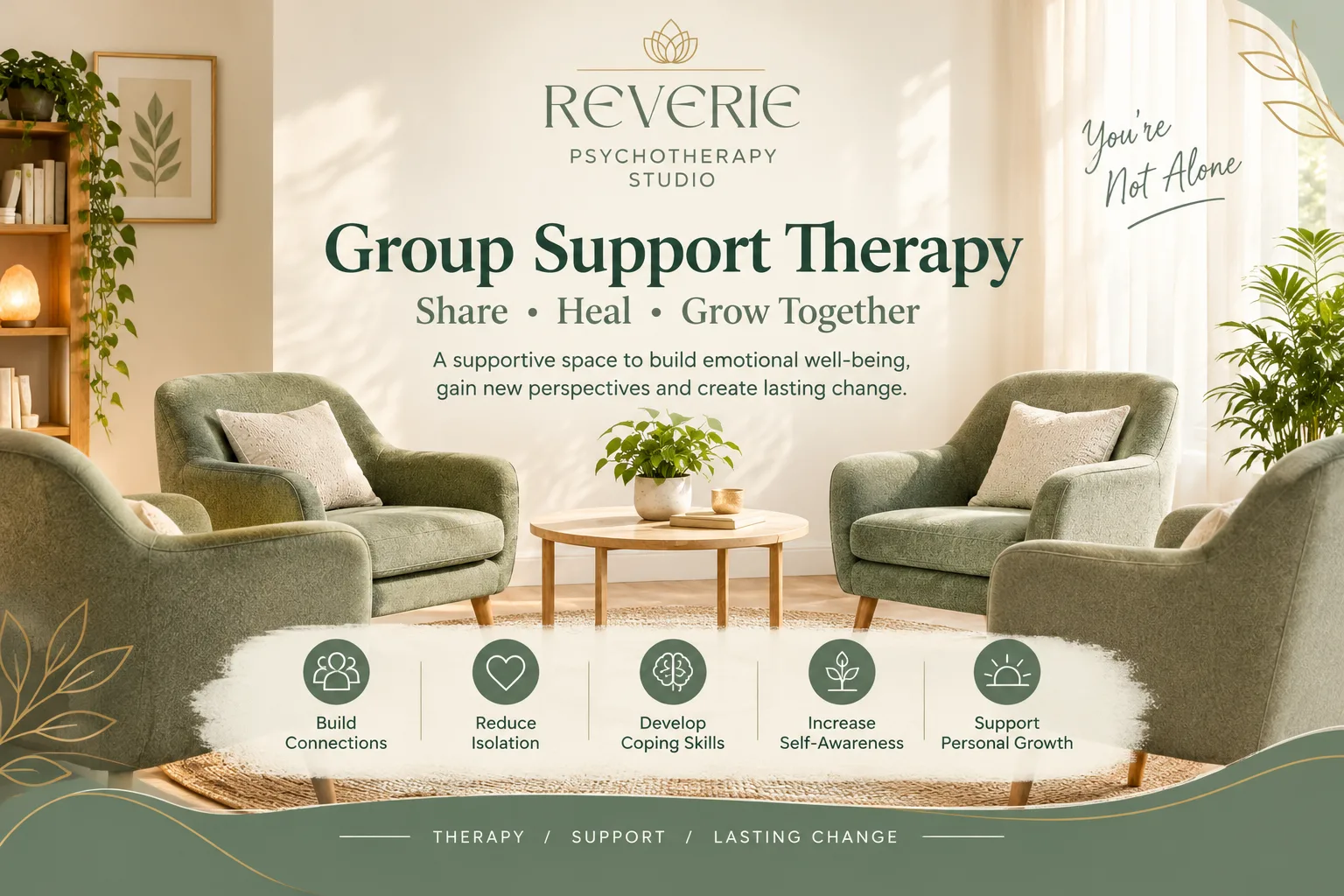
Mental health and emotional well-being are important parts of a healthy life. However, dealing with stress, relationship challenges, loneliness, anxiety, or significant life changes can sometimes feel overwhelming. Group Support Therapy offers a supportive environment where individuals can share experiences, learn from others, and explore healthier ways to manage emotional challenges. Instead of facing every difficulty alone, participants can connect with people who may understand similar feelings and experiences.
Group Support Therapy can encourage self-awareness, emotional expression, and meaningful social connections. With appropriate professional guidance, it may help participants develop practical coping strategies and feel more comfortable discussing their concerns. Reverie Psychotherapy aims to promote awareness of mental health and the value of supportive therapeutic approaches that encourage personal growth and emotional understanding.
What Is Group Support Therapy?
Group Support Therapy is a structured or facilitated setting in which several individuals come together to discuss shared concerns, learn coping strategies, and offer mutual encouragement. Depending on the group's purpose, sessions may focus on emotional well-being, stress management, relationships, personal development, grief, or other life challenges.
A trained facilitator or qualified mental health professional may guide conversations, establish boundaries, and help participants communicate respectfully. The goal is to create an environment where people can express themselves without unnecessary judgment and gain new perspectives through shared experiences.
Although group support and group psychotherapy can overlap, they are not always the same. Support groups often emphasize shared experiences, practical encouragement, and mutual understanding. Group psychotherapy generally involves a qualified mental health professional using therapeutic methods to address emotional or psychological difficulties. The appropriate format depends on participants' needs and the group's purpose.
Key Benefits of Group Support Therapy
1. Reduces Feelings of Isolation
People experiencing emotional difficulties may believe that nobody understands what they are going through. Group Support Therapy can help participants recognize that others face similar challenges. Listening to different experiences may reduce feelings of isolation and create a stronger sense of connection.
2. Encourages Emotional Expression
Talking about difficult experiences can be challenging, particularly when someone is worried about being judged. A respectful therapeutic environment can make it easier to express feelings, identify concerns, and reflect on personal experiences. Participants can gradually become more comfortable communicating their emotions.
3. Develops Healthy Coping Strategies
Group discussions may introduce practical approaches to handling stress, managing difficult emotions, setting boundaries, and responding to everyday challenges. Participants can learn from one another's experiences while considering which strategies may be suitable for their own circumstances.
4. Builds Communication and Interpersonal Skills
Group settings provide opportunities to practise active listening, express thoughts clearly, respect different perspectives, and respond constructively to feedback. These skills may support healthier relationships at home, at work, and in other social environments.
5. Supports Self-Awareness and Personal Growth
Hearing different viewpoints can help individuals recognize recurring patterns in their thoughts, emotions, and behaviour. With reflection and professional guidance where appropriate, participants may develop a clearer understanding of their needs, strengths, and areas for growth.
How Does Group Support Therapy Work?
The process usually begins with an introduction to the group's purpose, format, expectations, and participation guidelines. Depending on the programme, a facilitator may conduct an initial conversation to understand an individual's goals and determine whether the group is an appropriate option.
Understanding the Session Structure
A typical session may begin with a brief check-in, followed by a discussion, guided activity, or topic related to the group's objectives. Participants may share experiences, explore coping techniques, and reflect on what they have learned. Some groups are relatively open, while others follow a planned programme with specific themes.
Creating a Respectful and Supportive Environment
Clear group guidelines help participants understand the importance of respectful communication, listening without judgment, and allowing others to speak. Confidentiality should be discussed at the beginning, including its limits. Although participants can be asked to respect one another's privacy, absolute confidentiality cannot be guaranteed in a group setting.
Reflecting on Progress
Participants may identify personal goals and consider what they want to practise between sessions. Progress differs from person to person, and meaningful change may take time. A facilitator can help the group maintain focus while ensuring that discussions remain appropriate to its purpose.
Who Can Benefit from Group Support Therapy?
Group Support Therapy may be helpful for adults who want to improve emotional awareness, develop coping skills, strengthen communication, or connect with others facing similar life experiences. It may also provide support during periods of transition, bereavement, relationship difficulties, work-related stress, or personal uncertainty.
However, group participation is not suitable for everyone in every situation. Some individuals may prefer individual therapy because of their privacy needs or personal circumstances. Others may benefit from a combination of individual and group sessions. People experiencing severe distress or an urgent mental health crisis should seek appropriate professional or emergency support rather than relying solely on a support group.
A qualified mental health professional can help determine which approach best fits an individual's needs, preferences, and goals.
Group Support Therapy and Professional Development
Effective group facilitation requires thoughtful planning, ethical awareness, communication skills, and an understanding of group dynamics. Mental health professionals who want to develop their knowledge of therapeutic group work can explore relevant educational opportunities, supervised practice, and professional development resources.
For readers interested in developing their knowledge of group-based therapeutic approaches, Group Psychotherapy Training is a relevant internal-link anchor to consider. Link this phrase to the most relevant page on the Reverie Psychotherapy website if a dedicated training page is available. Ensure the destination accurately describes the training or professional development opportunities offered.
How to Choose the Right Group Support Therapy Programme
Before joining a Group Support Therapy programme, consider its purpose, facilitator qualifications, session format, group size, confidentiality policy, and participation expectations. Ask whether the sessions are educational, peer-led, or professionally facilitated, as these formats can differ considerably.
It is also helpful to understand the fees, schedule, expected commitment, and process for raising concerns. Participants should feel able to ask questions before deciding whether to join. A suitable group should have clear boundaries, respect individual differences, and explain how sensitive topics will be managed.
Frequently Asked Questions
What is the main purpose of Group Support Therapy?
The main purpose is to provide a structured or facilitated space where participants can share experiences, learn coping strategies, and develop a sense of connection. The specific goals depend on the group and its facilitator.
Is Group Support Therapy suitable for everyone?
Not always. Suitability depends on personal circumstances, the type of group, and the support an individual needs. A qualified professional can help someone decide whether group sessions, individual therapy, or a combination is appropriate.
How is group support different from group psychotherapy?
Group support often focuses on shared experiences and mutual encouragement. Group psychotherapy is a therapeutic process led by a qualified mental health professional using clinical approaches to address emotional or psychological concerns.
Conclusion
Group Support Therapy can provide opportunities for connection, emotional expression, practical learning, and personal reflection. By listening to others and sharing experiences in an appropriately facilitated environment, participants may develop greater self-awareness and useful coping strategies. Its suitability depends on individual circumstances, the group's structure, and the quality of professional guidance.
Understanding the process and potential benefits can help people make informed decisions about their mental health support options. For more information about psychotherapy and emotional well-being, visit Reverie Psychotherapy and explore the resources relevant to your needs.