

Large-scale businesses usually have unique needs, which is where enterprise application development helps as these apps are designed to specifically meet these business requirements in an efficient manner.
In today’s fast-paced business landscape, companies rely heavily on technology to operate efficiently, innovate faster, and deliver exceptional customer experiences. At the heart of this digital transformation lies enterprise application development.
Unlike consumer apps, enterprise applications are built to handle complex business processes, integrate with multiple systems, and support hundreds or even thousands of users simultaneously.
From streamlining supply chains to automating financial reporting, these applications form the backbone of modern enterprises.
Understanding Enterprise Application Development
Enterprise application development involves creating software solutions that cater to the specific needs of a business or organization rather than the general public.
These applications are usually mission-critical, meaning downtime or malfunctions can significantly impact operations and revenue.
Key characteristics include:
- High Scalability: Designed to handle growth in users, data, and operations without performance issues.
- Complex Integrations: Seamlessly connecting with other internal systems such as CRM, ERP, HRM, and third-party APIs.
- Robust Security: Ensuring data protection through encryption, role-based access, and compliance with industry regulations.
- Custom Functionality: Tailored features that align with unique business workflows and goals.
Traditional App Development vs Enterprise Application Development
While both involve designing and building software, the goals, scale, and complexity are very different.
Aspect Traditional App Development Enterprise Application Development PurposeBuilt for general consumers or small groups with specific needs. Examples include mobile apps, games, or small business tools. Designed to support large-scale, mission-critical operations for businesses, often integrating multiple departments and systems. Scale Serves a limited number of users, usually in the hundreds or thousands. Serves potentially tens of thousands of users across different regions, departments, or partner networks. Complexity Focused on a narrow set of features, often standalone. Handles multiple workflows, integrates with other systems like CRM, ERP, HRMS, and manages vast data volumes. Customization Often built using pre-defined templates or standard frameworks with minimal customization. Highly customized to match unique business processes, regulatory requirements, and operational workflows. Integration may not require deep integrations; often standalone or connected to limited external services. Requires robust integration with internal systems, third-party APIs, and legacy software. Security Standard security protocols suitable for public use. advanced security with encryption, access controls, and compliance with industry standards such as GDPR or HIPAA. Development Approach Shorter development cycles with quick-to-market releases. Longer, more strategic development with emphasis on scalability, reliability, and long-term maintainability. Maintenance Updates as needed, usually driven by user feedback or market demand. Ongoing maintenance with regular upgrades, performance monitoring, and security patches to ensure business continuity.
In short:
- Traditional app development focuses on speed, simplicity, and serving smaller user bases.
- Enterprise application development is about creating robust, secure, and highly scalable systems that keep large organizations running efficiently.
Data-Backed Insights on Enterprise Application Development
- According to Mckinsey and Company, Enterprise technology spending in the United States has been growing by 8 percent per year on average since 2022.
- According to a recent Forrester survey, 79 % of technology decision-makers in US organizations reported an increase in their software costs over the past year.
- By 2025, Forrester predicts that at least three large vendors will reevaluate how they value their applications’ data assets.
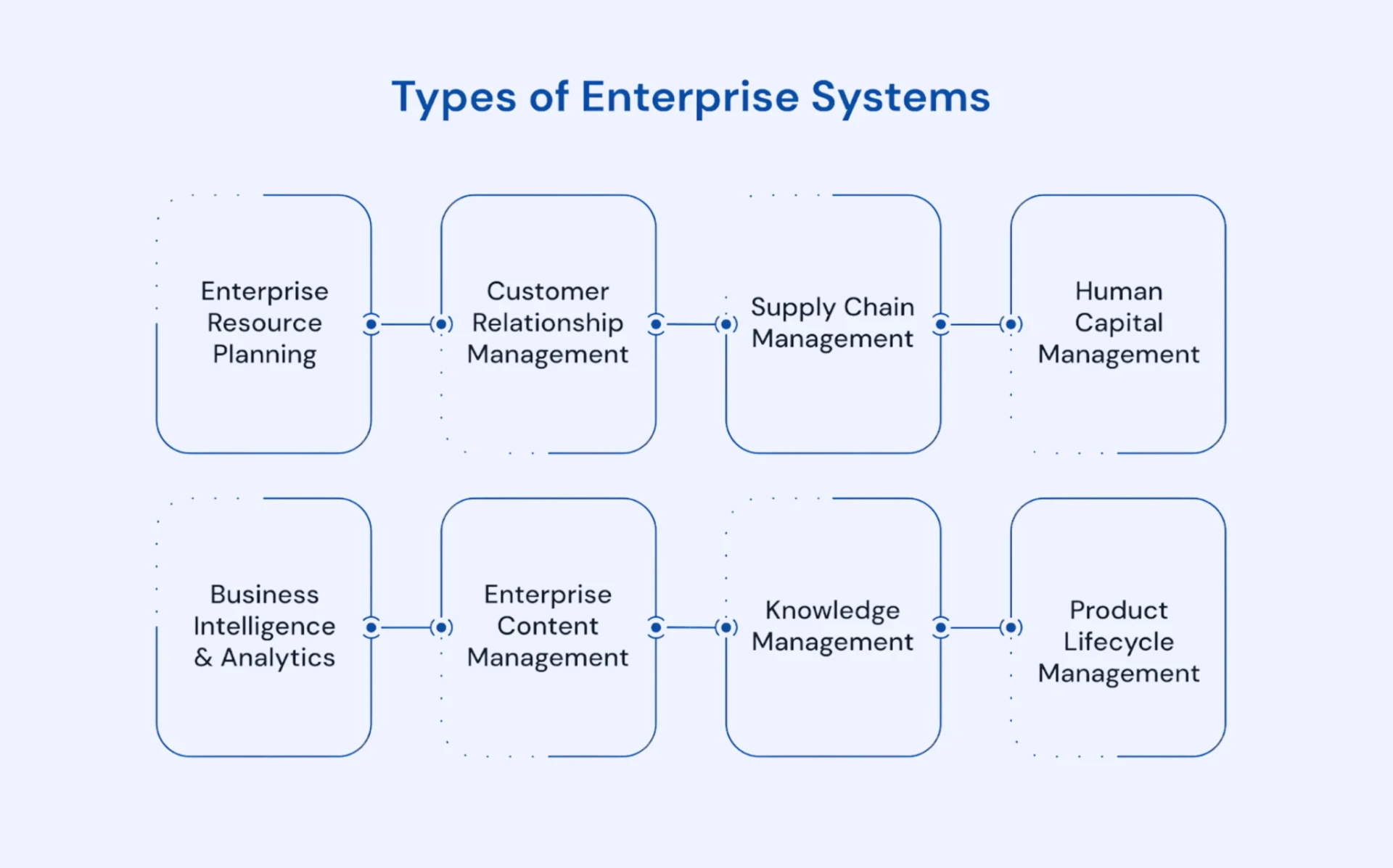
Types of Enterprise Applications
Enterprise applications come in many forms, each designed to serve specific business functions. While the exact list can vary by industry, here are the most common types used by organizations worldwide:
1. Customer Relationship Management (CRM) Systems
CRM applications help businesses manage customer interactions, track leads, and improve relationships. They store customer data, monitor sales pipelines, and automate follow-ups. Popular examples include Salesforce, HubSpot, and Zoho CRM.
Key Benefits: Better customer engagement, improved sales forecasting, and personalized marketing.
2. Enterprise Resource Planning (ERP) Systems
ERP systems integrate core business processes such as finance, procurement, inventory, HR, and manufacturing into a single platform. They provide real-time visibility and help optimize resources.
Examples include SAP S/4HANA, Oracle NetSuite, and Microsoft Dynamics 365.
Key Benefits: Operational efficiency, reduced data silos, and improved decision-making.
3. Human Resource Management Systems (HRMS)
These applications handle recruitment, payroll, attendance, performance management, and employee engagement. Examples include Workday, BambooHR, and ADP.
Key Benefits: Streamlined HR operations, better compliance, and improved employee satisfaction.
4. Supply Chain Management (SCM) Systems
SCM software manages the flow of goods, services, and information from suppliers to customers. It helps track shipments, manage inventory, and forecast demand. Examples include Infor SCM, SAP SCM, and Oracle SCM Cloud.
Key Benefits: Cost reduction, faster delivery times, and better supplier relationships
5. Business Intelligence (BI) Tools
BI applications analyze data and turn it into actionable insights through dashboards, reports, and predictive analytics. Popular tools include Tableau, Power BI, and QlikView.
Key Benefits: Data-driven decision-making, trend analysis, and performance tracking.
6. Content Management Systems (CMS)
CMS platforms help businesses create, manage, and publish digital content without extensive coding. Examples include WordPress, Drupal, and Adobe Experience Manager.
Key Benefits: Easy content updates, better SEO management, and streamlined collaboration.
7. Project Management Tools
These applications allow teams to plan, execute, and monitor projects in real time. Examples include Jira, Asana, and Trello.
Key Benefits: Enhanced collaboration, improved productivity, and on-time project delivery.
8. Collaboration and Communication Tools
Tools like Slack, Microsoft Teams, and Zoom facilitate internal communication, file sharing, and remote work collaboration.
Key Benefits: Improved teamwork, faster decision-making, and reduced communication gaps.
9. Financial Management Systems
These applications manage accounting, budgeting, forecasting, and financial reporting. Examples include QuickBooks, Xero, and SAP Financials.
Key Benefits: Accurate financial tracking, compliance support, and better resource allocation.
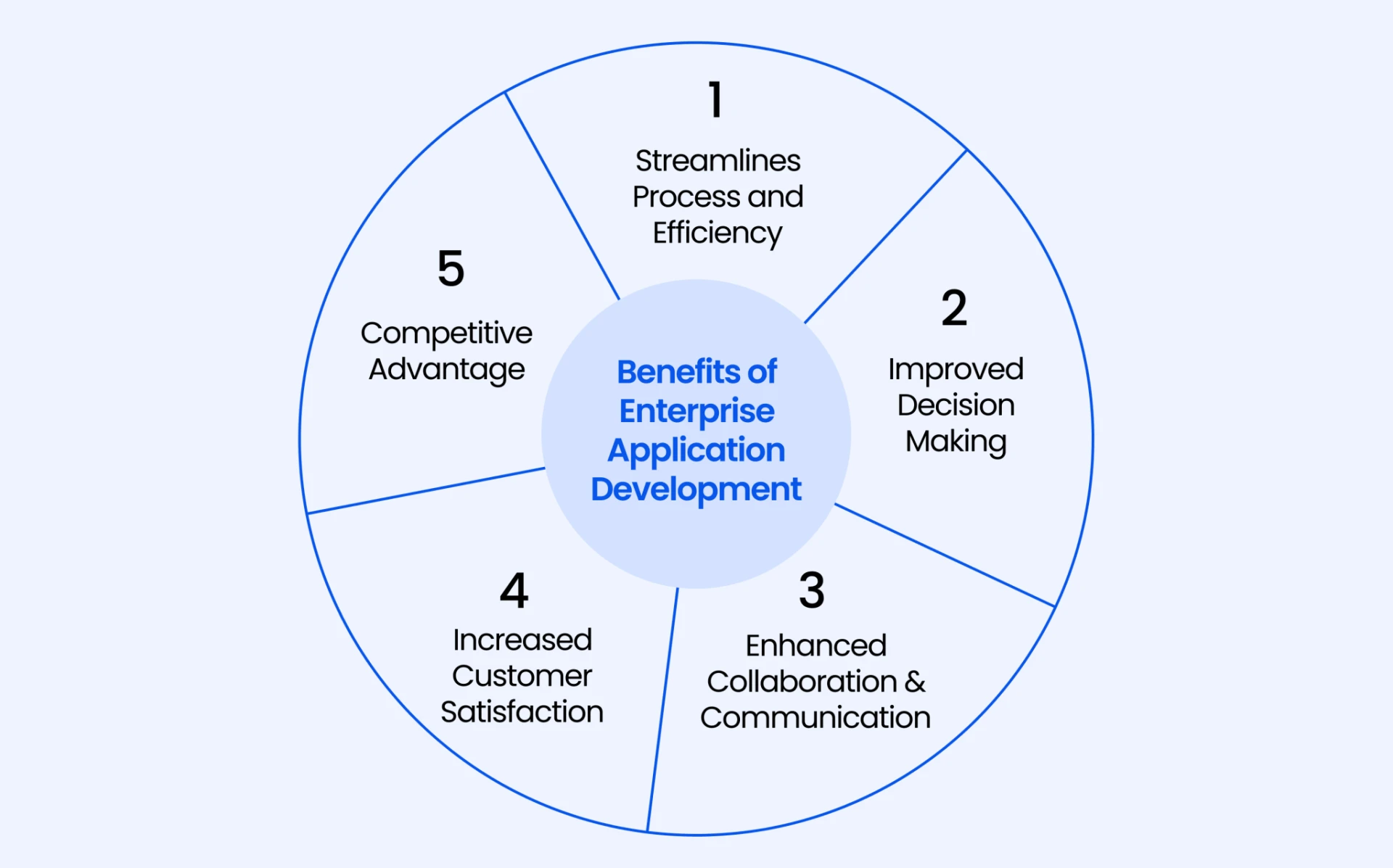
Why Enterprise Application Development Matters
Enterprise applications are more than just tools; they are strategic assets that enable organizations to:
- Increase Productivity by automating repetitive tasks and reducing human error.
- Improve Decision-Making through real-time data insights.
- Enhance Collaboration across departments and geographies.
- Strengthen Security for sensitive data and transactions.
- Adapt Quickly to changing market conditions or regulatory requirements.
A 2024 Gartner report revealed that organizations investing in custom enterprise applications experience 30 percent faster operational efficiency gains compared to those relying solely on off-the-shelf software.
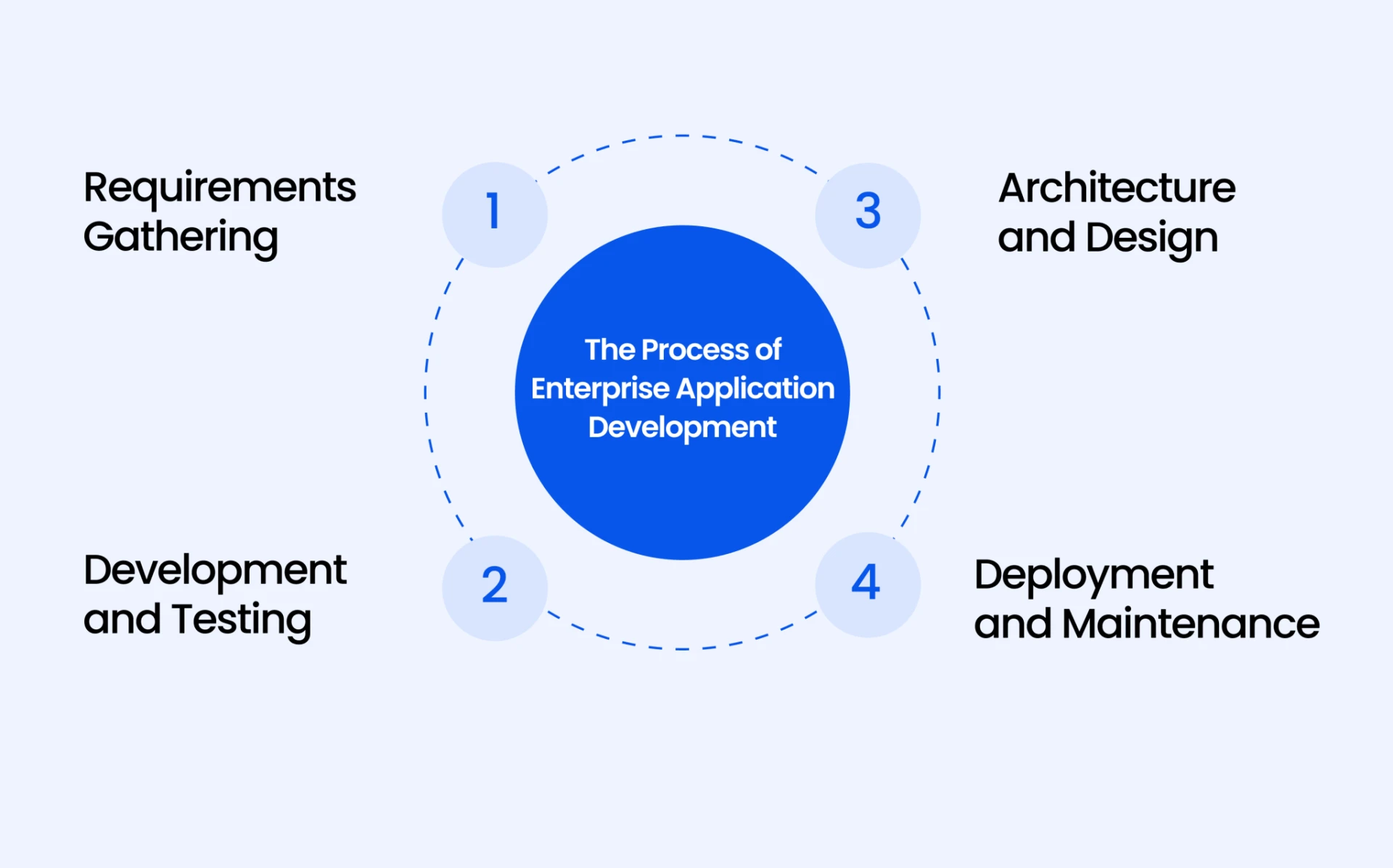
The Enterprise Application Development Process
While every project is unique, most follow these stages:
- Requirement Gathering and Analysis
- Understanding business needs, challenges, and goals through stakeholder interviews and process mapping.
- Planning and Design
- Creating a blueprint of system architecture, workflows, and user interface design to ensure usability and scalability.
- Development
- Writing clean, efficient code using technologies like Java, .NET, Python, or cloud-native frameworks.
- Integration
- Connecting the new application to existing systems, databases, and third-party services.
- Testing and Quality Assurance
- Conducting rigorous functional, performance, and security tests to ensure reliability.
- Deployment
- Rolling out the application in a phased or full launch, depending on complexity.
- Maintenance and Upgrades
- Regular updates to keep the application secure, efficient, and relevant.
Technologies Used in Enterprise Application Development
Modern enterprise applications often rely on:
- Cloud Platforms like AWS, Microsoft Azure, or Google Cloud.
- Databases such as PostgreSQL, Oracle, or MongoDB.
- Programming Languages including Java, C#, Python, and JavaScript.
- Microservices Architecture for scalability and flexibility.
- AI and Machine Learning for automation, analytics, and personalization.
Challenges in Enterprise Application Development
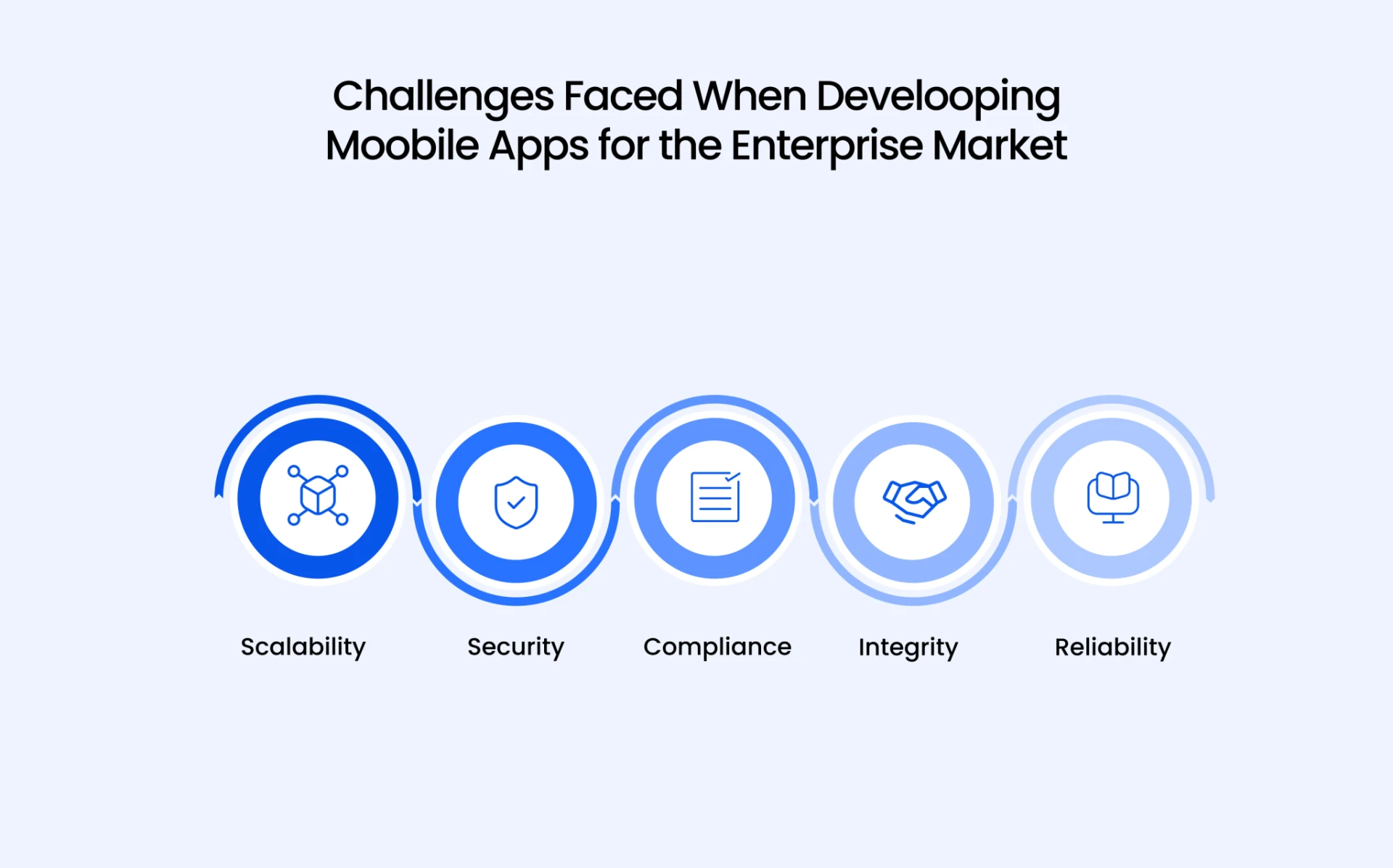
Despite the benefits, building enterprise applications comes with challenges:
- Complex Integrations with legacy systems.
- High Development Costs due to customization and scale.
- User Adoption and change management hurdles.
- Evolving Security Threats requiring constant monitoring and updates.
Overcoming these challenges requires careful planning, experienced development teams, and a focus on long-term value rather than short-term fixes.
The Future of Enterprise Application Development
The future is being shaped by emerging technologies like AI, blockchain, and low-code platforms.
These innovations are making enterprise applications more intelligent, faster to develop, and easier to maintain. Businesses that embrace these trends early can expect to stay competitive in a rapidly evolving market.
Conclusion
Enterprise application development is not just about writing code. It is about creating powerful, secure, and scalable solutions that empower businesses to operate more efficiently, make better decisions, and deliver greater value to their customers.
Whether you are a startup scaling rapidly or a global corporation managing complex operations, the right enterprise application can be a game-changer for your growth and success.