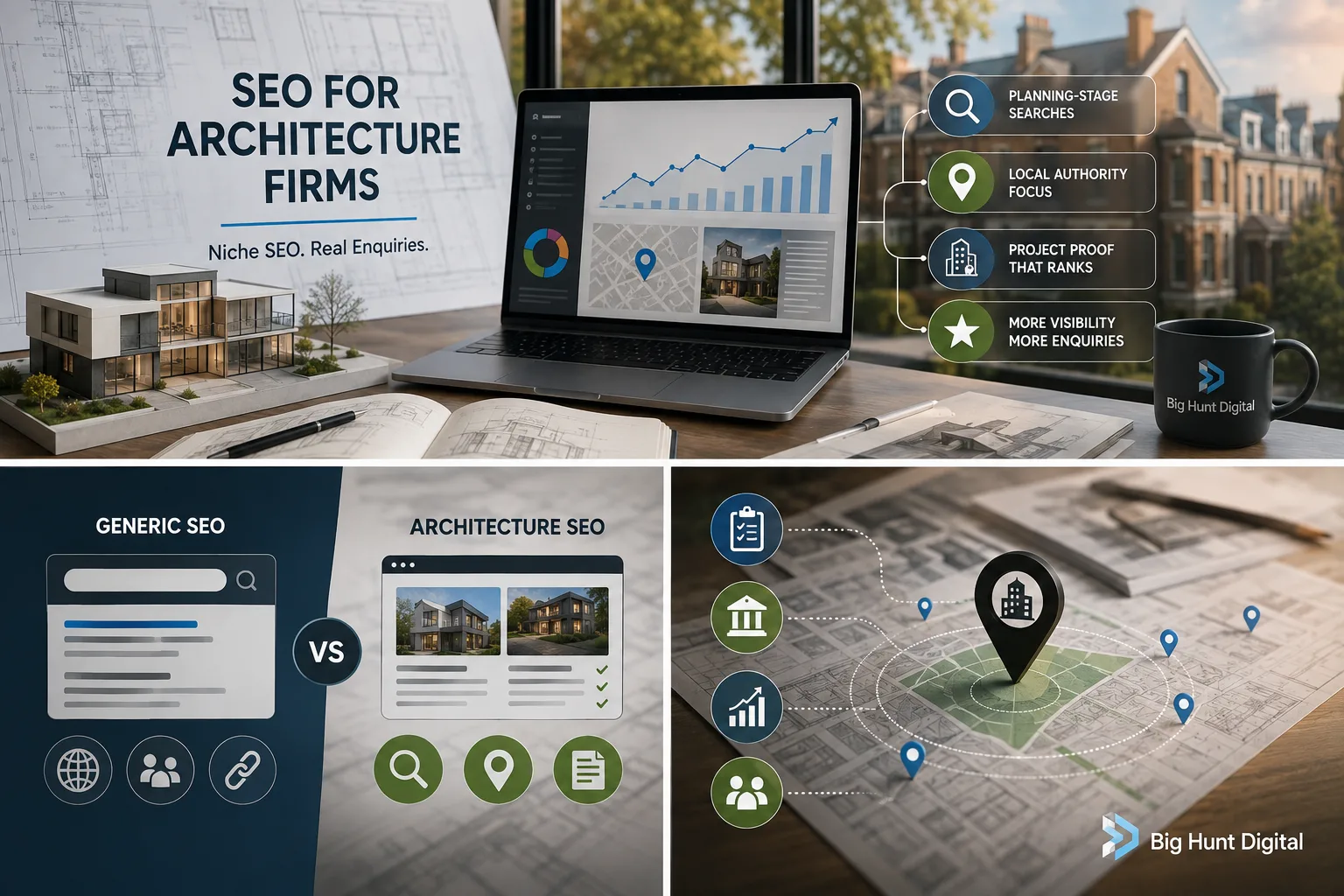
Architect SEO is the practice of optimising an architecture firm's website so it ranks for planning-stage searches, extensions, loft conversions, change of use, in the specific boroughs or catchments the firm serves. It sits within broader SEO services but requires a narrower, more specific approach than a generic local business would need, because the searches that convert are tied to a real planning decision rather than a general product or service comparison.
That's the short answer. The longer answer explains why the distinction matters, and it's easiest to see by clearing up a few assumptions that trip up most practices comparing SEO services.
Myth vs Reality: What Architect SEO Actually Involves
Myth: Architect SEO is just standard local SEO with the word "architect" added. Reality: The keywords, content structure, and buyer intent are meaningfully different. A homeowner searching for a plumber wants speed and availability. A homeowner searching for architecture help has usually already had a survey or a planning refusal, and their questions reflect that specific stage rather than a general comparison shop.
Myth: More published content automatically means better rankings. Reality: Volume without specificity underperforms. A generic page about "why choose our architecture firm" competes in an enormous, low-intent keyword space. A page answering a precise planning question, permitted development limits in a named borough, competes against almost nobody, because most agencies never write it.
Myth: A strong portfolio is enough to attract search traffic. Reality: Search engines read text, not photography. A gallery of finished projects with no written context, no property type, no planning route, no outcome, gives Google almost nothing to index, regardless of how impressive the work actually is.
Myth: Any competent SEO services provider can handle architecture without adjustment. Reality: The fundamentals are the same, technical groundwork, content strategy, authority building, but applying them without industry-specific knowledge tends to produce work that looks active while missing the searches that actually convert.
What Falls Under Architect SEO Specifically
A few elements consistently separate architect SEO from a generic local SEO package:
- Project pages written as documentation, not just photography, covering property type, planning route, and outcome
- Borough or catchment-specific content addressing real planning questions, such as permitted development limits or Article 4 directions
- A Google Business Profile kept genuinely active with project-specific updates rather than generic posts
- Reporting tied to qualified enquiries and keyword share within the firm's actual catchment, not raw traffic numbers
None of these require a separate discipline invented specifically for architecture. They're standard SEO services applied with the right context and the right depth of industry knowledge.
How Architect SEO Fits Within Broader SEO Services
Architect SEO isn't a replacement for standard SEO services, it's a specific application of them. The technical foundation, site speed, crawlability, structured data, still matters exactly as much as it would for any other business. Content strategy still needs to be built around real search intent rather than keyword density. Authority building still depends on consistent citations and demonstrated expertise.
What changes is the subject matter and the level of specificity required. A generic SEO services provider might write about "why choose our architecture firm." An agency applying architect SEO correctly writes about what a homeowner in a specific borough can and can't do under permitted development rights, because that's the question actually driving the search.
What to Check Before Assuming an Agency Understands Architect SEO
The clearest way to tell whether an agency applies architect SEO properly, rather than a generic template with the word "architect" inserted, is to ask direct questions:
- Have they written planning-stage content before, covering specific regulations rather than general advice?
- Do their project page examples read like case studies, with property type and planning route documented?
- Do they track visibility in AI tools like ChatGPT and Perplexity, since homeowners increasingly ask there before searching Google?
- Does their reporting show qualified enquiries within a specific catchment, rather than only traffic and rankings?
Vague answers to any of these usually indicate a standard SEO services package being resold under an architecture-specific label, without the underlying work actually changing.
Why This Distinction Affects the Timeline Too
Meaningful movement from architect SEO typically takes three to six months, similar to standard SEO timelines, but the compounding effect depends heavily on whether the content is actually specific enough to capture planning-stage intent. Generic content published on the same schedule tends to plateau faster, because it's competing in a much broader, more contested keyword space than borough-specific planning content ever does.
Practices that understand this distinction early tend to avoid a common mistake: judging early results against national rankings rather than catchment-specific enquiry volume, which is the metric that actually reflects whether the SEO work is producing business outcomes.
Where AI Search Adds Another Layer
Homeowners increasingly ask ChatGPT or Perplexity for architect recommendations before they open Google at all. A services scope that only tracks traditional rankings misses that shift entirely. Structured project data, consistent citations, and clearly documented planning expertise all feed into whether a practice shows up in those AI-generated answers, and that's now as relevant to the scope of work as traditional keyword rankings.
An agency that hasn't factored this into its service offering yet is working from a slightly outdated model of how people actually find an architect today, however solid its traditional SEO work might otherwise be.
The Direct Takeaway
Architect SEO isn't a separate service from standard SEO services, it's the same fundamentals applied with genuine knowledge of how architecture clients search and what convinces them to enquire. A firm evaluating providers should ask whether that specificity is actually present in the work, not just implied by the name of the package being sold.