What is a Cloud POS System and How Does it Work?
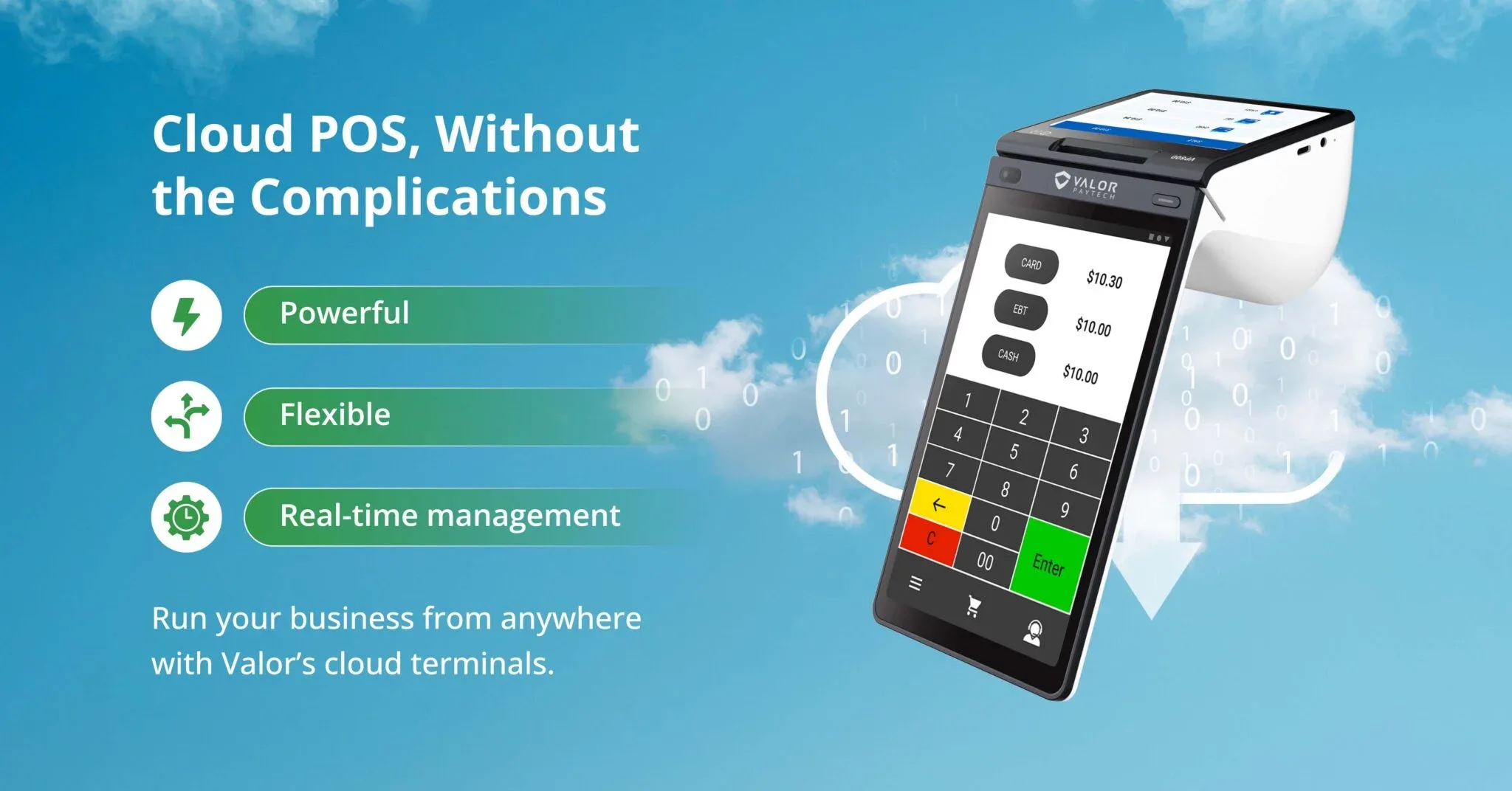
A Cloud POS System is more than just a payment terminal — it’s the full ecosystem that powers every transaction, configuration, update, and report through the cloud instead of the device itself.
Key Components:
- Cloud Management Portal: Controls settings, menus, taxes, pricing, and device behavior across all terminals.
- Cloud-Connected Terminals: Secure devices that communicate with the cloud in real time.
- Unified Product & Pricing Catalog: Ensures every device uses the same data — no version mismatches
- Real-Time Reporting Tools: Tracks sales, payments, tips, modifiers, taxes, and more across locations.
- API & Integrations Layer: Allows software platforms and ISVs to embed payments into their workflow.
This means merchants get greater reliability, ISOs reduce support cost, and ISVs gain seamless integration points for embedding payments in their software ecosystems.
What Features Should You Look for in the Best Cloud POS System?
When evaluating Cloud POS solutions, ensure the system includes:
- Centralized configuration management.
- Real-time reporting and analytics.
- Remote terminal provisioning.
- API-first integration approach.
- Multi-location device syncing.
- Fallback connection support (Ethernet/Wi-Fi/LTE).
- End-to-end encryption + tokenization.
Why Traditional POS Terminals Are No Longer Enough
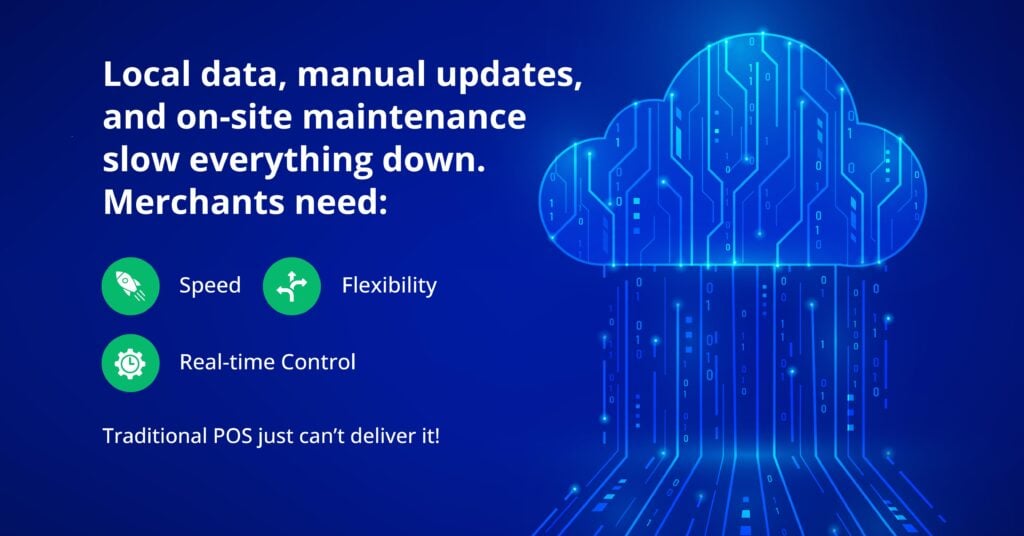
Let’s be fair — traditional terminals did their job.
But they were built for a world where:
- Business locations didn’t change frequently
- Loyalty and analytics weren’t expected as standard
- Software rarely needed updates
- Support teams were local
Today:
- Merchants are multi-location and mobile.
- Customers expect fast, seamless payment experiences.
- Chargebacks and fraud conditions evolve constantly.
- Regulations and compliance requirements update frequently.
- ISVs need hardware that integrates, not hardware that limits.
Traditional payment terminals struggle here.
They require:
- Manual software upgrades
- On-site installation
- Time-consuming troubleshooting
- Separate configurations per device
Which leads to:
- Higher ISO support costs
- Longer merchant onboarding cycles
- Reduced merchant satisfaction over time
Cloud POS Terminals solve all of this by design.
What is the Difference Between Traditional POS Systems and Cloud POS Systems?
CapabilityTraditional POS SystemCloud POS SystemProvisioningConfigure on-site, one device at a timeProvision remotely; ship ready-to-useSoftware UpdatesRequires tech scheduling + merchant downtimeUpdates push automatically in real timeFeature EnhancementsLimited or hardware-lockedCloud-driven, continuously improvingMulti-Location SupportEach location must be set independentlyConfigure once → replicate everywhereData Sharing & ReportingStored locally; limited visibilityCentralized dashboards across all devicesTroubleshootingMust dispatch support staffDiagnose + fix remotely from portalScalabilityRequires more hardware + service laborAdd devices instantly, no local IT neededMerchant ExperienceStatic, slow to evolveDynamic, monitored, optimized constantlyIn simple terms:
Traditional systems react.
Cloud POS systems adapt.
How Secure Is a Cloud POS Terminal?
Cloud POS Terminals use:
- End-to-end encryption (E2E)
- PCI DSS compliant data handling
- Tokenization to prevent card storage in plain text
- Private and secure AWS-backed environments
Because no card data lives on the terminal itself — risk is drastically reduced.
Why Cloud POS Terminals Matter for ISOs
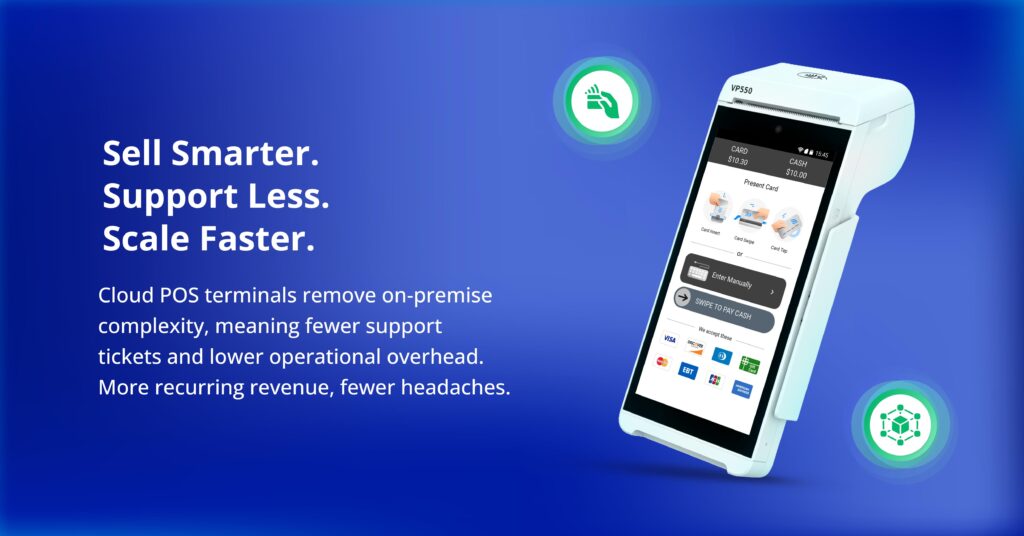
ISOs profit through long-term merchant retention.
Merchant churn is expensive — and usually avoidable.
Top reasons merchants churn:
- Slow support response times
- Outdated payment experiences
- Confusing reporting
- Downtime during peak hours
Cloud POS terminals drastically reduce these friction points.
Benefits for ISOs:
- 70–90% fewer field service visits
- Faster merchant onboarding
- Instant configuration changes (tips, taxes, surcharges, receipts)
- A superior merchant experience that improves retention
The result?
Higher lifetime value per merchant — without increasing workload.
Why Cloud POS Terminals Matter for ISVs
ISVs don’t just compete on product — they compete on platform maturity.
Your customers don’t want hardware that conflicts with your software or complicates your rollout model. They want integrated, cloud-connected, ready-to-deploy terminals that fit naturally inside your workflow.
Cloud POS terminals enable:
- API-driven integration
- Unified customer profiles
- Embedded payment workflows
- Consistent merchant experience across devices
Which means:
- Faster product adoption
- Stronger stickiness
- Less support dependency
- Higher recurring revenue per merchant
Cloud terminals transform payments from “a requirement” into “a feature that enhances your platform.”
Why are Merchants Switching to Cloud POS in 2026?
Merchants are choosing Cloud POS because it aligns with how modern businesses operate:
- Menu, price, and tax changes need to update instantly
- Support needs to be remote-first, not technician-dependent
- Uptime must be guaranteed across locations
- Data should drive decisions — not guesswork
Most importantly:
Cloud POS systems help merchants run smarter — not harder.
Read more