
Ohio landlords who call to verify an ESA letter are usually checking one thing: that a real, licensed clinician wrote it. The call is short and routine for most property managers. It confirms identity and credentials, not the tenant's medical history. Tenants who understand what can and cannot be asked during that conversation tend to feel calmer and respond with confidence.
Verification has become more common as landlords grow wary of paperwork bought without any evaluation. A properly issued emotional support animal letter online is built to survive that check.
Do landlords actually verify ESA letters?
Many do, especially larger property management companies in Ohio.
Smaller landlords sometimes accept a letter after a quick read. Corporate managers in cities such as Columbus, Cleveland and Cincinnati are more likely to follow a written verification procedure.
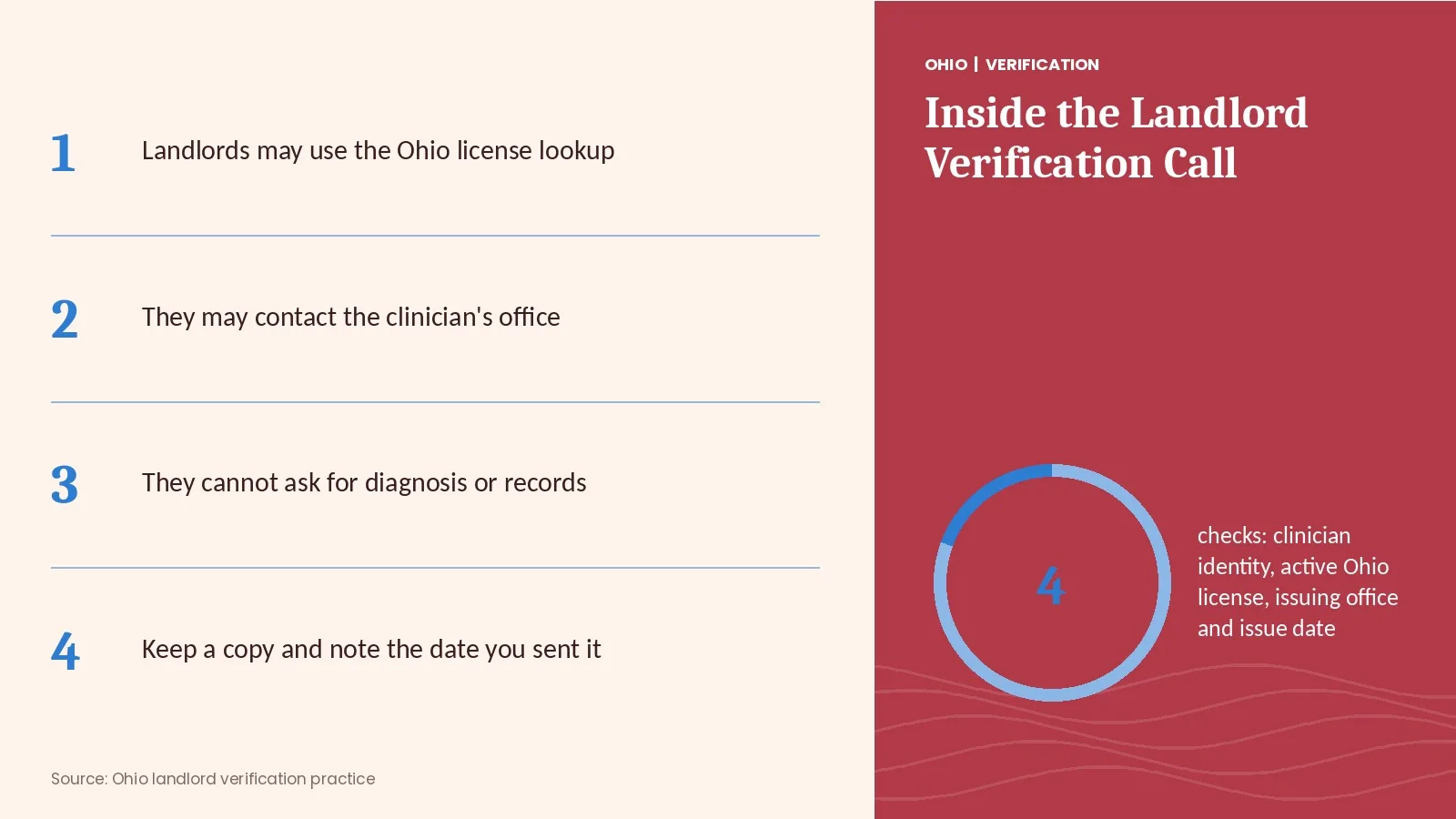
The process usually involves looking up the clinician's license and, in some cases, contacting the office printed on the letter. Both steps are permitted.
Tenants holding an Ohio ESA letter from a licensed therapist generally have little to worry about, because the details a landlord checks are already on the page.
A missing license number or an unreachable office is what usually turns a routine check into a denial.
Timing varies as well. Some managers verify the moment a letter arrives, while others wait until lease signing or renewal. Tenants should expect a check at either stage.
What does the landlord check during the call?
The call confirms that the clinician exists, is licensed and issued the letter.
A typical verification covers a handful of points:
- Whether the clinician named on the letter is a real professional.
- Whether the license number matches an active Ohio license.
- Whether the clinician's office confirms it issued the document.
- Whether the issue date on file matches the copy the tenant submitted.
Some landlords skip the phone entirely and rely on the state's online license lookup. Others send an email to the address on the letterhead.
A few managers use third party screening services to handle the check. The same limits apply, since the service acts on the landlord's behalf.
Any of these methods is acceptable. What matters is that the inquiry stays focused on authenticity rather than on the tenant's health.
What can a landlord not ask the clinician?
The landlord cannot ask for a diagnosis, medical records or details of the condition.
Clinicians are bound by confidentiality. Even when a landlord calls directly, the provider will typically confirm only that the letter is genuine.
Questions such as "What is the tenant being treated for?" or "How severe is the condition?" fall outside what a housing provider is entitled to learn.
Landlords also should not demand that the tenant sign a broad medical release. The accommodation request rests on the letter, not on access to treatment notes.
If a landlord presses for this information, the tenant can politely decline and point out that the letter already confirms the disability related need.
How should tenants prepare for a verification call?
Check the letter yourself first so nothing surprises you later.
Confirm the license is active
Look up the clinician on the Ohio licensing board website. Make sure the name and number match the letter exactly.
Tell the clinician's office to expect contact
A brief heads up lets the office respond promptly. Some practices route verification requests to a specific staff member.
Keep your own copy
Store a PDF of the exact letter you submitted. If the landlord reports a mismatch, you can compare versions right away.
Note when the request was sent
Write down the date you delivered the letter. A dated record helps if the review drags on.
What should tenants say if the landlord calls them instead?
Answer questions about the animal and the letter, and keep health details private.
Some landlords phone the tenant before contacting the clinician. These calls are usually informal and aim to clear up practical points.
Reasonable topics include the animal's type, size, age and whether it is housebroken. Tenants can answer these openly.
If the conversation turns to symptoms or treatment, a simple reply works: the letter from the licensed clinician confirms the need, and further medical details are private.
After the call, send a short email summarizing what was discussed. That note turns a spoken exchange into a written record both sides can refer to.
When does a verification request cross the line?
It crosses the line when it seeks health information or adds hurdles unrelated to authenticity.
Watch for requests such as these:
- A demand for therapy notes or prescription history.
- A requirement to use a specific landlord approved clinician.
- A form asking the clinician to describe the diagnosis.
- Repeated reverification of a current letter without a stated reason.
Tenants can respond in writing, explaining that the letter already contains the clinician's credentials and contact details for confirmation.
Staying courteous matters. Most managers adjust once they realize the request goes beyond what the law allows.
What details make a letter easy to verify?
Clear credentials and working contact information do most of the work.
A letter that answers verification questions on its face saves time for everyone. The essentials are:
- Clinician letterhead with a practice name.
- Full name, license type and license number.
- Ohio listed as the state of licensure.
- Issue date and signature.
- Phone number and email that actually reach the office.
Common license types include LPCC, LISW, psychologist and psychiatrist. Each can be searched through Ohio's public licensing records.
A School of Healthcare article on what an ESA letter shows explains the details a mental health professional's letter should contain, which are the same details a landlord sets out to confirm.
RealESALetter letters include the clinician license number, issue date and contact details, so a landlord can check each one directly. That makes the letter a verifiable option rather than a document that raises questions.
What happens if the verification fails?
A failed check usually leads to a denial or a request for corrected paperwork.
Failure often has an innocent cause. The clinician may have moved offices, changed phone numbers or let a license lapse after the letter was written.
Ask the landlord exactly which detail could not be confirmed. A specific answer points to a specific fix.
If the license has lapsed or the clinician cannot be reached, the tenant may need a new evaluation and an updated letter.
Responding promptly helps. Sending the corrected letter with a short note explaining what changed shows the landlord the issue was administrative rather than a sign of a fraudulent document.
Letters from online registries frequently fail here. No state runs an ESA registry, and a certificate without a licensed clinician behind it has nothing for a landlord to confirm.
Tenants who want a deeper look at landlord procedures can read about how landlords verify ESA letters and what each step is designed to confirm.
Which rules govern verification in Ohio?
The Fair Housing Act and Ohio fair housing law shape what landlords may do.
Federal law requires reasonable accommodations for tenants with disabilities in covered housing. State law adds its own protections and complaint procedures.
Since HUD's May 22, 2026 enforcement memo, state enforcement has become primary, with HUD in a secondary role. Ohio tenants facing an unfair denial should look first to state channels.
A clear guide to Ohio ESA laws explains how these protections apply to apartments, rental homes and student housing in the state.
Lawful grounds for refusing a specific animal stay narrow. They include a direct threat from that animal, serious property damage and an undue burden on the provider.
Can a landlord delay approval while verifying?
A reasonable review period is allowed, but an open ended delay can amount to a denial.
Verification takes time, particularly if the clinician's office is slow to respond. Waiting a few business days is generally reasonable.
Problems arise when weeks pass without any update. Tenants can send a polite written follow up asking for a status report and a decision date.
Keeping that follow up in writing creates evidence of good faith. It also shows the landlord the tenant is tracking the request.
If silence continues, a local fair housing organization can advise on next steps before a formal complaint is filed.
How does verification work in Ohio college housing?
Universities usually verify through their disability services office rather than a landlord style call.
Schools often provide their own accommodation form for the clinician to complete. The office may then contact the provider to confirm the details.
Deadlines can be earlier than in private rentals. Students should submit documentation well before move in to secure a suitable room.
Off campus apartments near a university follow the standard landlord process instead.
Frequently asked questions
Is the verification process different for an ESA cat?
No. The landlord checks the clinician and the letter the same way, whatever the species of animal.
Can an Ohio landlord verify a letter from a telehealth provider?
Yes. The license lookup and office contact work the same way for telehealth clinicians licensed in Ohio.
Should I give my landlord permission to call my clinician?
You can, but it is not required. Landlords may contact the provider listed on the letter without a signed release.
Can a landlord charge a fee to verify my ESA letter?
Generally no. Fees tied to an accommodation request are not appropriate for an approved ESA.
What if my clinician retired after writing the letter?
The letter may no longer verify. Getting a new evaluation from an active Ohio licensed clinician is the safest route.