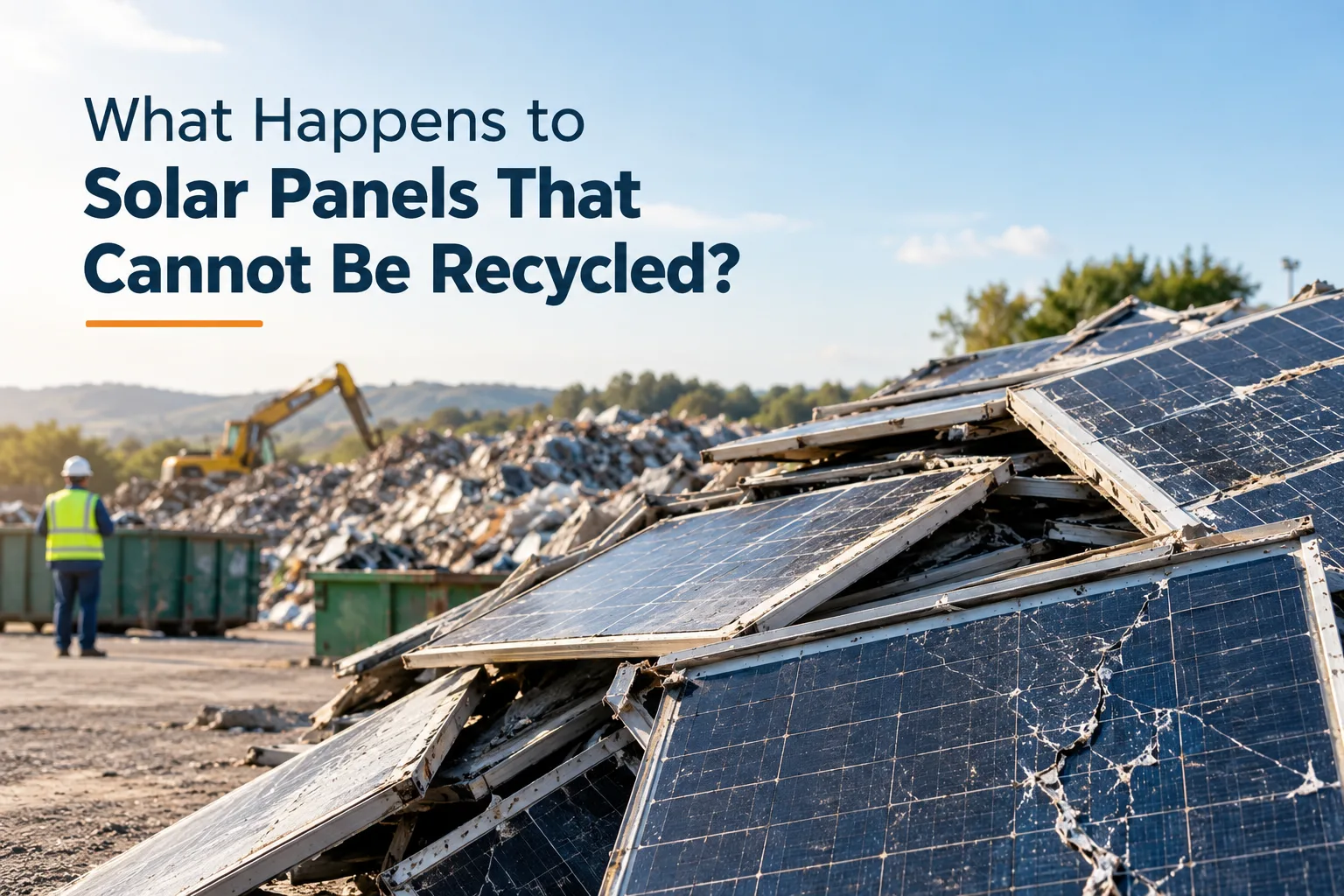
Solar panels eventually reach the end of their useful life due to damage, reduced performance, or system upgrades. While many can be recycled or reused, others require special handling and proper disposal. Understanding how to manage solar panels that cannot be recycled helps businesses and solar farm operators reduce waste and protect the environment.
Why Are Some Solar Panels Difficult to Recycle?
Most solar panels contain materials that can be recovered, including glass, aluminum, copper, and silicon. However, separating these materials is not always straightforward.
The different layers of a solar panel are tightly bonded together to protect the solar cells from moisture, heat, and other environmental conditions. While this design helps panels operate outdoors for many years, it also makes them more difficult to dismantle.
Several factors can limit solar panel recycling.
Damaged panels: Panels affected by hail, fire, severe storms, or physical impact may have broken glass, damaged cells, or exposed internal components. These conditions can make handling and processing more complicated.
Mixed materials: Solar panels contain glass, metals, silicon cells, plastic layers, wiring, and other components. Separating every material requires suitable equipment and processing methods.
Limited recycling facilities: Not every recycling facility is equipped to handle all solar panel technologies or damaged modules. Transportation costs and the distance to a suitable facility can also affect whether recycling is practical.
Cost of material recovery: Recovering certain materials requires specialized processes. If the value of the recovered materials does not cover the processing and transportation costs, some recycling options may not be economically practical.
According to the U.S. Environmental Protection Agency (EPA), solar panel recycling technology continues to develop, and recovering all materials at a commercial scale remains challenging.
What Happens to Solar Panels That Cannot Be Recycled?
When a solar panel cannot be recycled through a standard process, it does not automatically mean that the entire panel must be thrown away. Several options may be considered before final disposal.
1. The Panel May Be Repaired or Reused
The first step is to determine whether the panel can still serve a useful purpose.
Some panels are removed because a solar installation is being upgraded, even though the panels still generate electricity. Others may have minor damage that can be repaired safely by qualified professionals.
Panels that pass appropriate electrical and performance checks may be suitable for reuse in another installation. Refurbished panels may also be used in applications where their remaining output meets the project's requirements.
However, not every damaged panel can be reused. Panels with serious structural damage, compromised electrical components, or other safety concerns should not be returned to service without proper assessment.
Separating reusable panels from damaged or unusable ones also helps prevent unnecessary waste and makes the next stage of solar panel waste management easier.
2. Recoverable Materials May Be Separated
Even when a complete solar panel cannot be recycled using a particular process, some of its components may still be recoverable.
For example, a recycling facility may remove the aluminum frame, junction box, and accessible wiring before processing the remaining panel materials. Glass and certain metals may also be recovered through suitable mechanical, thermal, or chemical processes.
The challenge is that recovering some materials does not necessarily mean every part of the panel can be recycled.
The remaining glass fragments, polymer layers, cell materials, and processing residues may require additional treatment. Their final destination depends on their composition, the capabilities of the facility, and the applicable waste regulations.
This is why choosing an appropriate solar panel recycling service matters. A responsible recycling program should consider the entire panel rather than focusing only on the easiest materials to recover.
3. The Remaining Waste May Require Specialized Treatment
Some solar panels contain metals such as lead or cadmium. Whether discarded panels are classified as hazardous waste depends on their composition and the applicable regulatory requirements.
If a panel or its processing residues are classified as hazardous waste, they must be handled according to the relevant hazardous waste rules. Appropriate treatment and disposal methods may be required to protect workers, soil, water, and surrounding communities.
Even when a panel is not classified as hazardous waste, it should still be managed responsibly.
Breaking panels apart without proper controls can create sharp glass fragments and expose workers to potentially harmful materials. Damaged modules should therefore be handled carefully and assessed before transportation or processing.
Businesses should work with qualified waste management providers that understand the requirements for handling end-of-life solar panels.
4. Landfill Disposal May Be Necessary in Some Cases
When a panel cannot be reused or recycled and no suitable recovery process is available, landfill disposal may be an option for the remaining waste.
However, this does not mean that every solar panel can be placed in an ordinary landfill.
The waste must first be evaluated under applicable regulations. Panels classified as hazardous waste generally require disposal at an authorized hazardous waste facility unless a permitted alternative management route applies. State and local requirements may also be stricter than federal rules.
Before selecting a disposal route, project owners should confirm that the receiving facility is authorized to accept the specific waste.
Landfill disposal also has environmental and resource implications. Materials that could potentially be recovered may be permanently lost, while improperly managed waste can create avoidable risks.
For this reason, recycling and reuse should be evaluated before disposal whenever practical and legally appropriate.
What Are the Environmental Risks of Improper Solar Panel Disposal?
Solar energy helps reduce dependence on fossil fuels, but its environmental benefits do not remove the need to manage old equipment properly.
Improper solar panel disposal can create several problems.
Potential contamination: Certain panel types contain metals that may pose environmental concerns if waste is managed incorrectly. The actual risk depends on the panel's composition, condition, and disposal environment.
Loss of valuable materials: Aluminum, glass, copper, and other recoverable materials may be wasted when panels are discarded without proper assessment.
Increased landfill waste: As more solar installations reach the end of their service life, poorly managed disposal can add unnecessary pressure to waste facilities.
Additional project costs: Unplanned storage, repeated transportation, improper sorting, and noncompliant disposal can increase the cost of managing a decommissioned solar installation.
A well-planned disposal strategy helps businesses reduce these risks while making better use of the materials already available.
How Can Businesses Manage Solar Panels That Cannot Be Recycled?
For commercial properties and utility-scale solar farms, managing unusable panels requires more planning than simply arranging a collection.
The following steps can help.
Assess the Panels Before Removal
Identify the panel types, quantities, condition, and reasons for removal. Separate panels that may be suitable for reuse from those that are broken or beyond repair.
Find an Appropriate Recycling or Waste Management Partner
Choose a provider that can explain which materials will be recovered, how the remaining waste will be managed, and whether the facility can accept your particular panel type.
Plan Transportation and Storage
Store removed panels securely to reduce further breakage and prevent unnecessary exposure to weather. Transportation arrangements should account for damaged modules and any applicable waste shipment requirements.
Confirm Compliance and Documentation
Ask for relevant recycling records, waste transfer documentation, and disposal records where applicable. For large projects, maintaining material tracking and clear reporting can help demonstrate responsible waste management.
Include Disposal in the Decommissioning Plan
Solar panel waste is only one part of a larger decommissioning project. Inverters, wiring, mounting structures, and other equipment may also require removal, recycling, or disposal.
Businesses planning a complete site shutdown can explore solar panel and solar farm decommissioning services to understand how removal, material recovery, waste management, and site restoration fit together.
How Green Clean Solar Helps With End-of-Life Solar Panels
Managing solar panels that cannot be recycled through standard processes requires a clear plan for reuse, material recovery, and responsible disposal.
Green Clean Solar provides solar panel removal, recycling, and decommissioning support for commercial and utility-scale projects. Its services include coordinating the removal of solar equipment, identifying opportunities for reuse and material recovery, and managing waste through appropriate channels.
For businesses planning to retire old or damaged panels, Green Clean Solar's solar panel removal and disposal services offer a starting point for planning the next steps.
The right approach depends on the type of panels, project size, site conditions, and applicable regulations. Before committing to a disposal method, ask your service provider how unrecoverable materials will be handled and what documentation will be available.
The goal is to recover as much useful material as practical while ensuring that anything that cannot be reused or recycled is managed responsibly.
Conclusion
Solar panels that cannot be recycled through standard methods may still have options for reuse, partial material recovery, or specialized waste treatment. When none of these options is suitable, disposal must follow the requirements that apply to the specific waste.
For solar farm operators and commercial property owners, the key is to assess panels before removal, choose an appropriate waste management partner, and plan for the materials that remain after recycling.
Responsible solar panel disposal services help reduce avoidable waste, protect the environment, and make end-of-life solar projects easier to manage.
Frequently Asked Questions
1. What happens to solar panels that cannot be recycled?
They may be assessed for reuse, processed to recover certain materials, or sent for appropriate waste treatment and disposal. The correct option depends on their condition, composition, available facilities, and applicable regulations.
2. Are solar panels that cannot be recycled hazardous waste?
Not necessarily. Some discarded solar panels meet the criteria for hazardous waste, while others do not. Their classification depends on the materials they contain and the applicable regulatory requirements.
3. Can damaged solar panels be recycled?
Yes, some damaged solar panels can be recycled. However, broken glass, fire damage, and exposed internal components may require special handling. The recycling facility must be able to accept and process the particular type of damaged panel.
4. Is it legal to dispose of solar panels in a landfill?
Landfill disposal may be permitted when the facility is authorized to accept the waste and all applicable requirements are met. Panels classified as hazardous waste must follow the relevant hazardous waste disposal rules.
5. Which solar panel materials can still be recovered?
Depending on the panel design and recycling process, materials such as aluminum, glass, copper, and silicon may be recovered. Not every facility can recover all materials, and some processing residues may still require disposal.
6. How can businesses reduce solar panel disposal waste?
Businesses can assess panels for reuse, separate damaged modules, work with suitable recycling providers, track recovered materials, and include waste management in their solar decommissioning plans.
7. Who handles solar panel removal and disposal for large solar farms?
Specialized solar decommissioning and recycling providers can coordinate panel removal, transportation, material recovery, and the appropriate management of residual waste. Project owners should confirm the provider's capabilities, compliance procedures, and documentation before starting work.