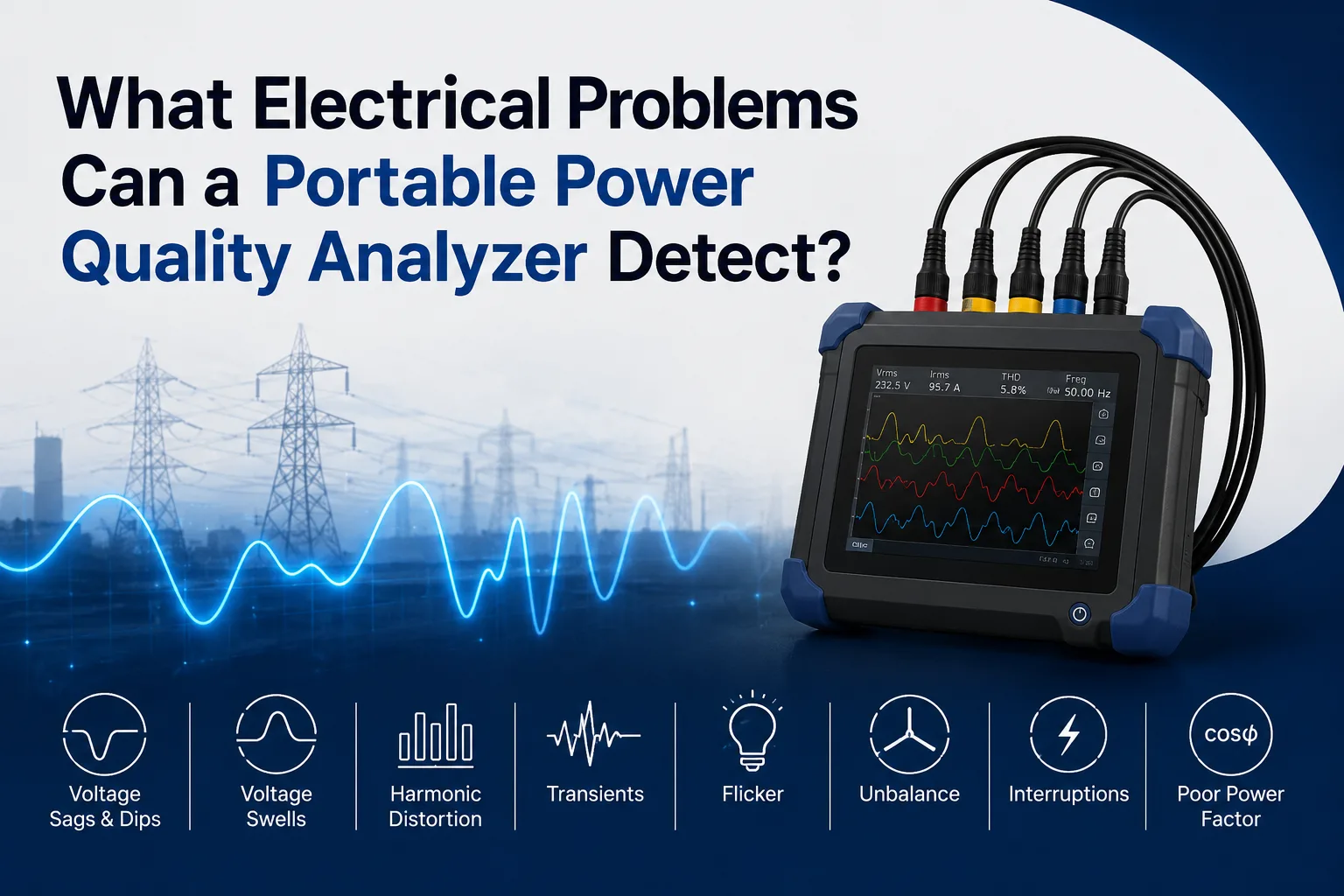
Electrical systems can experience hidden disturbances that reduce equipment performance, increase energy costs, and lead to unexpected downtime. Many of these issues occur within milliseconds, making them difficult to identify using standard electrical meters. A Portable Power Quality Analyzer captures and records these events, helping engineers understand what is happening within a power system and determine the root cause of recurring electrical problems.
Whether troubleshooting a manufacturing plant, commercial building, renewable energy installation, or utility network, a portable analyzer provides detailed insights into voltage, current, harmonics, frequency, and other critical electrical parameters. Modern instruments, including a 3 phase power quality analyzer and Class A Power Quality Analyzer, deliver precise measurements that support maintenance, compliance, and long-term system reliability.
What Is a Portable Power Quality Analyzer?
A Portable Power Quality Analyzer is a diagnostic instrument designed to measure, record, and analyse the quality of electrical power within a system. Unlike a standard multimeter that provides only momentary readings, a power quality analyzer continuously monitors electrical parameters over extended periods, allowing technicians to capture intermittent disturbances that might otherwise go unnoticed.
These instruments connect directly to electrical circuits using voltage leads and current probes. Once installed, they record detailed information about how electricity behaves under different operating conditions. This data helps identify abnormalities that may affect equipment performance, energy efficiency, or overall system reliability.
A typical portable analyzer measures:
- Voltage
- Current
- Frequency
- Active, reactive, and apparent power
- Power factor
- Harmonics
- Voltage unbalance
- Current unbalance
- Flicker
- Voltage sags and swells
- Transient events
- Energy consumption
Many modern devices also generate graphical reports, event logs, trend charts, and waveform recordings, making it easier to investigate electrical issues and communicate findings with maintenance teams or facility managers.
How Is It Different from Other Electrical Test Equipment?
A Portable Power Quality Analyzer performs far more than basic electrical measurements. While a multimeter measures values such as voltage, current, and resistance at a specific moment, it cannot capture short-lived disturbances or monitor trends over time. Similarly, a clamp meter is useful for measuring current without disconnecting conductors, but it does not provide detailed power quality analysis.
An energy meter primarily tracks electricity consumption for billing or energy management, whereas a power quality logger records electrical parameters over an extended period for later review. However, a portable power quality analyzer combines continuous monitoring, event recording, waveform capture, and advanced diagnostics in a single instrument. This makes it a practical choice for identifying the root causes of electrical problems rather than simply measuring electrical values.
How Does It Work?
A portable analyzer continuously samples electrical signals from the connected circuit. Advanced software processes this information and compares it against predefined thresholds or industry standards. Whenever an abnormal event occurs, the instrument records the exact time, duration, and severity of the disturbance.
Engineers can later review the collected data to determine whether equipment failures are linked to voltage instability, harmonic distortion, excessive current, poor power factor, or other electrical issues.
Many analyzers also support remote monitoring, automated reporting, and cloud-based data storage, making long-term condition monitoring more efficient.
Why Detecting Power Quality Problems Matters
Power quality problems rarely appear without warning. Small electrical disturbances often develop gradually before causing noticeable failures. If left unresolved, these issues can shorten equipment lifespan, reduce operational efficiency, and increase maintenance costs.
Identifying these problems early allows organisations to plan corrective actions before they disrupt operations.
Some of the most common consequences of poor power quality include:
Unexpected Equipment Failures
Sensitive electronic equipment relies on a stable power supply. Voltage fluctuations, harmonic distortion, or transient events can damage control systems, PLCs, servers, motors, and variable frequency drives.
Production Downtime
Even a brief voltage sag may interrupt automated manufacturing processes or stop production lines. Unplanned downtime often results in lost productivity and higher operational costs.
Increased Energy Consumption
Electrical systems operating with poor power factor, harmonic distortion, or overloaded circuits consume more energy than necessary. Detecting these inefficiencies helps improve overall energy performance.
Reduced Equipment Life
Continuous exposure to electrical disturbances accelerates wear on motors, transformers, capacitors, and power supplies. Monitoring power quality helps extend equipment lifespan and reduce replacement costs.
Improved Safety
Electrical abnormalities such as overloaded conductors, excessive neutral currents, or voltage imbalance can increase the risk of overheating and insulation failure. Identifying these conditions early contributes to a safer working environment.
Better Maintenance Planning
Instead of reacting to unexpected failures, maintenance teams can use power quality data to schedule repairs during planned maintenance windows. This proactive approach reduces emergency callouts and improves asset reliability.
By providing accurate, real-time electrical data, a Portable Power Quality Analyzer enables engineers to move from reactive troubleshooting to predictive maintenance. Whether used during commissioning, routine inspections, or fault investigations, it delivers the insights needed to maintain reliable and efficient electrical systems.
Industries That Benefit Most
Power quality issues can affect almost any facility that relies on electrical equipment. Regular monitoring helps identify hidden problems before they disrupt operations.
Industries that commonly use a Portable Power Quality Analyzer include:
- Manufacturing plants
- Commercial buildings
- Data centres
- Hospitals
- Mining operations
- Renewable energy facilities
- Utilities
- Water and wastewater treatment plants
These environments often operate sensitive equipment where stable power is essential for safety, efficiency, and uptime.
Supporting Long-Term Monitoring
While a Portable Power Quality Analyzer is ideal for diagnosing electrical disturbances, load loggers are useful for tracking electrical demand over longer periods. They help identify load patterns, peak demand, and changes in energy usage.
A power quality logger can also record voltage and current trends over days or weeks, providing valuable data for maintenance planning and energy management.
Why Measurement Accuracy Matters
Accurate measurements are essential when investigating electrical issues or verifying compliance. A Class A Power Quality Analyzer follows recognised international standards, delivering consistent and repeatable results.
This level of accuracy helps engineers compare measurements with confidence, especially during troubleshooting, acceptance testing, or detailed power quality assessments.
Selecting the Right Solution
The right instrument depends on the complexity of your electrical system and monitoring requirements. For industrial facilities, a 3 phase power quality analyzer is often the preferred choice because it measures all three phases simultaneously and captures detailed information about system performance.
When choosing an analyzer, consider factors such as:
- Measurement accuracy
- Harmonic analysis
- Data logging capability
- Reporting software
- Battery life
- Safety rating
- Ease of use
Conclusion
Maintaining good power quality starts with identifying electrical issues before they affect operations. A Portable Power Quality Analyzer provides the data needed to detect voltage disturbances, harmonics, transients, and other conditions that can reduce equipment performance or cause unexpected downtime.
For applications that require continuous monitoring, additional tools such as load monitoring devices and transformer monitoring solutions can provide valuable long-term insights. When selecting testing equipment, it is also important to choose a manufacturer that offers dependable products, technical support, calibration services, and software updates.
CHK Power Quality provides a range of monitoring solutions that help engineers and maintenance teams troubleshoot electrical systems, improve reliability, and support informed maintenance decisions.
Frequently Asked Questions
What does a Portable Power Quality Analyzer measure?
It measures voltage, current, frequency, harmonics, power factor, energy consumption, and other electrical parameters to identify power quality issues.
Can it detect harmonic distortion?
Yes. A Portable Power Quality Analyzer can identify harmonic levels and help determine whether they are affecting electrical equipment or overall system performance.
Is a power quality logger the same as an analyzer?
Not exactly. A power quality logger focuses on recording electrical data over time, while an analyzer provides more advanced diagnostics, waveform analysis, and detailed reporting.
Why use load loggers?
Load loggers help monitor electrical demand and identify usage patterns, making them useful for capacity planning and energy management.
When is a Class A Power Quality Analyzer recommended?
A Class A Power Quality Analyzer is recommended when high measurement accuracy or compliance with recognised standards is required.