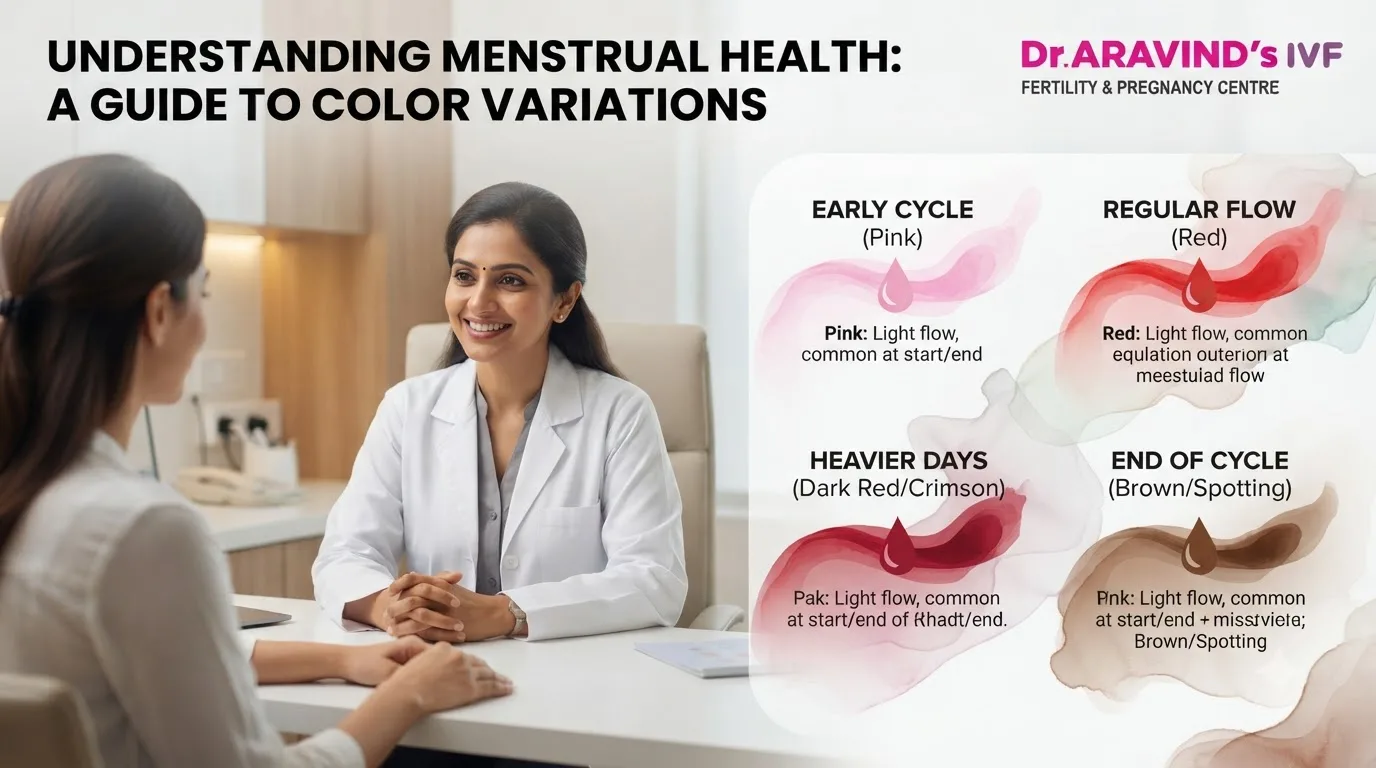
Your period can look different from one month to another, and changes in shade can naturally make you wonder whether something is wrong. Understanding period blood color can help you recognize what may be normal and when it is worth discussing your symptoms with a healthcare professional. If you are also trying to conceive, knowing your menstrual pattern can be useful when discussing reproductive health with a fertility specialist.
What Does Period Blood Color Tell You?
Menstrual blood is not always bright red. Its appearance can change depending on how quickly blood leaves the uterus, how long it has been exposed to air, and how much menstrual flow is present.
Bright Red Period Blood
Bright red blood commonly appears when menstrual flow is moving out of the uterus relatively quickly. It may be more noticeable during days of heavier bleeding. By itself, this color is generally not considered a reliable sign of a fertility problem.
Dark Red or Burgundy Blood
As blood remains in the uterus or vagina for longer before leaving the body, it can become darker. Dark red or burgundy menstrual blood is often noticed toward the middle or later part of a period and can occur as the flow becomes lighter.
Brown Period Blood
Brown blood usually represents older blood that has taken longer to leave the body. It is frequently seen at the beginning or end of menstruation when the flow is lighter. Brown discharge around a period does not automatically indicate reduced fertility.
Pink Period Blood
A lighter pink appearance can happen when menstrual blood mixes with vaginal fluid. It may be seen during lighter bleeding. If a new or persistent change in bleeding occurs alongside other symptoms, a medical consultation can help determine the cause.
Does Period Blood Color Affect Fertility?
One of the most common questions among women trying to conceive is whether menstrual blood color can reveal fertility health. In most cases, period blood color alone cannot determine whether someone is fertile or infertile.
Fertility depends on several factors, including ovulation, egg health, the fallopian tubes, the uterus, hormonal function, age, and the male partner's reproductive health. For this reason, looking only at menstrual blood color can provide an incomplete picture.
If you have been trying to conceive without success, tracking your cycle, menstrual flow, ovulation signs, and other symptoms can give your doctor useful information during a fertility evaluation.
When Should You Talk to a Fertility Specialist?
Color is only one part of your menstrual pattern. Pay attention to changes such as unusually heavy or prolonged bleeding, severe menstrual pain, bleeding between periods, consistently irregular cycles, or a significant change from your usual pattern.
These symptoms do not necessarily mean there is a fertility problem, but they can be worth discussing with a qualified doctor. A fertility assessment may include a review of your menstrual history, ovulation, reproductive health, and appropriate diagnostic tests based on your individual situation.
Looking at Your Complete Fertility Picture
If you are searching for a Best fertility centre in Tirupathur, Dr Aravind's IVF Fertility & Pregnancy Centre can help you understand fertility concerns through an individualized consultation rather than relying on a single symptom.
The important takeaway is simple: period blood color can naturally vary, and color alone does not diagnose fertility problems. If your menstrual pattern has changed or you are concerned about conception, speaking with a fertility specialist can help you understand what is happening and what steps may be appropriate for you.