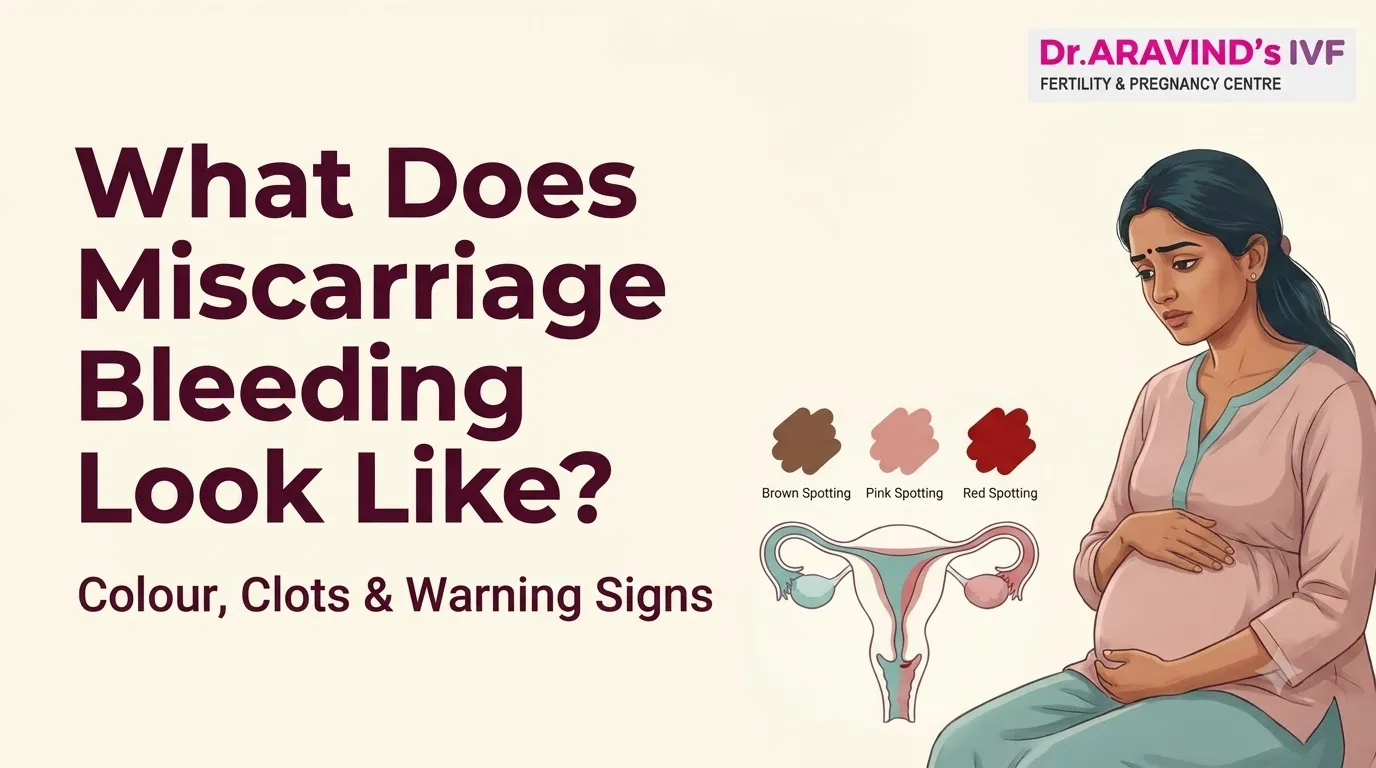
Miscarriage bleeding can look different from one person to another. It may begin as light spotting, appear pink or brown, or develop into heavier red bleeding with blood clots. However, the colour of bleeding alone cannot confirm a miscarriage, and bleeding during early pregnancy does not always mean pregnancy loss.
Understanding the possible signs can help you recognise when medical assessment is needed. If you are trying to conceive again after a pregnancy loss, the best IVF centre in Salem can help you discuss your reproductive health and understand appropriate next steps when fertility support is needed.
What Does Miscarriage Bleeding Look Like?
Miscarriage bleeding may range from a few spots on underwear to bleeding similar to a heavy menstrual period. Some people experience abdominal cramps, lower back discomfort, or pass clots and pregnancy tissue. Others may have very little bleeding, depending on the type of miscarriage.
Bleeding can begin gradually and become heavier over several hours or days. In some cases, it may stop and start. These patterns vary, so the amount or appearance of blood cannot reliably establish whether a pregnancy is continuing.
If you notice bleeding during pregnancy, contact your healthcare professional for advice. An ultrasound and, when appropriate, blood tests measuring pregnancy hormone (hCG) levels may help determine what is happening.
Miscarriage Bleeding Colours: Brown, Pink and Red
The colour of bleeding can change as blood leaves the body, but it is not a reliable way to diagnose miscarriage.
- Brown bleeding: Brown blood often represents older blood that has taken longer to leave the body. It can occur with spotting in early pregnancy and does not automatically indicate miscarriage.
- Pink bleeding: Light pink spotting may occur when a small amount of blood mixes with vaginal discharge. It can have several causes, including cervical irritation.
- Bright red bleeding: Bright red blood usually indicates fresher bleeding. It may occur with miscarriage, but other pregnancy-related conditions can also cause it.
- Dark red bleeding: Dark red blood may appear during heavier bleeding or when blood has been present for some time.
If you are unsure about your symptoms, read our guide to what does miscarriage bleeding look like for more information about possible signs and causes.
What Do Miscarriage Blood Clots Look Like?
Miscarriage blood clots may look like dark red, jelly-like lumps or thicker pieces of blood. Some people may also pass greyish or whitish tissue. The appearance depends on the stage of pregnancy and the amount of bleeding.
Blood clots can also occur during menstruation, so passing a clot does not confirm pregnancy loss. Similarly, tissue-like material cannot be identified reliably by appearance alone.
Contact a healthcare professional if you pass clots while pregnant, particularly if bleeding is increasing or you have pain. Do not delay urgent care if symptoms are severe.
Warning Signs That Need Medical Attention
Seek urgent medical assessment if you experience heavy bleeding, severe or worsening abdominal pain, fainting, significant dizziness, fever, or foul-smelling vaginal discharge. Severe one-sided pelvic pain or shoulder-tip pain, especially with dizziness or faintness, may indicate an ectopic pregnancy, which requires emergency treatment.
Even light bleeding deserves medical advice when you are pregnant, especially if accompanied by cramps or pain. Do not assume that bleeding is a miscarriage without an appropriate assessment.
A clinician may recommend an ultrasound, hCG blood tests, or follow-up testing based on your symptoms and stage of pregnancy. Sometimes an early scan cannot provide a definite answer, and repeat assessment is needed.
Can You Have Miscarriage Without Heavy Bleeding?
Yes. A miscarriage does not always cause heavy bleeding or obvious clots. In a missed miscarriage, pregnancy development has stopped, but the body may not immediately expel the pregnancy tissue. Symptoms can be limited or absent initially.
Conversely, some pregnancies continue normally despite light bleeding. Because symptoms overlap, medical evaluation is the safest way to understand the cause.
When Should You Seek Fertility Guidance After a Miscarriage?
Many people can conceive after a miscarriage, but the right timing depends on their physical recovery, medical circumstances, and emotional readiness. A healthcare professional can advise when it is appropriate to try again and whether further evaluation is needed, particularly after repeated pregnancy losses.
If you have concerns about conception or recurrent miscarriage, a qualified fertility specialist can help assess possible contributing factors and discuss suitable care. Choosing the best IVF centre in India should involve reviewing the specialist's qualifications, the recommended investigations, treatment transparency, and whether the proposed care suits your individual needs. IVF is not necessary for everyone after a miscarriage.
Frequently Asked Questions
1. What colour is miscarriage bleeding?
Miscarriage bleeding may be brown, pink, bright red, or dark red. Colour alone cannot confirm miscarriage, so medical assessment is important if bleeding occurs during pregnancy.
2. Do miscarriage blood clots always mean pregnancy loss?
No. Blood clots can occur with miscarriage and menstruation, among other causes. A healthcare professional may recommend an ultrasound and blood tests to assess the pregnancy.
3. Can miscarriage bleeding start as brown spotting?
Yes. Bleeding may begin as brown spotting and later become red or heavier. However, brown spotting can also occur in pregnancies that continue, so it should not be used alone to diagnose miscarriage.
4. When is miscarriage bleeding an emergency?
Seek emergency care for very heavy bleeding, severe abdominal pain, fainting, significant dizziness, or symptoms such as one-sided pain with shoulder-tip pain. Fever or foul-smelling discharge also needs prompt medical assessment.
5. Can I get pregnant again after a miscarriage?
Yes, many people conceive successfully after a miscarriage. The timing depends on recovery and individual medical circumstances. Consult a healthcare professional for personalised advice, especially after repeated pregnancy losses.
Get the Right Guidance for Your Next Step
Bleeding, clots, and cramps can be worrying, but they do not always mean miscarriage. Prompt medical assessment is the best way to understand the cause and protect your health. If you are concerned about a current pregnancy, contact your obstetric healthcare professional. If you need fertility guidance after pregnancy loss, speak with a qualified specialist at Dr. Aravind's IVF Fertility & Pregnancy Centre to discuss your individual needs and appropriate options.