
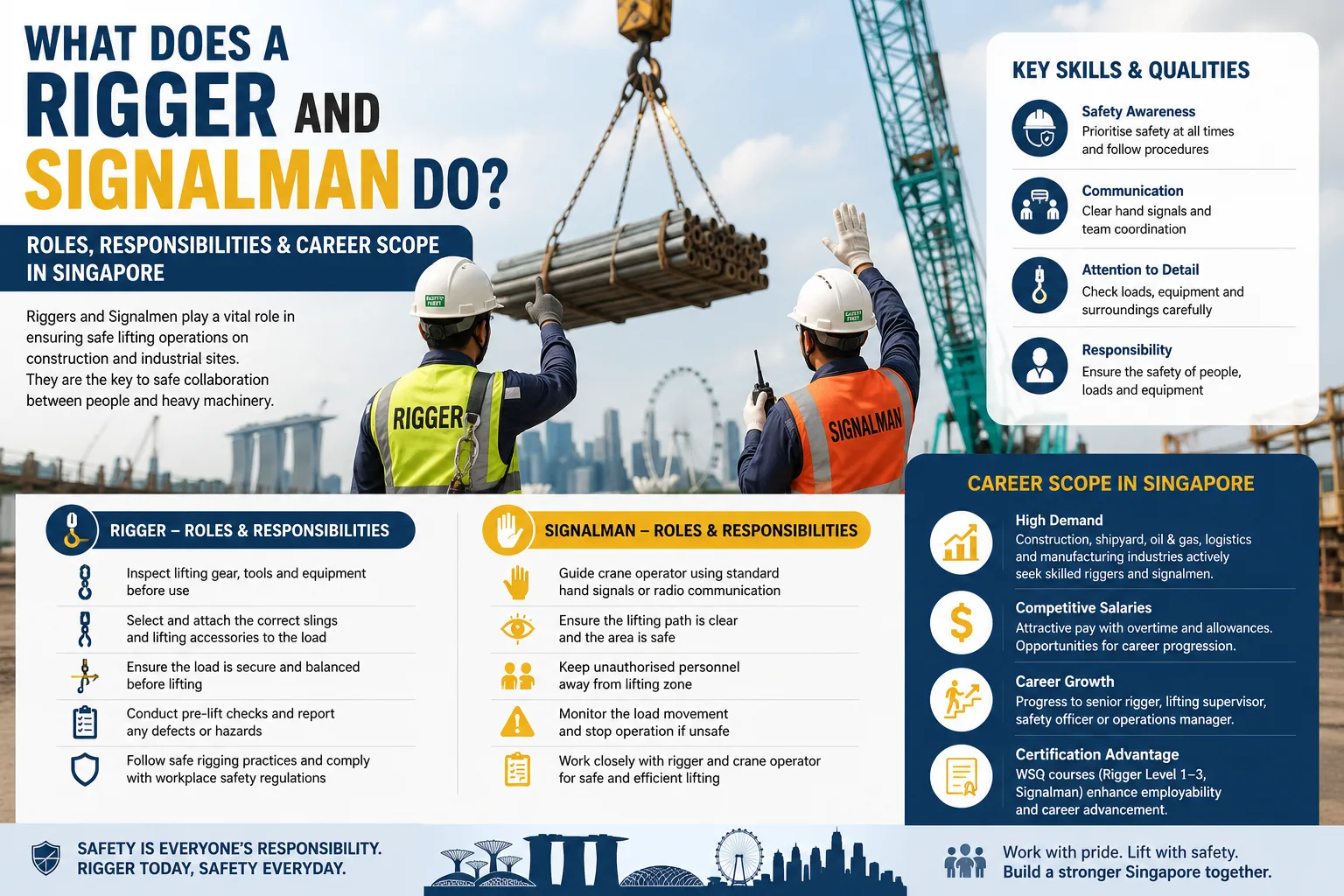
Lifting operations are a daily necessity to Singapore’s construction, marine, logistics and engineering industries. Whether it is moving heavy steel beams, machinery, containers or equipment, these jobs require precision, coordination and strict safety control. This is where the role of a rigger and signalman comes in.
A Rigger and Signalman ensures that lifting activities are conducted safely, efficiently and without any risk to workers or property. These positions are essential in preventing accidents and complying with occupational safety regulations in Singapore.
Greensafe International - Singapore conducts the WSQ Perform Rigger and Signalman Task (PRST) course to equip individuals with the skills and knowledge to carry out these roles professionally and safely.
Who is a Rigger?
A Rigger is responsible for the preparation and securing of loads prior to lifting by cranes or other lifting equipment. It’s a role that requires both planning and hands-on execution to ensure loads are stable and balanced correctly.
Key responsibilities of a Rigger include:
- Inspection of lifting equipment e.g. slings, shackles, hooks, chains
- Calculation of loads weight and centre of gravity
- Choosing the right lifting gear based on type and weight of the load
- Secure and attach loads to lifting devices safely
- Making sure loads are balanced before lifting starts
- Checking for potential hazards in the lifting area
A Rigger plays a crucial role in preventing load drops, equipment failure, and unsafe lifting conditions.
Who is a Signalman?
A Signalman is a person who communicates with the crane operators to guide the movement of loads during lifting operations. Crane operators often have limited visibility so the Signalman is their eyes on the ground.
Key responsibilities of a Signalman include:
- Providing standardized hand signals or radio instructions
- Communication with crane operators during lifting operations
- Keeping the lifting path free of workers and obstructions
- Monitoring load movement for safety and accuracy
- Co-ordinate with riggers and site supervisors
- Operations will cease if unsafe conditions are identified
Effective communication is the most important skill for a Signalman, as even a small misunderstanding can lead to serious accidents.
Why Are Riggers and Signalmen Important in Worksites?
Lifting operations are one of the most dangerous activities in the workplace. “Without proper coordination accidents can happen such as falling loads, equipment damage or injury to a worker.
Riggers and Signalmen help to:
- Lifting operations: Minimise workplace accidents
- Better coordination between ground crew and crane operators
- Comply with Workplace Safety and Health (WSH) regulations
- Reduce downtime and boost operational efficiency
- Ensure a safe workplace for all employees
In industries like construction and marine engineering, these roles are not optional—they are essential for safe operations.
Skills Required for Riggers and Signalmen
To perform effectively, individuals must develop both technical and communication skills.
Technical skills:
- Understanding lifting principles and load dynamics
- Knowledge of rigging equipment and its safe usage
- Ability to assess risks in lifting operations
- Familiarity with workplace safety procedures
Communication skills:
- Clear use of hand signals and radio communications
- Strong situational awareness
- Ability to work as part of a coordinated team
- Fast decisions in high-risk environments
Career Scope for Riggers and Signalmen in Singapore
Singapore’s infrastructure, construction, shipyard, and logistics sectors continue to grow, creating steady demand for skilled lifting professionals.
Career opportunities include:
- Construction sites and building projects
- Shipyards and marine engineering facilities
- Logistics and warehouse operations
- Heavy machinery and manufacturing industries
- Oil and gas-related projects
With proper certification and experience, Riggers and Signalmen can also progress into supervisory roles such as lifting supervisors or safety coordinators.
WSQ PRST Training with Greensafe International - Singapore
Formal training is strongly recommended to work as a Rigger and Signalman in Singapore professionally. The WSQ Perform Rigger and Signalman Task (PRST) course in Singapore from Greensafe International is designed to equip you with practical safety training and hands-on knowledge.
The course typically covers:
- Lifting procedures and regulations
- Rigging and equipment handling methods
- Signal communication methods and protocols
- Risk assessment and hazard identification
- Practical lifting operation exercises
Upon completion, learners gain industry-relevant skills that improve employability and workplace safety awareness.
Conclusion
Singapore’s Riggers and Signalmen play an essential role in the safe and efficient lifting operations in many industries. They need to be technical, accurate and communicate well to avoid accidents and keep things ticking over.
With growing demand for skilled lifting personnel, completing a structured training program like the WSQ PRST course from Greensafe International - Singapore can significantly enhance career opportunities in the workplace safety and industrial sectors.
Whether you are new to the industry or looking to improve your skills, becoming a certified Rigger and Signalman is a good step to a safer and more rewarding career.