Investing in high-quality outdoor shade structures is one of the smartest decisions a business owner can make. Whether you operate a trendy restaurant in downtown Phoenix, a boutique retail shop in Scottsdale, or a commercial office complex in Tucson, street visibility and customer comfort are essential for driving revenue. Adding a professional canopy or awning directly enhances your curb appeal while expanding your usable, climate-controlled square footage. When searching for the right setup, the first question most business owners ask is: what is the actual commercial awning cost?
Because every commercial building features distinct architectural constraints, local zoning challenges, and spatial requirements, there is no single flat price tag. A small, stationary window covering might run a few thousand dollars, whereas an expansive, motorized setup spanning an entire outdoor dining patio will require a significantly larger investment.
At Phoenix Tent and Awning Company, we have been designing, fabricating, and installing custom commercial shade solutions across Arizona for generations. In this comprehensive guide, we will break down the core factors that dictate your overall project pricing, explore common material options, and detail what you can expect during the installation process.
1. Type and Functionality of the Awning System
The mechanical design of your structure is the primary factor influencing your initial financial investment. Business owners must choose between fixed permanent structures or highly adaptable, moving systems.
Stationary Coverings
A fixed storefront covering features a rigid framework welded securely to your building wall. These traditional setups provide continuous, year-round protection and are highly effective for displaying company logos or matching specific architectural features. Because they contain zero moving parts or motorized tracks, fixed options represent a highly stable and cost-effective structural foundation.
Dynamic Open-Air Systems
If your business requires seasonal flexibility, tracking a retractable commercial awning price becomes necessary. These advanced mechanisms allow you to extend the shade during the peak heat of Arizona afternoons and roll the fabric back during comfortable winter evenings.
Because they require heavy-duty internal folding arms, spring-loaded tensioning cables, and internal electric motors, retractable systems command a higher price point than stationary models. However, the convenience of automated wind sensors that protect your investment during unexpected monsoon dust storms makes them highly popular for modern restaurants and bars.
2. Material Selections: Framework and Performance Fabrics
The specific raw materials chosen for your frame and cover determine both the up-front expense and the long-term operational lifespan of your investment.
Aluminum vs. Steel Framing
Commercial frames are typically constructed from either structural steel or industrial-grade aluminum. Aluminum is incredibly popular across the Valley because it is naturally lightweight, completely rust-proof, and easy to manipulate into clean designs.
Steel framing offers superior structural strength, making it the standard choice for massive spans or cantilevers that must support substantial weights. However, steel requires specialized protective coatings to ward off environmental corrosion, which can elevate your base manufacturing expenses.
Fabric Awnings and Covers
When exploring high-performing fabric awnings, the type of textiles selected is incredibly important. Premium commercial shade systems rely on top-tier materials like solution-dyed acrylics, vinyl-coated polyesters, or heavy-duty composite fabrics.
Investing in cheap, unrated fabrics will result in rapid color fading, sagging, and dry-rotting under the harsh Arizona sun. Premium commercial fabrics are woven to block up to 98% of harmful ultraviolet rays, carry robust flame-retardant certifications required by local building codes, and feature protective coatings that repel dirt and grime.
3. Overall Size, Projection, and Scale
Like most major commercial construction projects, scale plays a dominant role in estimating costs. Awning costs are largely calculated based on the total square footage of coverage, along with the complexity of the projection distance.
Small Applications (3 to 6 feet wide): Ideal for individual office windows or single entryways, these smaller frameworks require fewer raw materials and minimal installation labor.
Medium Storefronts (7 to 15 feet wide): Perfect for standard boutique retail frontages, these systems require sturdier mounting brackets and multi-person installation crews.
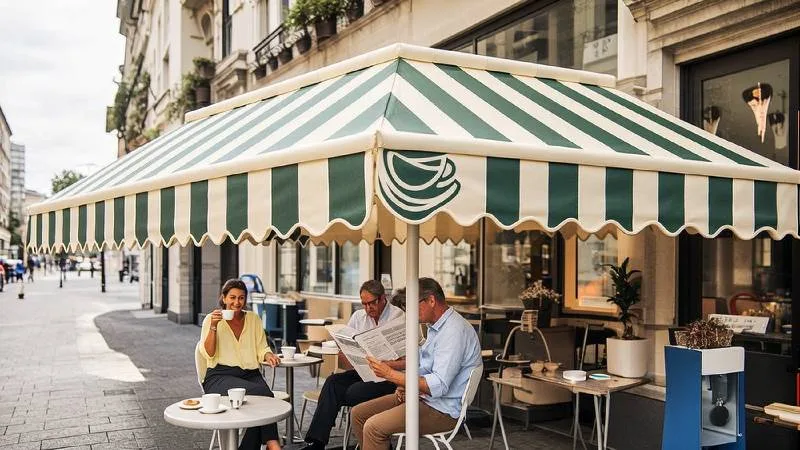
Large Outdoor Patios (16+ feet wide): When covering large dining spaces, the commercial canopy cost increases because the framework must feature reinforced support pillars, concrete ground footings, or heavy-duty cantilevered arms to safely handle the weight and wind load.
4. Custom Branding, Lettering, and Graphics
For a commercial enterprise, an awning is far more than a simple sun shield; it acts as a permanent, highly visible billboard on a busy street. Customizing your cover to serve as a marketing tool will influence the final fabrication quote.
Adding custom graphics, high-resolution business logos, or specific illuminated lettering requires specialized manufacturing processes like heat-sealed vinyl applications or premium screen-printing. While these branding elements increase your initial production costs, they pay massive dividends by making your storefront instantly recognizable to passing foot traffic and motorists.
5. Engineering Permits and Awning Installation Cost
The final component of your budget involves securing necessary municipality clearances and paying for professional on-site assembly. The awning installation cost is never a uniform number because it depends heavily on where and how the structure mounts to your property.
Structural Mounting Variables
Attaching a heavy metal frame to a solid concrete tilt-up wall is relatively straightforward. However, securing a massive shade structure to a delicate stucco facade, an aging brick storefront, or a complex curtain-wall system requires specialized hardware, backing plates, and structural engineering modifications. If your project demands heavy structural adjustments or crane rentals to hoist components into position, labor fees will adjust accordingly.
Permitting and Local Compliance
Commercial structures in cities like Phoenix, Scottsdale, and Tucson must comply with strict building codes, wind load ratings, and specific setback rules. Securing commercial building permits, submitting detailed engineering calculations, and satisfying local Homeowners Association or historic preservation guidelines require time and specialized expertise, which should always be accounted for in your initial design budget.
Summary of Pricing Expectations
To help you plan your next property upgrade, here is a general breakdown of what business owners typically experience in the commercial market:
Entry-Level Storefront Accents: Ideal for basic window or door protection using standard fixed frames and high-quality fabrics.
Mid-Range Branded Commercial Solutions: Perfect for classic retail frontages, featuring custom color choices, structural aluminum frames, and custom company logos.
Premium Motorized and Large-Scale Patio Setups: Designed for expansive restaurant dining spaces, utilizing advanced motorized retractable systems, integrated LED lighting, or heavy-duty architectural metal canopies.
Frequently Asked Questions (FAQ)
How long does a commercial fabric awning typically last in Arizona?
The heavy-duty metal frame of a commercial structure is designed to last for decades. When using premium, commercial-grade solution-dyed acrylic or vinyl-coated fabrics, the cover will typically last between eight to twelve years before requiring a fabric recover, even under constant exposure to our intense desert heat.
Are retractable commercial awnings safe to use during high wind events?
Modern commercial retractable systems are highly durable, but they should be retracted during severe windstorms or major monsoon events. To protect your investment, we highly recommend integrating automated wind sensors that detect dangerous wind velocities and safely roll the awning back automatically.
Do I need a formal city building permit to install a commercial canopy?
Yes, the vast majority of municipalities across Arizona require commercial building permits and formal plan reviews for permanent outdoor structures. Working with an experienced, licensed contractor ensures your design meets all local wind-load ratings, fire clearance codes, and zoning regulations.
Can you replace the fabric on an existing frame to lower costs?
Absolutely. If your business is rebranding or your existing fabric is showing signs of wear, we can easily clean, inspect, and weld structural frame repairs before retrofitting a brand-new custom fabric cover. This saves you money by utilizing your existing infrastructure.
How do commercial awnings help reduce business utility bills?
By blocking blazing solar radiation before it hits your storefront windows and doors, commercial shades can reduce indoor heat transfer significantly. This reduces the strain on your building commercial HVAC units, leading to excellent monthly electricity savings during our long summer months.
Are you ready to elevate your business's street presence and keep your client spaces perfectly cool? Contact the commercial shade experts at Phoenix Tent and Awning Company today to schedule your custom design consultation!
Know more https://www.phoenixtent.com/blog/commercial-awning-cost-pricing-factors/