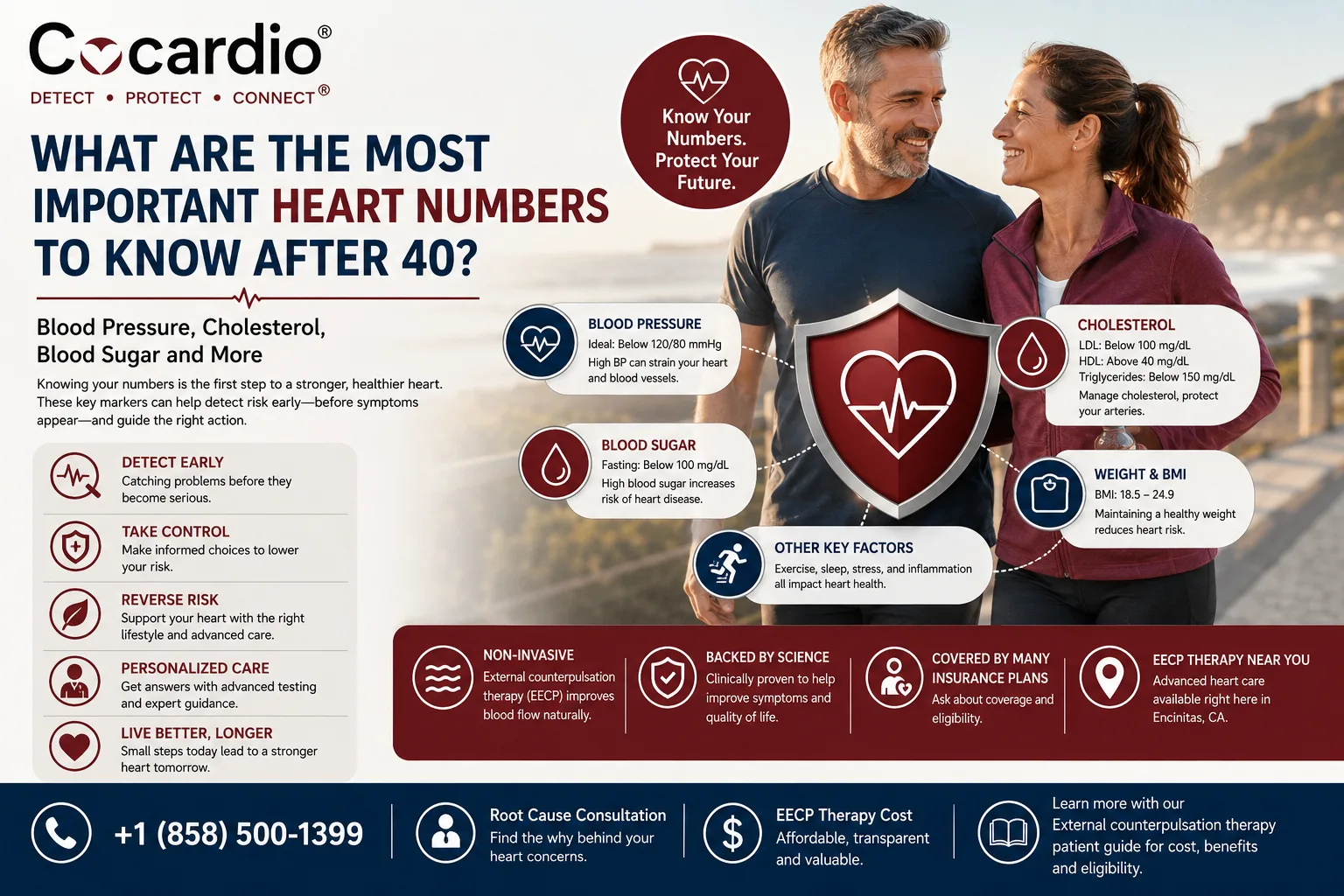
After 40, the most useful heart-health picture is usually broader than one lab result. CoCardio’s prevention-first materials repeatedly group blood pressure, cholesterol, blood sugar, symptoms, heart function, stress, sleep, and lifestyle factors together. A search for EECP therapy near me should come after that context is understood, not before.
The purpose of tracking heart numbers is not to chase isolated readings. It is to notice patterns, understand risk factors, and know when a conversation with your physician or a prevention-focused evaluation may be appropriate. CoCardio also emphasizes that services such as ECP/EECP are adjunctive and depend on candidacy.
Why Blood Pressure Belongs on Your Heart-Health Dashboard
CoCardio identifies high blood pressure as a major cardiovascular risk factor and notes that it can affect how the heart works over time. Its high-blood-pressure material connects blood pressure with heart structure and function and also considers contributors such as stress, sleep, weight, insulin resistance, and vascular stiffness.
The practical takeaway is that a blood-pressure reading is more useful when you know the pattern and can discuss it with a clinician. A single measurement should not be overinterpreted, and treatment decisions belong with a licensed healthcare professional.
What Cholesterol Tells You - and What It Does Not
Cholesterol is an important risk factor because cholesterol-related plaque can reduce blood flow to the heart. CoCardio’s high-cholesterol guidance still cautions against reacting to the number alone; it places cholesterol within a wider picture that includes symptoms, circulation, heart function, blood pressure, blood sugar, stress, and inflammation.
If cholesterol is abnormal, the next step is to understand the clinical context rather than assuming a specific degree of blockage. That is where physician-directed evaluation and, when appropriate, additional testing become important.
Why Blood Sugar Is Also a Heart Number
CoCardio includes blood sugar and metabolic health in its cardiovascular risk framework. Its prevention materials connect elevated blood sugar with cardiovascular risk and recommend looking at blood pressure, cholesterol, and blood sugar together rather than as unrelated issues.
This is especially relevant when several readings are borderline or abnormal at the same time. CoCardio’s cardiometabolic material describes clusters of risk factors as a reason to look at the bigger picture and consider earlier prevention-focused action.
Numbers Are Not the Whole Story: Heart Function Matters
Lab values cannot show how the heart is pumping or how its valves are moving. CoCardio’s heart function testing is an in-house echocardiogram that uses non-invasive ultrasound to assess heart chambers, wall motion, valve structure and function, pumping strength, and circulation patterns within the heart.
That makes heart function a different kind of information from cholesterol or blood sugar. The question is not whether everyone over 40 needs an echocardiogram; the question is whether symptoms, risk profile, or clinical guidance make heart-function assessment appropriate for you.
What Can Epigenetic Biomarker Testing Add?
CoCardio also offers Epigenetic biomarker testing, which it describes as a way to examine how lifestyle, environment, stress, sleep, inflammation, and other influences are reflected in DNA methylation patterns. It is positioned as an additional prevention-focused data layer rather than a replacement for standard medical testing.
The most responsible use of any newer biomarker is alongside established clinical information, not instead of it. CoCardio’s own framework recommends looking at the whole picture and determining what questions should be taken back to your physician.
Where External Counterpulsation Therapy Fits
CoCardio describes External counterpulsation therapy as a non-invasive, circulation-focused approach delivered through its prevention-first model. It should not be treated as the default next step simply because one heart number is high.
For appropriate candidates, it may be one non invasive heart treatment option considered after consultation and screening. Claims to reverse heart disease naturally should be interpreted within CoCardio’s broader program language and not as a guarantee of outcome for any individual.
If you are comparing local options through an ECP therapy near me search, ask how the clinic evaluates candidacy and how the service coordinates with your existing medical care.
The supplied External counterpulsation therapy patient guide for cost, benefits and eligibility is another place to review patient-oriented questions about eligibility and physician-directed care.
Common Mistakes to Avoid
- Tracking one number while ignoring the rest of the cardiovascular picture.
- Assuming a lab result tells you exactly how your heart is functioning.
- Starting a therapy search before clarifying the problem you are trying to address.
- Changing medication, diet, or treatment without guidance from a qualified healthcare professional.
Key Takeaways
- Blood pressure, cholesterol, and blood sugar are core risk-factor numbers in CoCardio’s prevention framework.
- Symptoms, stress, sleep, and lifestyle add important context.
- Heart-function testing provides information that ordinary lab values do not.
- EECP/ECP is a therapy discussion for appropriate candidates, not a substitute for understanding the underlying cardiovascular picture.
Frequently Asked Questions
What heart numbers should adults over 40 know?
CoCardio’s prevention materials emphasize blood pressure, cholesterol, and blood sugar, while also considering symptoms, heart function, stress, sleep, and lifestyle context.
Do normal lab numbers guarantee that my heart is healthy?
No. Lab values are only part of the picture. CoCardio uses heart-function testing when appropriate to assess pumping, valves, structure, and circulation patterns.
Should I search for EECP just because my cholesterol or blood pressure is high?
No. CoCardio positions ECP/EECP as a therapy for appropriate candidates after consultation and screening, not as an automatic response to one abnormal risk-factor number.
How can I contact CoCardio about testing or EECP?
Call +1 (858) 500-1399 to discuss consultation, testing options, candidacy, and local availability in Encinitas.
Know the Pattern, Not Just the Number
Heart-health numbers become useful when they are interpreted together and connected to symptoms, function, and your existing medical care. For a prevention-focused discussion about heart function testing, biomarker testing, or whether external counterpulsation belongs in the conversation, call CoCardio at +1 (858) 500-1399.
Medical disclaimer: This article is for general educational purposes only and does not diagnose, treat, or replace care from a licensed physician or cardiologist. Sudden, severe, or worsening chest pain, especially with shortness of breath, fainting, nausea, or pain spreading to the arm or jaw, requires emergency medical care.