Learning CPR may look scary at first. Yet simple lessons break the task into easy parts. A good CPR certification study guide walks learners through each step in a clear way. Short tips, easy words, and real-life scenes help people learn fast. With the right guide in hand, anyone can gain skills to help a friend, family member, or even a stranger.
Below are the key steps every reliable guide explains.
Understanding What CPR Means
CPR stands for cardiopulmonary resuscitation. Big words, simple job. CPR keeps blood and air moving when the heart stops.
The heart pumps blood. The lungs bring air. When both stop, the brain lacks oxygen. Damage may start within minutes. CPR helps push blood through the body until help arrives.
A good CPR study guide starts with this basic idea. Simple pictures and short notes help learners see why each move matters.
Also, guides explain when CPR should begin. Signs often include:
- No breathing
- No pulse
- Sudden collapse
- No response when you speak or tap
Clear signs help people act without delay.
Step One: Check the Scene for Safety
First things first. A helper must stay safe. A reliable CPR certification study guide teaches learners to pause and scan the area.
Look for risks such as:
- Fire
- Traffic
- Water
- Loose wires
If danger sits nearby, move the person only when safe to do so. Safety keeps both helper and victim protected.
Next, check if the person responds. Tap the shoulder. Speak in a loud voice. Ask if they are okay. No response means action must start soon.
Step Two: Call for Help
After checking safety, call emergency services right away. Quick help brings trained medical teams.
A good CPR study guide explains two simple options:
- Call emergency number yourself
- Ask someone nearby to call
If a phone sits close, switch on speaker mode. This way, hands stay free for CPR while help guides the process.
Every second counts here.
Step Three: Check Breathing
The next step checks breathing. Look at the chest. Watch for rise and fall. Place the ear near the mouth. Listen for air flow. Feel breath on the cheek. No breath or gasping sounds mean CPR must start at once.
Reliable guides teach learners to spend only ten seconds on this check. A long delay may harm the victim.
Step Four: Begin Chest Compressions
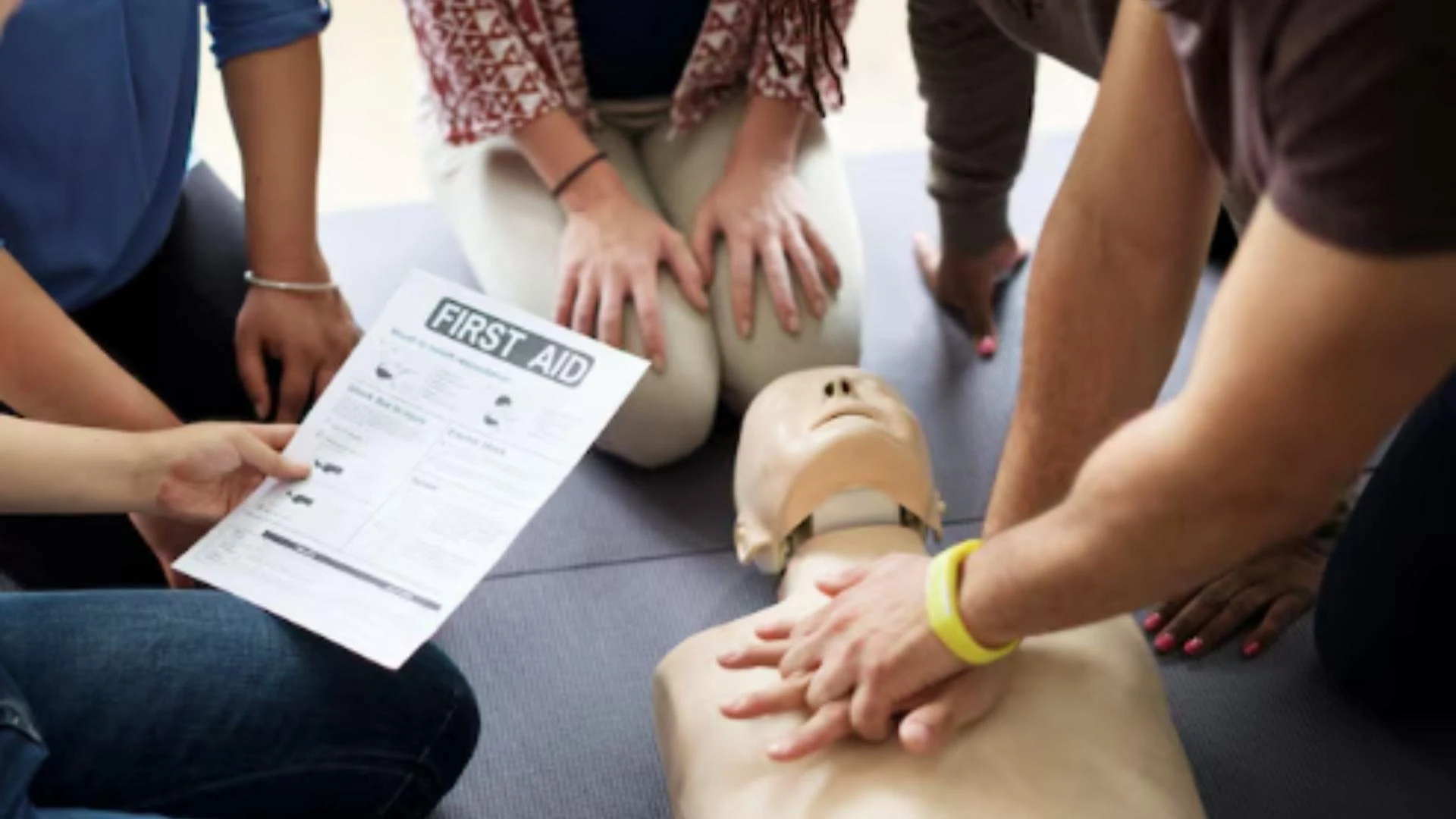
Chest compressions form the core of CPR. Hands push the chest to move blood through the body.
A solid CPR certification study guide explains this step with clear detail:
- Place the heel of one hand at the center of the chest
- Put the other hand on top
- Lock elbows
- Push hard and fast
Aim for about 100 to 120 pushes each minute. Push depth should reach about two inches for adults.
Also, let the chest rise after each push. This allows blood flow to reset before the next compression. Simple rhythm tips help learners stay on pace.
Step Five: Give Rescue Breaths
After compressions come rescue breaths. Air helps the lungs supply oxygen to the blood. Most guides teach a simple cycle:
- 30 chest compressions
- 2 rescue breaths
Tilt the head back. Lift the chin. Pinch the nose. Then give one breath lasting one second.
Watch the chest rise. Rise shows air entered the lungs. If breath fails to lift the chest, adjust head position and try again. This step forms a key part of any trusted CPR study guide.
Step Six: Keep the Cycle Going
CPR works best with a steady rhythm. Stop only when:
- Emergency team arrives
- Person starts breathing
- Body shows clear movement
- Helper feels too tired to continue
A guide often reminds learners to switch helpers when possible. Fresh energy keeps compressions strong.
Practice drills in a CPR certification study guide help learners build muscle memory. With practice, steps become second nature.
Step Seven: Learn AED Basics
AED stands for automated external defibrillator. This small device helps restart the heart with an electric shock.
Reliable guides introduce AED use because many public places hold these devices.
Basic AED steps include:
- Turn the device on
- Place pads on the chest
- Follow voice prompts
- Step back if shock begins
The device guides the user through each step. No deep medical skill needed. Combining AED use with CPR greatly improves survival chances.
Step Eight: Practice and Review
Reading alone does not build strong skills. Practice plays a huge role. A well-built CPR study guide includes:
- Step diagrams
- Quick checklists
- Practice drills
- Review questions
These tools help learners test memory and sharpen response speed. Short refresh sessions also keep skills fresh over time.
Final Thought
Emergencies bring stress and fear. Still, clear knowledge helps people act with courage. CPR stands as one of the most powerful life-saving skills anyone can learn.
A reliable CPR certification study guide breaks the process into simple steps. Safety checks, emergency calls, chest compressions, rescue breaths, and AED use all work together to protect life.
With practice and the right guide, ordinary people gain the power to help during critical moments. One calm action may save a life.