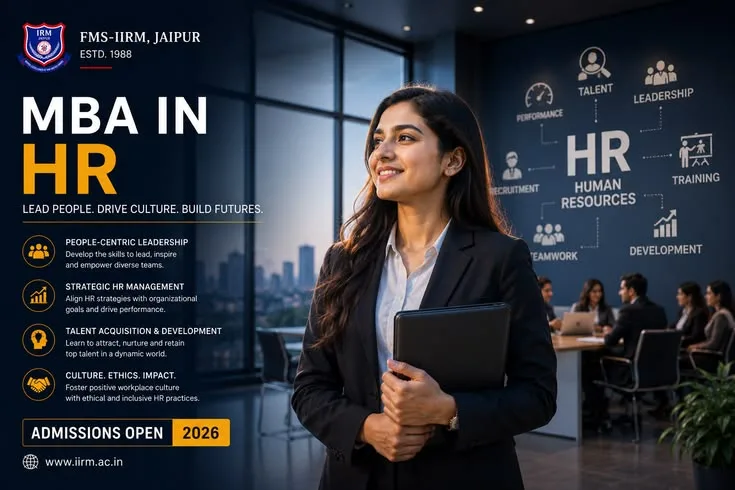
An MBA in HR Management prepares students to manage people, support organisational development, improve employee performance, and contribute to business decisions. Graduates can explore careers in recruitment, talent management, employee relations, training and development, compensation and benefits, HR analytics, and strategic human resource management.
For students researching a top HR management college in Jaipur, understanding these career options can help them select a suitable programme and prepare for long-term professional growth. Career opportunities depend on skills, internship experience, employer requirements, and the ability to understand both people and business needs.
Quick Answer: What Can You Do After an MBA in HR Management?
After an MBA in HR Management, graduates can work as HR executives, recruiters, talent acquisition specialists, training coordinators, and compensation analysts. With experience, they can move into roles such as HR business partner and HR manager. Some may specialise in HR analytics, employee engagement, or organisational development. The right career path depends on individual interests, practical experience, communication skills, and the size and structure of the organisation.
What Are the Main Career Options After an MBA in HR Management?
Human Resource Management covers several functions within an organisation. Graduates can choose roles that focus on hiring, employee development, workplace policies, data analysis, or strategic workforce planning.
1. HR ManagerHR managers coordinate human resource activities, support workforce planning, implement workplace policies, and help resolve employee-related issues. They may also supervise recruitment, performance management, and employee development.
This position generally requires relevant professional experience, leadership ability, and a strong understanding of employment practices.
2. Talent Acquisition SpecialistTalent acquisition specialists help organisations identify, attract, assess, and recruit suitable candidates. Their work may involve preparing job descriptions, screening applications, coordinating interviews, and communicating with hiring managers.
This career suits graduates who enjoy communication, networking, and evaluating candidates.
3. Learning and Development SpecialistLearning and development professionals identify employee training needs and help design programmes that improve workplace skills. They may coordinate induction sessions, professional development workshops, and leadership training.
Graduates interested in teaching, employee development, and organisational improvement may find this field rewarding.
4. Compensation and Benefits AnalystThese professionals help organisations review salary structures, employee benefits, incentive plans, and compensation policies. The role involves data analysis, attention to detail, and an understanding of how compensation supports employee retention and business objectives.
A strong foundation in spreadsheets, numerical analysis, and compensation principles can be useful.
5. HR Business PartnerAn HR business partner works with business leaders to connect workforce decisions with organisational goals. Responsibilities may include workforce planning, employee engagement, performance improvement, and support for organisational change.
This role often requires experience across multiple HR functions and the ability to understand business operations.
6. HR Analytics SpecialistHR analytics specialists use workforce data to identify patterns in recruitment, employee turnover, performance, attendance, and engagement. Their analysis can help organisations make better-informed people-management decisions.
Graduates interested in data-driven decision-making can build relevant skills in Excel, reporting tools, data visualisation, and HR information systems.
Which Industries Hire MBA HR Graduates?
MBA HR graduates can work across industries because organisations of all sizes need professionals to manage recruitment, employee development, workplace policies, and workforce planning.
Common employment sectors include:
- IT and technology: Recruitment, employee engagement, HR operations, and workforce planning.
- Banking and financial services: Talent acquisition, employee relations, and HR administration.
- Manufacturing: Industrial relations, training, workforce management, and compliance support.
- Healthcare: Recruitment, employee development, and personnel administration.
- Retail and e-commerce: High-volume recruitment, employee retention, and performance management.
- Consulting and professional services: HR advisory, organisational development, and talent management.
Responsibilities and eligibility criteria vary by employer. Students should review job descriptions to understand the skills required for their preferred roles.
What Skills Are Important for HR Management Careers?
Employers generally look for HR graduates who can communicate clearly, handle confidential information responsibly, resolve workplace concerns, and support business objectives.
Key skills include:
- Communication and interpersonal skills
- Recruitment and interview coordination
- Conflict resolution and employee relations
- Knowledge of HR policies and employment practices
- Data analysis and HR reporting
- Presentation, negotiation, and problem-solving
- Familiarity with HR software and digital tools
Internships, case studies, group projects, and practical assignments can help students apply these skills before entering full-time employment.
How Should You Choose a Top HR Management College in Jaipur?
When comparing institutions, students should evaluate the curriculum, practical exposure, faculty support, internship opportunities, and placement information rather than relying only on promotional claims.
A useful checklist includes:
- Curriculum: Check whether the programme covers recruitment, organisational behaviour, training, compensation, and strategic HR.
- Industry exposure: Look for internships, projects, workshops, and opportunities to interact with professionals.
- Placement transparency: Review available placement reports, job profiles, salary details, and the reporting period.
- Practical learning: Consider case studies, presentations, group activities, and exposure to HR technology.
- Career support: Check interview preparation, communication training, and career guidance.
Students should also confirm the programme’s eligibility requirements, fees, and current admission details directly with the institution.
How Can IIRM Help Students Develop Management Skills?
The Indian Institute of Rural Management (IIRM), also known as FMS-IRM, Jaipur, offers management education through its PGDM programmes. Students considering a career in human resources can review the PGDM curriculum and available specialisations to understand how the programme aligns with their goals.
The institute’s management education provides a context for developing business understanding, communication, analytical thinking, and decision-making skills. Students should verify the latest curriculum, HR-related subjects, internship arrangements, and placement information on the official IIRM website.
Conclusion
An MBA in HR Management can lead to careers in recruitment, training and development, compensation, employee relations, HR analytics, and strategic workforce management. Some roles are suitable for fresh graduates, while senior positions generally require professional experience and leadership skills.
For students considering a top HR management college in Jaipur, the best approach is to compare course content, practical learning, career support, and verified placement information. Building strong communication, analytical, and problem-solving skills can help graduates prepare for the changing requirements of human resource management.
Frequently Asked Questions
1. What jobs can I get after an MBA in HR Management?
You can explore roles such as HR executive, recruiter, talent acquisition specialist, training coordinator, HR analyst, and employee relations executive. Opportunities depend on your skills and the employer’s requirements.
2. Is an MBA in HR Management a good career option?
It can be a suitable choice for students interested in people management, organisational behaviour, recruitment, and employee development. Career growth depends on experience, performance, and continuous learning.
3. Can freshers get HR jobs after an MBA?
Yes. Fresh graduates may qualify for entry-level HR, recruitment, talent acquisition, and HR operations roles. Internships and practical projects can strengthen their applications.
4. Which skills are required for HR Management?
Communication, problem-solving, recruitment, employee relations, analytical thinking, and knowledge of HR systems are useful. Specific roles may require additional expertise in compensation, compliance, or analytics.
5. What is the salary after an MBA in HR Management?
Salary varies by employer, job role, location, experience, and skills. Students should compare recent, reliable salary information for the specific role instead of assuming that every MBA HR graduate receives the same package.