A Website Development Course can be a practical starting point for students, freshers, business owners, and beginners who want to learn how websites are planned, built, styled, launched, and managed. The right course should not stop at theory. It should give you hands-on work with real website tools, basic web concepts, and projects that you can show as proof of your skills.
For beginners, the learning path can start with simple website concepts and move into tools such as WordPress, WooCommerce, and Shopify. JSDM’s current course page states that its program focuses on practical website and online-store work, with classroom and online learning options.
Why Learn Website Development Today?
A website is often the first place people go when they want to learn about a business, service, product, or brand. That makes website skills useful beyond a traditional developer job. A person who understands how websites work can also support marketing, SEO, content, design, or an online business.
Worth knowing: web development is not only about writing code. MDN’s learning path covers planning a site, creating content, styling pages, adding interaction, and publishing the finished website.
That's not all. Website skills can also help you understand how different parts of a site fit together. You begin to see why page structure, design, forms, mobile layout, content, and site speed all matter when building a useful website.
What Do You Learn in Website Development?
A good website development training program should build skills in stages. The first step is understanding how a website works and what is needed before you start building it.
MDN recommends a beginner path that introduces the development setup, files, web standards, and the process of creating a first website.
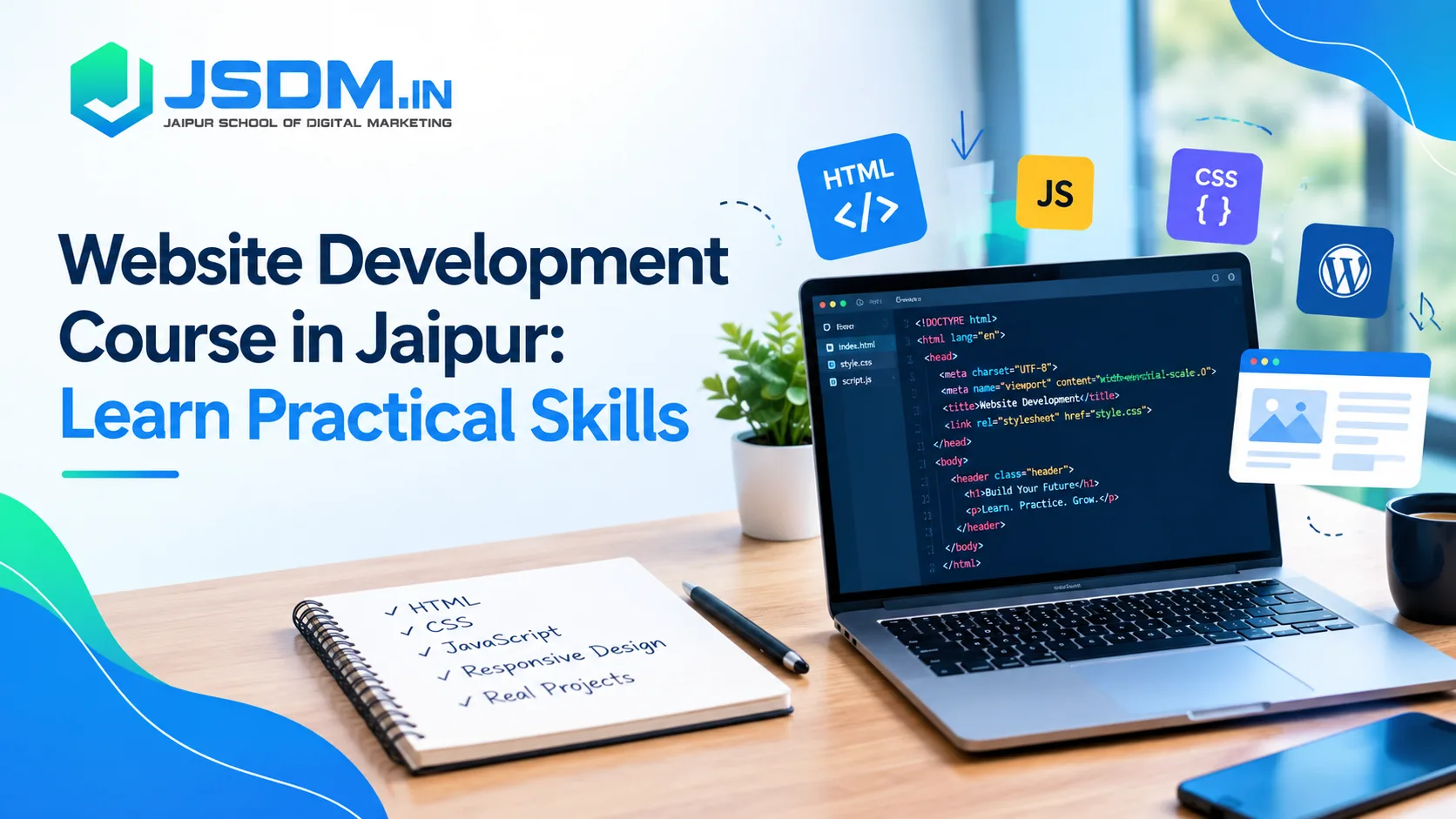
Next comes the practical side. HTML helps structure web content, while CSS controls the look and layout of pages. JavaScript adds interactive features such as responses to buttons, forms, animations, and other page actions.
The catch? Learning these skills is easier when you use them instead of only reading about them. Small projects can help beginners understand how each part works together.
WordPress, WooCommerce and Shopify Skills
Not every person who wants to build websites needs to become a full-time programmer. Many businesses use content management and e-commerce platforms to create and manage their online presence.
JSDM’s course page says students work with WordPress and online stores using WooCommerce or Shopify. It also states that the program includes live project work.
That's useful for beginners because platform-based development can provide a faster way to understand website structure, pages, products, forms, menus, and basic store functions. WordPress’s own developer resources also point to HTML, CSS, PHP, and JavaScript as important technologies used when developing themes and plugins.
So, a website development course can be useful even if your long-term goal is digital marketing, freelancing, e-commerce, or running a business.
Why Practical Projects Matter
Watching someone build a website can help you understand the basics, but doing the work yourself is where real learning begins.
Practical projects give learners a chance to create web pages, test different features, solve common problems, and understand how a website works beyond the classroom. Resources such as MDN also use hands-on exercises and first-website projects to help learners turn concepts into actual skills.
JSDM follows a similar project-based approach in its website development training. The course page highlights practical projects and portfolio building, along with daily sessions and both classroom and online learning options. The listed course duration is 21 days.
The biggest advantage of project work is that you finish with something you have actually built. You can review it, improve it, add it to your portfolio, and use it as a starting point when applying for internships, jobs, or freelance work.
Who Can Take a Website Development Course?
You do not need to be an experienced programmer to start learning web development. MDN's beginner material specifically provides a starting path for people with no previous coding knowledge.
That makes this type of training relevant for several groups:
- Students who want a practical digital skill
- Freshers building their first portfolio
- Marketing professionals who want website knowledge
- Small business owners who want more control over their website
- Freelancers who want to add website services
- Beginners interested in WordPress or e-commerce
Still, expectations matter. A short course can give you a foundation and practical exposure, but real skill comes from continued practice. The more websites you build, test, and improve, the more confident you become.
What Should You Check Before Joining?
First, check the syllabus. Does it cover the tools and skills you want? Next, ask whether you will build projects yourself or mainly watch demonstrations. Also check the learning mode, course duration, trainer support, certification details, and what happens after the classes end.
Worth checking: the current JSDM course page lists classroom and online options, practical projects, a certificate, and a three-month internship for freshers. These are course-specific claims, so prospective students should still confirm the latest terms directly before enrolling.
A useful rule is simple: choose a course based on what you will be able to do after it, not just what is written on the banner.
Website Development and Career Skills
Website development can connect with several areas of digital work. Someone who learns how to build a site may later explore front-end development, WordPress work, e-commerce management, UI-related work, or freelance website services.
MDN's learning path also includes soft skills, collaboration, research, workflows, and finding a job alongside technical web skills.
That's an important point. Technical knowledge alone does not make a strong web professional. You also need to understand client needs, plan work, communicate clearly, test your pages, and keep learning when tools change.
For a beginner, the best approach is to start small. Build a simple site, make it responsive, add useful pages, test forms, improve the layout, and then move to a larger project. Over time, these small steps can turn into a portfolio.
Conclusion
Learning website development is less about memorising tools and more about knowing how to turn an idea into a working website. Start with the basics, practise with real projects, and learn how platforms such as WordPress and e-commerce tools work.
A Website Development Course in Jaipur can be a useful starting point when it combines clear teaching with hands-on work. Before choosing one, compare the syllabus, project work, class format, course length, trainer support, and current terms.
Most of all, keep building after the course ends. That's where the real learning begins. A simple first website can become a stronger project, then a portfolio piece, and eventually a useful skill for work, freelance projects, or your own online business.
FAQs
Is a Website Development Course suitable for beginners?
Yes. Beginner-focused web learning can start without previous coding knowledge. MDN provides a structured starting path for complete beginners, including setup, website creation, styling, interaction, and publishing.
Do I need to know coding before joining?
Not always. Some website development programs focus on platforms such as WordPress, WooCommerce, and Shopify, while broader web development also covers technologies such as HTML, CSS, and JavaScript. The best choice depends on your goal.
Can I learn WordPress and Shopify?
A course may include both, but you should check the current syllabus before enrolling. JSDM's current course page states that its training includes WordPress and online-store work with WooCommerce or Shopify.
How long does the JSDM website development course take?
The current course page lists a 21-day program with daily sessions from Monday to Friday and classroom or online learning options. Course details can change, so confirm the current batch information before joining.
Is a certificate enough to get a website job?
A certificate can show that you completed training, but it should not replace practical ability. A portfolio of working websites gives you a better way to demonstrate what you can actually build. MDN also places practical challenges and project work within its web learning path.