Shop for a water filter system for whole house use and you'll run into more format variety than the category first suggests cartridge-based systems, tank-style backwashing filters, single-stage and multi-stage configurations, all claiming to solve some version of the same problem. Choosing correctly comes down to matching the format to your actual water and your household's practical maintenance preferences, not just picking whichever system has the most convincing marketing copy. This guide walks through the real differences.
Cartridge Systems vs. Tank-Style Filters: The Core Format Decision
Nearly every whole house water filter falls into one of two basic formats, and understanding the difference is the first real decision point.
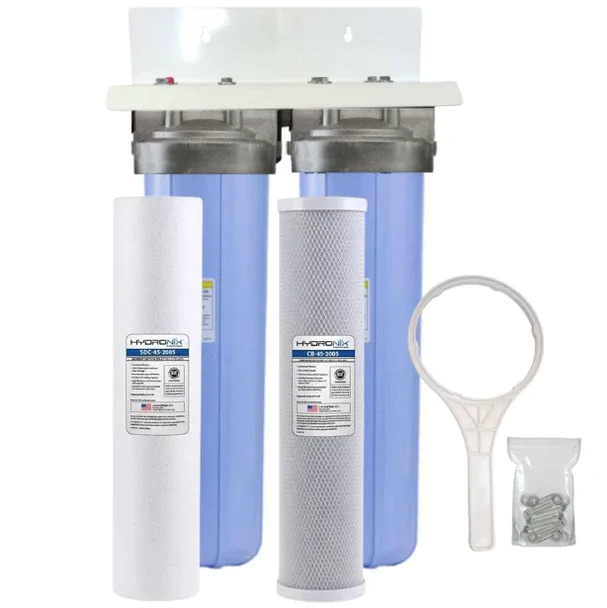
Cartridge-based systems (commonly built around "Big Blue" 4.5-inch housings) use replaceable filter cartridges that get manually swapped out on a schedule typically every few months depending on water quality and usage. They're straightforward, relatively inexpensive to install, and simple to maintain, but they do require you to remember (or track) replacement timing.
Tank-style backwashing filters use a media bed inside a resin-style tank, similar in appearance to a water softener, and regenerate themselves automatically through a periodic backwash cycle rather than requiring manual cartridge changes. These systems generally handle higher contaminant loads and larger household demand better than cartridge systems, but they cost more upfront, require a drain line for backwashing, and use some water and (in most cases) electricity during each regeneration cycle.
Neither format is universally "better" the right choice depends on what you're filtering for and how hands-on you want ongoing maintenance to be.
Whole House Water Filters: What They Can and Can't Address
It's worth being precise about what filtration actually solves, since expecting a Whole House Filter System to handle every water quality issue is one of the most common and costly mistakes homeowners make.
Filtration is well suited to:
- Sediment (sand, silt, rust particles)
- Chlorine and chloramine taste and odor
- General taste and odor compounds, including some herbicides and pesticides depending on media type
- Iron, sulfur, and manganese though this specifically requires oxidizing media or air injection, not standard sediment/carbon filtration
Filtration does not address:
- Hardness (calcium and magnesium) this requires a dedicated water softener
- Bacterial or viral contamination this requires UV disinfection
- Dissolved contaminants like nitrate, arsenic, or lead at a meaningful level these typically require reverse osmosis
A common and costly mistake is buying a general-purpose filtration system expecting it to solve a problem like hardness or bacterial safety that filtration simply isn't designed to fix. This is exactly why testing your water before buying matters more than any other single step in the process.
Whole House Water Purification Systems: Single-Stage vs. Multi-Stage
Once you've settled on a format, the next decision is how many treatment stages your water actually needs. Broadly, most Whole House Water Purification Systems fall into one of these tiers:
- Single-stage typically just sediment filtration, appropriate for water with minimal aesthetic issues beyond occasional particulate
- Dual-stage sediment plus a single carbon stage, addressing the most common combination of complaints (sediment and chlorine taste) on municipal water
- Multi-stage (3+ stages) layering sediment, carbon, and specialty media (iron/sulfur removal, pH correction, or UV disinfection) to address more complex water conditions, particularly common on well water
Adding more stages isn't automatically better a household with straightforward municipal water and no iron, sulfur, or bacterial concerns doesn't benefit from a five-stage system built for well water problems it doesn't have. The right stage count follows directly from a water test, not from defaulting to the most comprehensive option available.
Sizing a Whole House Filtration System Correctly
Undersizing is one of the most common and most avoidable mistakes in whole-house filtration, and it affects both water pressure and filtration effectiveness:
- Match the system's rated flow capacity (GPM) to your home's peak simultaneous demand not average daily usage, but the moment when a shower, a washing machine, and a kitchen faucet might all be running at once
- Larger housings and tanks generally mean less frequent maintenance, since there's simply more filtration media doing the work between changes or regeneration cycles
- Connection size matters too 1-inch connections offer meaningfully less flow restriction than ¾-inch connections, which matters more as household demand increases
An undersized system doesn't just create weak water pressure it can also mean water is moving through the filtration media faster than it's rated for, reducing actual contaminant removal effectiveness at exactly the moments demand is highest.
Whole House Filtration System: Installation Considerations
Regardless of format, a few installation principles apply broadly:
- Install as close to the point of entry as practical, typically right after the pressure tank on well systems or after the water meter on municipal connections, so every fixture downstream benefits
- Leave clearance for maintenance access, whether that's filter cartridge changes or tank-style media replacement down the line
- Plan for a drain line if you're installing a tank-style backwashing system, since these require periodic regeneration cycles that flush to a drain
- Consider professional installation for tank-style systems requiring drain line plumbing or electrical connections, while cartridge-based systems are generally more approachable for a confident DIY installer
Comparing the Two Formats Directly
A few practical trade-offs worth weighing side by side:
- Upfront cost: cartridge systems are generally less expensive to purchase and install than tank-style backwashing systems
- Ongoing maintenance: cartridge systems require manual filter changes on a schedule; tank-style systems regenerate automatically but need periodic media replacement over a longer interval
- Water and electricity use: cartridge systems use neither during normal operation; tank-style systems consume some water during backwash cycles and typically require an electrical connection
- Contaminant capacity: tank-style systems generally handle higher contaminant loads and larger household demand more efficiently over time than cartridge systems treating the same water
Final Thoughts
Choosing the right water filter system for whole house use comes down to matching the format cartridge or tank-style and the number of treatment stages to what a water test actually reveals, then sizing correctly for your household's real demand. Get those fundamentals right, and either format can deliver years of reliable, low-maintenance performance.