Uthirakosamangai, in Ramanathapuram district of Tamil Nadu, is home to the ancient Mangalanatha Swamy Temple, one of the most fascinating Shiva temples in the region. Local and devotional traditions describe the temple as extraordinarily ancient, and some accounts even refer to it as the “world’s first Shiva temple.” That statement should be understood as a traditional claim rather than a historically established fact. What is firmly documented is that the site is an ancient Shiva temple, renowned for its extraordinary six-foot emerald Nataraja, which is revealed publicly during the annual Arudhra Darshan.
1. Why Is Uthirakosamangai Considered Such an Ancient Shiva Temple?
Uthirakosamangai is located about 18 kilometres from Ramanathapuram, and the district administration describes the shrine as an ancient Shiva temple. The temple is dedicated to Mangalanatha Swamy, with the sacred site holding an important place in the Shaiva heritage of Tamil Nadu.
The name Uthirakosamangai is traditionally connected with the idea of a sacred place where profound spiritual knowledge was revealed. In temple tradition, Shiva is said to have imparted the secrets of the Vedas to Parvati Devi here. The story is part of the sacred mythology surrounding the temple and helps explain the special spiritual identity associated with the name.
This is why devotees connect the temple with Shiva as Guru, divine knowledge and sacred wisdom. The famous devotional expression:
“Thennaadudaiya Sivane Potri, Ennaattavarkkum Iraivaa Potri”
beautifully reflects the Tamil Shaiva tradition of praising Shiva as the Lord of the southern land and the Lord of all people.
2. Did Ravana and Mandodari Really Visit This Temple?
One of the fascinating traditions connected with Uthirakosamangai concerns Ravana and Mandodari.
Local temple tradition tells a story that Mandodari, before her marriage to Ravana, came to this sacred place and worshipped Shiva. In some versions of the tradition, Ravana himself is also connected with Shiva worship at the site.
These stories belong to religious and Puranic tradition, rather than independently verified historical records. That distinction is important because the Ramayana exists in multiple textual and regional traditions, and legends associated with individual temples can develop over many centuries.
Still, the story gives Uthirakosamangai another fascinating layer: the temple is remembered not only as an ancient Shiva shrine but also as a place connected through tradition with characters from the Ramayana.
3. What Makes the Six-Foot Maragatha Nataraja So Extraordinary?
This is perhaps the temple’s most remarkable feature.
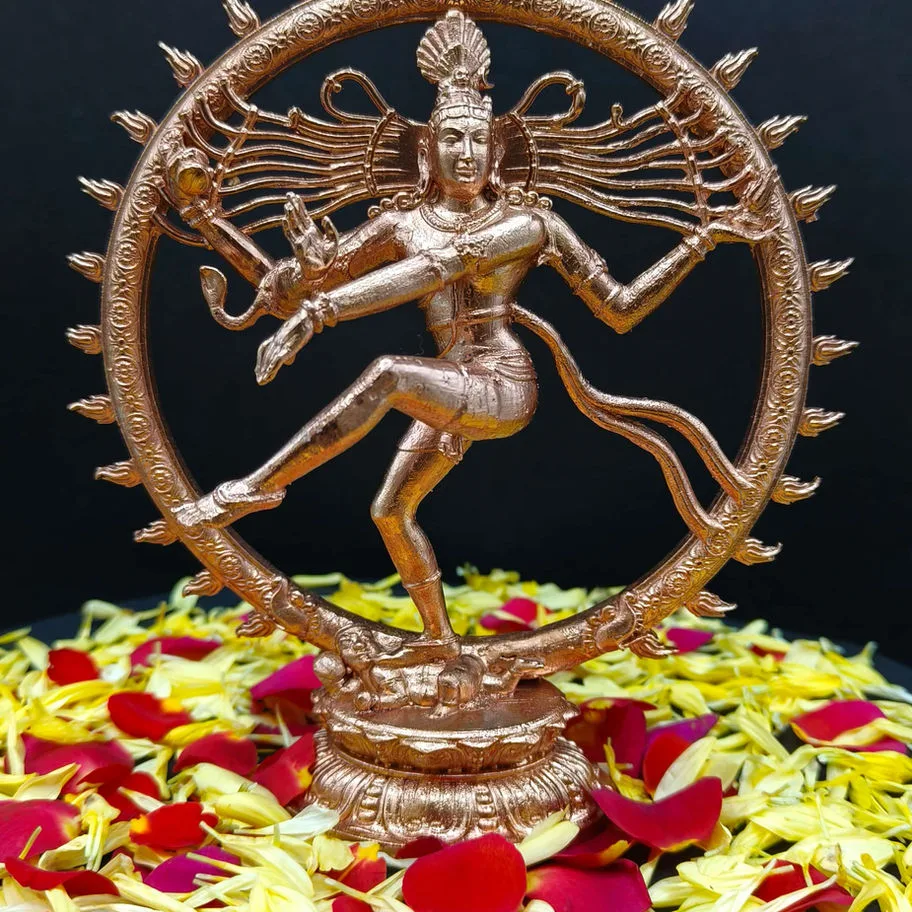
The Ramanathapuram District administration states that Uthirakosamangai is an ancient Shiva temple where a six-foot-tall Nataraja image carved from emerald (maragatham) is kept inside the temple. The sculpture is covered with sandalwood paste, and devotees receive the opportunity to view the uncovered image during the annual Arudhra Darshan on Thiruvathirai day in the Tamil month of Margazhi.
For most of the year, the image remains covered with sandalwood paste. During the annual festival, the sandal paste is removed, and the sacred Nataraja is revealed following ritual ceremonies and abhishekam. The event attracts large numbers of devotees from Ramanathapuram and other parts of Tamil Nadu.
The combination of Nataraja’s cosmic dance and the rare emerald material makes this one of the most visually and religiously distinctive images associated with Tamil Shiva temples.
4. Why Is the Sandalwood Covering Important?
The practice of covering the Maragatha Nataraja with sandalwood paste (sandanakappu) is one of the temple's best-known traditions.
The official Ramanathapuram district information confirms that the emerald Nataraja is kept covered in sandal paste and that the covering is removed during the annual Arudhra Darshan.
The annual unveiling makes the festival particularly significant. Rather than seeing the sacred image throughout the year, devotees wait for the special Thiruvathirai occasion to receive its darshan.
This creates a remarkable connection between time, ritual and sacred art. A sculpture that remains hidden for most of the year becomes the centre of a major annual celebration.
The emerald Nataraja also connects Uthirakosamangai with the wider Tamil tradition of worshipping Nataraja as Shiva, the cosmic dancer—the divine form associated with creation, preservation and transformation.
5. Why Does Uthirakosamangai Still Fascinate People Today?
Uthirakosamangai brings together several layers of Tamil religious heritage: an ancient Shiva temple, traditions of Shiva's teaching to Parvati, Ramayana-related legends, the extraordinary Maragatha Nataraja and the annual Arudhra Darshan. The Ramanathapuram district administration itself identifies the temple as an ancient Shiva shrine and highlights the emerald Nataraja as its major attraction.
Its importance is also part of the broader historical landscape of Ramanathapuram, a region whose history includes periods under Chola, Pandya, Nayaka and Sethupathi rule. District historical records note that the Ramanathapuram region came under Chola control under Rajendra Chola in 1063 CE.
For lovers of Indian sculpture, temples and devotional art, the temple tells an especially powerful story: some sacred art is meant not merely to be seen, but to be preserved, worshipped and revealed at the right moment.
At Gold Plating Art Studio, this same respect for traditional sacred sculpture inspires the creation and enhancement of devotional artwork. A carefully crafted gold-plated Shiva, Nataraja or other Hindu deity sculpture can highlight intricate details such as ornaments, crowns, gestures and traditional iconography while giving the artwork a distinctive luminous finish. The studio can be presented as a place for those who appreciate the relationship between Indian spiritual heritage and skilled metal craftsmanship.
Conclusion
Uthirakosamangai is surrounded by a rich combination of history, temple tradition and sacred legend. Calling it the “world’s first Shiva temple” is a traditional claim rather than a conclusively established historical fact, but there is no doubt that it is an ancient and culturally significant Shiva temple of Tamil Nadu.
Its greatest treasure is the six-foot Maragatha Nataraja, preserved beneath sandalwood paste and revealed during the annual Arudhra Darshan.
From the legend of Shiva revealing sacred knowledge to Parvati to the extraordinary emerald Nataraja, Uthirakosamangai reminds us that Tamil temples are not simply buildings. They are places where mythology, devotion, sculpture, history and living tradition continue to meet.
For Gold Plating Art Studio, that heritage provides endless inspiration: sacred forms such as Nataraja and Shiva continue to live through skilled craftsmanship, detailed sculpture and the timeless beauty of traditional Indian art.
Was Uthirakosamangai the World’s First Shiva Temple? The Ancient Mystery of Mangalanatha Swamy