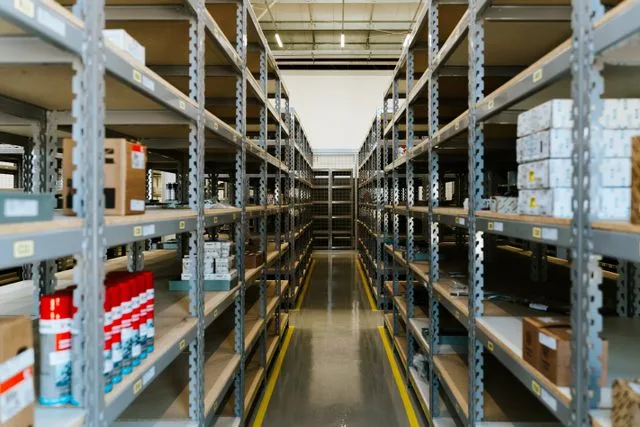
A warehouse pick module is a purpose-designed storage and picking area that brings inventory, workers, and material movement into a more efficient layout. Instead of requiring employees to travel throughout a large warehouse to locate individual products, a pick module concentrates high-throughput inventory into organized picking zones. These systems can incorporate carton flow rack, pallet flow racking, push-back pallet storage, gravity conveyors, and multiple levels of storage to create a coordinated order fulfillment operation.
The goal is simple: put frequently picked products closer to the people and processes that handle them while reducing unnecessary travel, replenishment interruptions, and wasted warehouse space.
What Is a Warehouse Pick Module?
A warehouse pick module is a multi-level or highly organized picking system designed around the way inventory moves through a facility. It can combine storage racks, carton flow lanes, pallet flow, conveyors, elevated work areas, and reserve inventory into one integrated operation.
Rather than treating storage and picking as completely separate activities, the pick module connects them. Fast-moving products can be positioned at accessible pick faces while reserve inventory remains nearby for replenishment.
This approach is especially valuable in distribution centers handling large numbers of orders or SKUs. A well-designed module can make the picking process more predictable by giving each product a defined location and creating a consistent path from inventory to order processing.
Gravity Flow Racking in Pick Modules
Gravity flow racking is one of the most useful components of a pick module. Carton flow rack uses inclined lanes equipped with rollers or wheeled tracks to move cartons, totes, and cases toward the picking face.
Inventory is loaded from the replenishment side, while workers pick products from the opposite side. As the front item is removed, the next item advances into position.
This arrangement reduces the need for workers to reach deep into shelving or repeatedly walk to retrieve products. It also keeps the pick face organized because inventory naturally moves toward the position where it is needed.
Carton flow is particularly useful for case picking, each picking, retail distribution, parts distribution, and other operations where many individual products need to remain readily accessible.
Pallet Flow for High-Volume Picking
Pallet flow racking can provide the reserve and case-picking capacity needed for high-volume SKUs. Instead of storing pallets in static positions, pallets move through inclined lanes using gravity.
In a pick module, pallet flow can supply inventory to a case-picking area. As a pallet is consumed, another pallet moves into the picking position, reducing the need for frequent forklift intervention.
This is particularly useful for operations handling dated or perishable inventory because pallet flow supports FIFO rotation. Food, beverage, and grocery distribution are common examples where controlled inventory rotation can be important.
Push-Back Racking for Reserve Storage
Push-back pallet racking can complement carton flow and pallet flow by providing dense reserve storage. Unlike pallet flow, which generally moves inventory toward a separate pick face, push-back systems use inclined rails and carts to store multiple pallets deep while loading and unloading from one aisle.
This makes push-back racking useful when reserve inventory follows a LIFO strategy. It can provide additional pallet positions without requiring an aisle for every storage lane.
Using push-back storage above or near a picking area can help reduce forklift travel and make replenishment more efficient.
Gravity Conveyor Integration
Gravity conveyors can connect different parts of a pick module and provide a simple way to move cartons, totes, and other loads between work areas. Roller and skate-wheel configurations can be selected according to the products being transported.
A conveyor can carry completed orders away from pickers, move empty containers, or connect picking areas with packing and shipping operations. Because gravity conveyor systems can operate without powered motors in appropriate applications, they can provide a relatively simple transportation method.
Benefits of a Well-Designed Pick Module
The biggest advantage of a warehouse pick module is the concentration of inventory and picking activity. When fast-moving SKUs are positioned strategically, employees can spend more time picking and less time walking.
Vertical space can also be used more effectively. Multi-level systems allow facilities to increase picking capacity without expanding their building footprint.
Another advantage is improved replenishment. When reserve inventory is positioned close to the active pick face, workers or material handling equipment can restock products with less travel.
A well-designed system can also improve organization and accuracy. Dedicated SKU lanes, defined pick faces, and consistent product presentation make it easier for workers to locate the correct inventory.
Designing the Right Pick Module
The design should begin with the inventory profile. SKU dimensions, weight, order frequency, case quantities, pallet quantities, and product velocity all influence the appropriate storage system.
Fast-moving products may require wider or more accessible pick faces, while slower-moving inventory can be positioned in less accessible locations.
The facility itself also matters. Ceiling height, floor space, columns, fire protection, aisle requirements, conveyor routes, and pedestrian traffic all need to be considered.
A pick module should be designed around the complete workflow rather than a single piece of equipment. Carton flow, pallet flow, push-back storage, conveyors, and reserve rack work best when they function as parts of one system.
Final Thoughts
A warehouse pick module can transform the way high-volume order fulfillment operations use space and labor. By combining gravity flow storage, pallet racking, conveyors, and organized picking locations, the system brings inventory closer to the people and processes that need it.
The most effective design is not necessarily the one with the most equipment. It is the one that matches storage density, SKU velocity, replenishment requirements, order volume, ergonomics, and available space. When those elements are considered together, a pick module can create a faster, more organized, and more scalable warehouse operation.
and drive-in storage.