
Vietnam has carved a formidable reputation in the global agricultural trade as one of the top rice-producing and exporting nations. With the rice trade serving as a critical pillar of the country’s economy, the 2025 outlook for Vietnam rice exporters is optimistic — but not without its challenges. This in-depth article explores the future of rice export in Vietnam, examines profiles of major exporters, and discusses the broader context of Vietnam export dynamics that impact the sector.
Vietnam’s Role in the Global Rice Supply Chain
Vietnam is one of the largest rice exporters globally, regularly competing with India and Thailand for market dominance. The country’s fertile delta regions, cost-effective farming methods, and growing reputation for premium rice varieties have positioned it as a reliable supplier to over 150 countries. As global demand for high-quality rice surges, so does interest in Vietnam rice exporters.
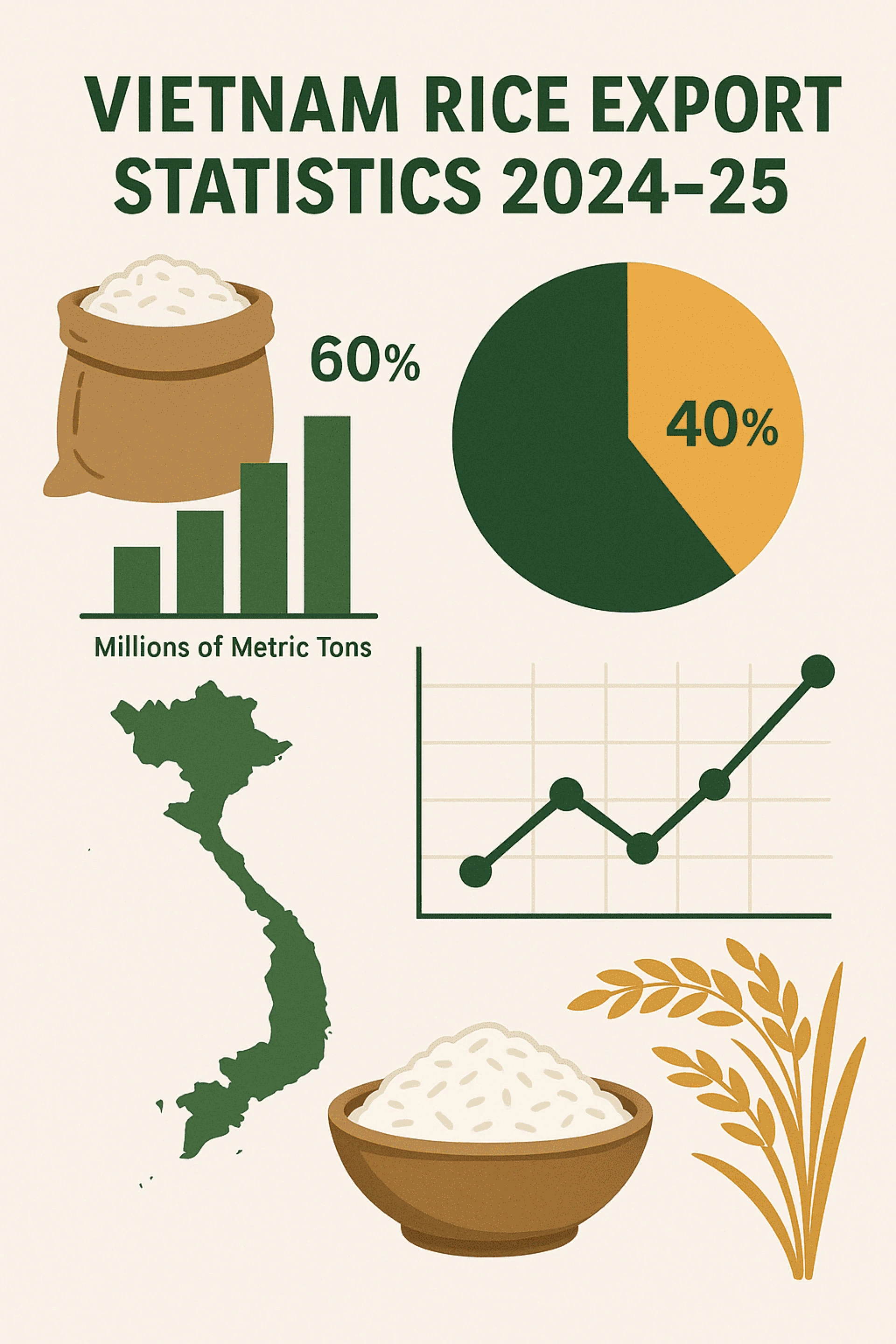
In 2024, Vietnam exported an estimated 4.2 million metric tons in the first half alone, with projections showing a rise to 8.7–9 million metric tons by the end of 2025. This positive trend coincides with global food security concerns, supply chain shifts, and an increasing appetite for fragrant and specialty rice products.
Key Factors Driving Vietnam’s 2025 Rice Export Outlook
1. Rising Global Demand for Premium Varieties
Rice importers are increasingly shifting focus toward higher-quality rice such as Jasmine, Japonica, and ST25 — an award-winning Vietnamese variety. Exporters who adapt to this demand are gaining higher margins and stronger buyer loyalty.
2. Government Trade Facilitation & Export Policies
Vietnam’s Ministry of Agriculture and Rural Development (MARD) and the Ministry of Industry and Trade (MOIT) are supporting the rice industry by:
- Investing in modern irrigation and milling infrastructure
- Offering financial incentives for exporters
- Promoting sustainability and compliance with international food safety standards
These policies complement national Vietnam export strategies designed to increase trade volume and reduce dependency on traditional markets.
3. Expansion of Trade Agreements
Vietnam’s rice industry benefits from a range of trade pacts, including:
These agreements provide favorable tariff conditions, reduce bureaucratic hurdles, and unlock new markets for Vietnam rice exporters across Europe, the Middle East, and the Americas.
Top Export Markets for Vietnamese Rice in 2025
Based on current data and forward contracts, Vietnam is expected to see significant export volume to the following countries:
Country2024 Volume Estimate (MT)2025 Growth PotentialPhilippines1.6 millionHighChina950,000ModerateIndonesia850,000High (G2G contracts)Ghana620,000GrowingMalaysia480,000Steady
In addition to these, new markets in Eastern Europe and the Middle East are showing signs of rapid growth due to favorable exchange rates and increased food security planning.
Top Vietnam Rice Exporter Profiles
Below are some of the most influential and innovative companies in the Vietnamese rice export landscape:
1. VinaRice Export Corporation
- Specialty: Jasmine, Japonica, and ST25 varieties
- Export Reach: Asia, Europe, and North America
- Strength: Certified organic, traceable supply chain, HACCP compliance
2. Loc Troi Group
- Specialty: High-value, sustainably grown rice
- Export Reach: Japan, South Korea, Germany
- Strength: Farmer support networks and precision agriculture
3. Angimex
- Specialty: Medium and long-grain white rice
- Export Reach: Africa and Southeast Asia
- Strength: Competitive pricing and mass volume production
These Vietnam rice exporters are leading the transformation from volume-driven exports to quality-driven branding and niche market dominance.
Broader Trends in Vietnam Export Performance
Vietnam’s rice sector doesn’t operate in isolation. It is closely linked to broader Vietnam export trends, which reflect the country’s economic growth, innovation in logistics, and strategic investments in trade infrastructure.
Key cross-sector trends influencing rice export include:
- Digitalization of customs and export documentation
- Private-sector investment in cold-chain logistics
- Government funding for sustainable agriculture
These efforts help streamline rice export in Vietnam while also improving competitiveness in global agricultural markets.
Challenges for Vietnam Rice Exporters in 2025
Despite a positive outlook, several risks must be acknowledged:
- Climate volatility in the Mekong Delta could impact yields
- Rising global shipping costs and logistics delays
- Currency fluctuations affecting exporter profitability
- Price competition from India and Pakistan
These factors require exporters to remain agile, invest in technology, and build long-term international relationships.
Strategies for Success: How Vietnam Can Stay Ahead
To maintain and grow its global market share, Vietnam must continue:
- Investing in high-tech farming solutions (drones, AI, precision irrigation)
- Expanding organic and fair-trade certifications
- Building rice brands tailored to foreign consumer preferences
- Strengthening market intelligence platforms like Vietnam Export Data to enable data-driven decisions
Exporters that align with these strategies will have the best chance of long-term sustainability and growth.
Conclusion
Vietnam’s rice export industry is at a pivotal moment. With global demand for high-quality rice rising and trade partnerships expanding, 2025 offers incredible opportunities for Vietnamese exporters. However, seizing these opportunities will require modernization, innovation, and the strategic use of market intelligence tools like Vietnam Export platforms.
The next chapter for Vietnam rice exporters is about evolution — from traditional trade to modern, branded, and tech-enabled exports. For investors, buyers, and supply chain partners, now is the time to connect with this fast-changing, high-potential sector.