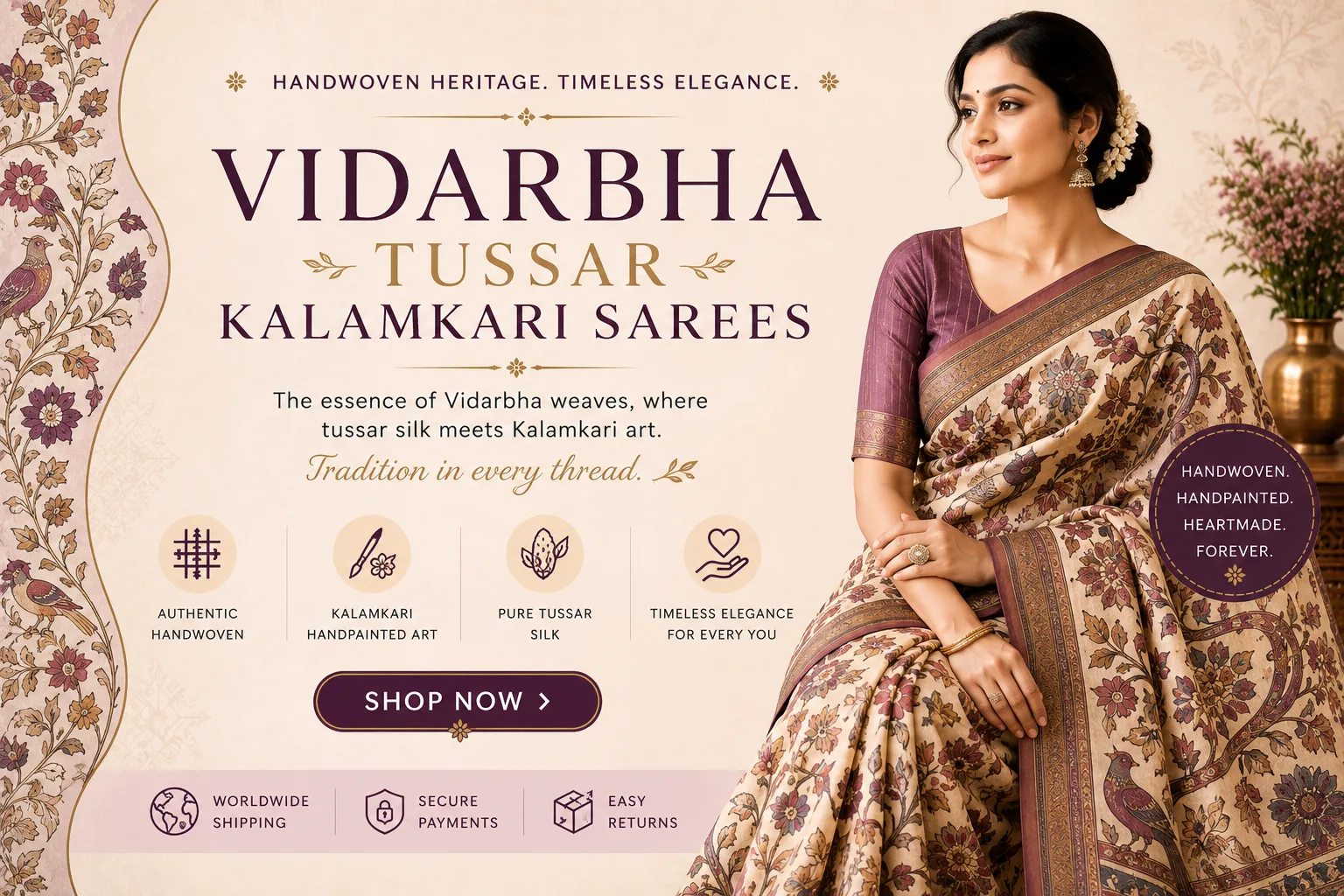
A Vidarbha Silk Saree is easy to recognise the moment you touch it — the fabric has a slightly coarse, grainy texture, a warm natural sheen, and a distinct saw-tooth border that no power loom can replicate. If you're comparing it against Kosa, Bhagalpuri, or Mysore silk before buying, here's what actually sets a genuine Vidarbha weave apart, and what to check before you pay for one.
What Makes a Vidarbha Tussar Saree Different From Other Tussar Weaves?
A Vidarbha Tussar Saree is woven with wild tussar silk yarn in the body and a contrasting cotton or silk border in a "karvat" (saw-tooth) pattern — a technique locally called Karvati Kinaar or Karvath Kati. Unlike mulberry silk sarees (smooth, glossy, uniform), tussar has an uneven, textured slub because the yarn is reeled from wild silk cocoons rather than farmed ones.
The weave is native to the Vidarbha region of eastern Maharashtra, particularly around Nagpur, Bhandara, and Pauni. It's traditionally handwoven by artisans from the Halba community, who are believed to have migrated from the erstwhile Bastar region in the 17th century. This origin is what gives the saree its Geographical Indication (GI) recognition as a handicraft product of Maharashtra.
Key identifiers of an authentic Vidarbha Tussar Saree:
- Natural beige, honey, or off-white base tone (undyed tussar doesn't take bright colours evenly)
- Saw-tooth ("karvat") border, often in a contrasting cotton
- Slightly rough, textured hand-feel rather than a smooth glide
- Visible yarn irregularities — a sign of hand-reeling, not a defect
- A dobby-attached pattern on the border, since the saw-tooth motif needs mechanical precision even on a handloom
How Is a Vidarbha Silk Saree Woven?
The saree is made using a three-shuttle weaving technique operated by a single weaver, which is what makes the karvat border possible without machine assistance. A single handloom Vidarbha Silk Saree typically takes 8–10 days to complete, start to finish — longer if the border carries intricate extra-weft or gheecha detailing using leftover tussar yarn.
This is slower and more labour-intensive than power-loom tussar production, which is one reason genuine handloom pieces cost more than printed or machine-woven "tussar-style" sarees sold under the same name.
Vidarbha Tussar Saree vs Other Popular Tussar Weaves
If you're weighing a Vidarbha saree against other regional tussar weaves, here's how they compare on the points that actually matter for buying:
FeatureVidarbha Tussar SareeBhagalpuri Tussar (Bihar)Kosa Silk (Chhattisgarh)Signature featureSaw-tooth (karvat) borderFine, lightweight drapeRich, deep sheenBase textureCoarse, grainy slubSmooth-ish for tussarSlightly smoother, glossyTypical weaving time8–10 days5–7 days6–8 daysBest suited forFestive, bridal, ceremonial wearDaily/office festive wearEvening and festive wearGI recognitionYes (Karvath Kati Sarees)Yes (Bhagalpuri Silk)Yes (Champa/Kosa Silk)None of these is objectively "better" — the right pick depends on whether you want the structured, statement border of a Vidarbha weave or the softer drape of Bhagalpuri or Kosa silk.
What Occasions Suit a Vidarbha Silk Saree?
Because of its structured border and natural texture, a Vidarbha Silk Saree works best for:
- Weddings and engagement ceremonies (traditionally worn by brides in the region)
- Festive pujas and auspicious functions
- Family gatherings where a heavier, textured drape suits the occasion
- Gifting, since handloom tussar sarees carry heritage value
It's a less obvious pick for everyday or office wear, where a lighter, more crease-resistant fabric like cotton or Bhagalpuri silk usually works better.
How Do You Care for a Vidarbha Tussar Saree?
Tussar silk is more delicate than it looks. To keep the texture and colour intact:
- Dry clean first wash — tussar can bleed or shrink slightly with home washing.
- Store folded in muslin cloth, not plastic, to let the fabric breathe.
- Avoid direct sunlight for long periods; it fades the natural tone unevenly.
- Refold along different lines every few months to prevent permanent crease marks at the same fold.
- Iron on low heat, ideally with a thin cloth between the iron and the fabric.
How Much Does a Vidarbha Silk Saree Cost?
Pricing depends heavily on whether the saree is pure handloom tussar or a machine-blended version:
- Machine-woven or blended tussar-look sarees: generally the most affordable, but they won't carry the GI-linked karvat weaving technique.
- Handloom Vidarbha Tussar sarees with cotton border: mid-range, reflecting the 8–10 days of manual weaving time.
- Handloom pieces with silk borders, zari, or gheecha work: priced higher due to the additional weaving time and yarn cost.
If a "Vidarbha silk saree" is priced close to a machine-made cotton saree, it's worth asking the seller directly whether it's handloom or power-loom before buying.
Where to Buy an Authentic Vidarbha Silk Saree Online?
Searching for a Vidarbha Saree online brings up a mix of genuine handloom sellers and mass-produced lookalikes, so it helps to check a few things before ordering:
- Ask whether the saree is handloom-woven or power-loom finished
- Look for GI-tag or Handloom Mark references from the seller
- Check for close-up fabric photos that show the natural yarn texture, not just styled shots
- Compare the border weaving style against the saw-tooth karvat pattern described above
Indeloom is one of the platforms in this space that lists handloom and regional silk sarees, including tussar weaves, for buyers shopping online rather than visiting weaving clusters directly. As with any online saree purchase, it's worth checking product-specific details on the listing — fabric composition, weave type, and border style — before ordering.
For an official reference on which sarees currently hold GI protection from the Vidarbha region, the Government of India's Incredible India portal documents the Karvath Kati saree's GI status and weaving heritage in detail.
Quick Buying Checklist
- [ ] Confirm handloom vs power-loom before paying a premium price
- [ ] Check for the karvat (saw-tooth) border, not just a tussar-coloured base
- [ ] Ask for fabric close-ups showing natural slub texture
- [ ] Verify GI or Handloom Mark claims with the seller
- [ ] Plan for dry-clean-only care after the first wash
Frequently Asked Questions
Is Vidarbha silk saree the same as Kosa silk?
No. Both are types of tussar (wild) silk, but Kosa silk comes from Chhattisgarh and has a smoother, glossier finish, while Vidarbha tussar sarees are identified by their coarser texture and signature saw-tooth border.
Does a Vidarbha Tussar Saree have a GI tag?
Yes. The Karvath Kati saree, the signature weave of the Vidarbha region, holds Geographical Indication recognition as a Maharashtra handicraft, registered under GI number 390.
Can a Vidarbha silk saree be worn daily?
It's possible, but the coarser texture and heavier drape make it better suited to festive or ceremonial wear rather than daily use, where lighter fabrics are more practical.
How do I know if a Vidarbha saree bought online is genuine handloom?
Ask the seller directly whether it's handloom or power-loom, request close-up fabric photos, and check for GI or Handloom Mark references on the listing before buying.
Final Thoughts
A genuine Vidarbha Silk Saree is defined less by its colour and more by its weave — the karvat border, the hand-reeled tussar texture, and the 8–10 days of manual work behind each piece. Whether you're buying for a wedding, a festive occasion, or simply to own a piece of Maharashtra's handloom heritage, checking for these specific weaving details will tell you more than the price tag alone.