
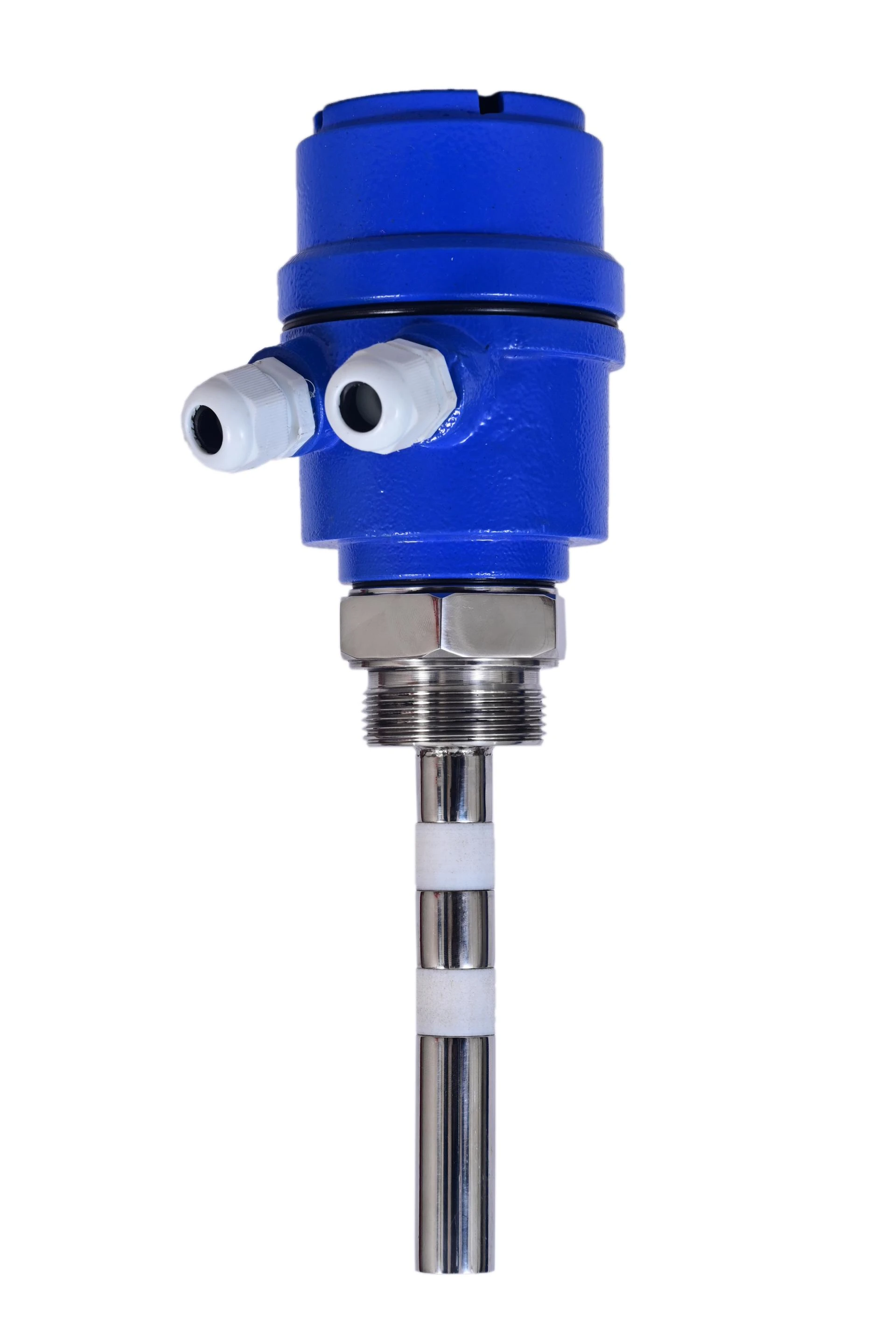
Unlike paddle-type or capacitive level switches, the vibrating rod does not rely on moving parts, which significantly reduces the chances of mechanical failure. This has led many vibrating rod level switch manufacturers to emphasize its low maintenance and operational reliability as major selling points.
Why Manufacturers Prefer Vibrating Rod Level Switches
1. High Reliability in Dusty Environments
Dusty materials like cement or flour can cause interference in optical or ultrasonic sensors. Vibrating rod level switches, however, are largely unaffected by dust, making them ideal for such environments.
2. Ease of Installation
With simple mounting requirements and no need for calibration, these switches are plug-and-play devices that save time and cost during setup.
3. No Moving Parts
The absence of moving mechanical components minimizes wear and tear. This contributes to long service life and reduces the frequency of maintenance, which is why many vibrating rod level switch manufacturers are turning to this technology for large-scale industrial applications.
4. Consistent and Accurate Measurement
Vibrating rod technology offers high precision in solid level detection, even in bulk materials with varying densities. This makes them more reliable than some capacitive or RF-based devices in certain scenarios.
Comparing with RF Admittance Level Switches
The RF admittance level switch is another advanced technology often used in similar applications. While both systems are non-contact and provide reliable switching, there are trade-offs to consider:
FactorVibrating Rod Level SwitchRF Admittance Level SwitchBest forDry powders, granular solidsSticky materials, slurriesMaintenanceVery lowLow, but requires calibrationInstallationEasy, no calibrationSlightly complex, needs tuningMaterial Build-UpLess proneCan be compensated with Cote Shield (in advanced models)
Top manufacturers evaluate these trade-offs based on their operational environment. For example, if stickiness or coating is a concern, they may opt for an RF admittance level switch with advanced anti-coating features. However, for general bulk solids, the vibrating rod remains a preferred choice.
Challenges in Choosing the Right Technology
Choosing between a vibrating rod level switch and an RF admittance level switch depends on several parameters:
- Material type and consistency
- Dust level and temperature
- Installation constraints
- Required maintenance frequency
- Cost vs. performance expectations
While vibrating rod switches provide a balance of affordability and precision, industries dealing with aggressive, sticky, or conductive materials may need to explore RF-based alternatives.
The Role of the Manufacturer
Selecting the right vibrating rod level switch manufacturer is as crucial as choosing the right technology. A reliable manufacturer will offer:
- High-quality stainless steel or corrosion-resistant probes
- Certifications like ATEX or IECEx for hazardous environments
- Customization options for mounting and probe length
- Strong after-sales support and service
Top manufacturers also offer hybrid solutions or advanced variants that combine vibrating and RF principles to offer versatile applications.
Conclusion
The demand for dependable level sensing solutions continues to grow across industries. With their simplicity, durability, and consistent performance, vibrating rod level switches have earned their place as a top choice for manufacturers worldwide. Although RF admittance level switches still play a crucial role in specialized applications, the overall reliability and ease-of-use of vibrating rod technology make it a leader in the level detection space.
When choosing a solution, working with an experienced vibrating rod level switch manufacturer ensures access to expert guidance, high-performance equipment, and long-term operational value.
Frequently Asked Questions (FAQs)
Q1. What is a vibrating rod level switch used for?
A vibrating rod level switch is used for level detection of dry solids like grains, powders, or granules in silos, hoppers, and bins.
Q2. What are the advantages of vibrating rod over RF admittance level switches?
Vibrating rod switches are easier to install, require no calibration, and are less affected by dust and buildup, making them ideal for dry bulk materials.
Q3. How do I choose the best vibrating rod level switch manufacturer?
Look for manufacturers offering high-quality materials, industry certifications, application support, and strong after-sales service.
Q4. Can vibrating rod level switches be used in sticky or wet materials?
They are not ideal for sticky or moist materials. In such cases, an RF admittance level switch with anti-coating technology is a better option.
Q5. Are vibrating rod level switches maintenance-free?
While they are not completely maintenance-free, their design with no moving parts significantly reduces maintenance compared to traditional level sensors.