Ask five people in your company which supplier is the best, and you will probably get five different answers. One remembers a late delivery. Another remembers a great price. A third just likes the account manager.
That is not vendor evaluation. That is opinion.
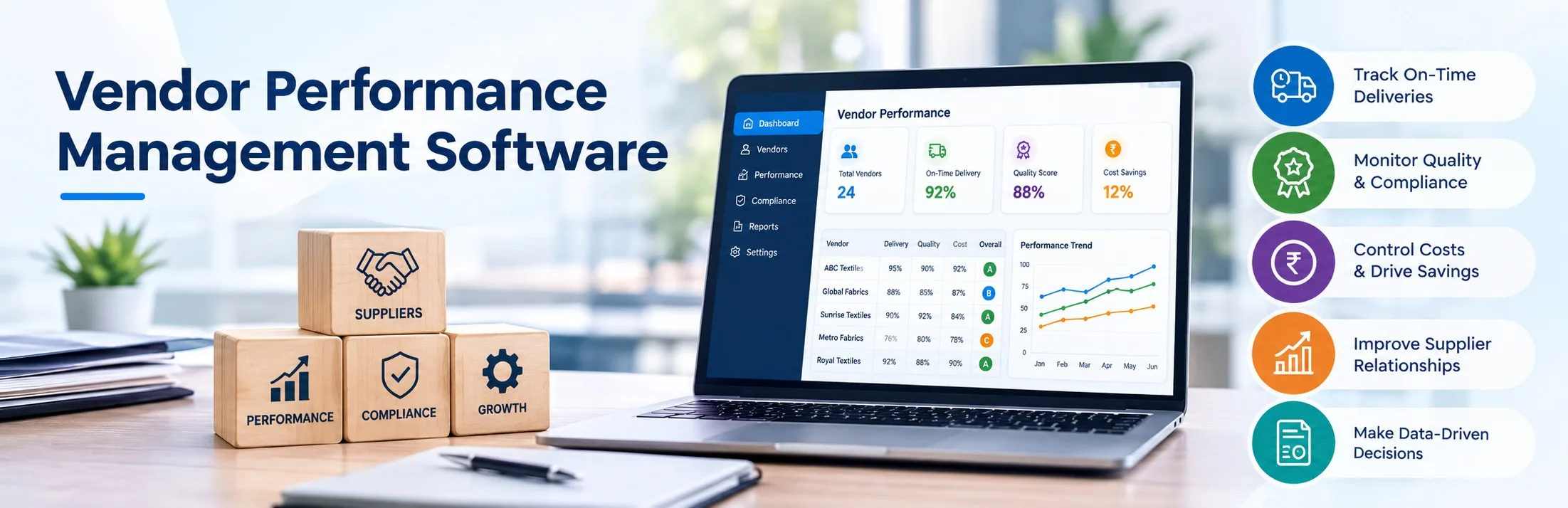
A vendor scorecard replaces opinion with a clear, repeatable score. It tells you which suppliers deserve more business, which need improvement and which need to be replaced. In this guide you will learn how to build one, which vendor performance KPIs matter, and how vendor performance management software can calculate it automatically from real purchasing data.
Want scorecards without the spreadsheet work? See ZYNO Procurement in a free demo or start a 14-day free trial.
What Is a Vendor Scorecard?
A vendor scorecard is a structured way to rate a supplier against agreed performance criteria over a period of time. Each criterion gets a score, weights reflect what matters most to your business, and the combined result becomes an overall rating.
Used well, a scorecard helps you:
- Reward strong suppliers with more volume or longer contracts
- Give weak suppliers specific, fair feedback
- Negotiate renewals with facts instead of feelings
- Reduce risk by spotting problems early
- Prove your decisions in audits
The 7 Vendor Performance KPIs That Matter Most
You don't need 30 metrics. Start with these seven and add more only if they change decisions.
#KPIHow to measure itData source1On-time deliveryOrders delivered by promised date ÷ total ordersPO and goods receipt2Order accuracyCorrect items and quantities ÷ total receivedPO and GRN3QualityAccepted items ÷ items received, or defect/return rateGRN and inspection records4Price complianceInvoices matching agreed price ÷ total invoicesQuote, PO, invoice5Lead-time consistencyVariation between promised and actual lead timePO and GRN6ResponsivenessTime to respond to quotes and queriesRFQ and communications7ComplianceValid documents, certificates and contract termsVendor record and contractNotice that most of these come straight from purchase orders, goods receipts and invoices. That is why vendor management software that is connected to purchasing can score suppliers far more accurately than a standalone spreadsheet.
A Simple Weighted Scorecard Example
Weights should reflect your priorities. A manufacturer may weight delivery and quality heavily. A services business may weight responsiveness and price compliance more.
Illustrative example (adjust to your business):
KPIWeightScore (0–100)Weighted scoreOn-time delivery25%9022.5Quality25%8521.3Price compliance20%9519.0Order accuracy10%808.0Responsiveness10%707.0Compliance10%10010.0Total100% 87.8Rating bands you can use:
Total scoreRatingSuggested action90–100StrategicConsider more volume, long-term agreement75–89PreferredKeep, review quarterly60–74WatchlistShare feedback, set improvement targetsBelow 60At riskCorrective plan or replaceHow to Build a Vendor Scorecard in 6 Steps
Step 1: Segment your suppliers
Don't score everyone the same way. Group them by spend and criticality, and focus on strategic and high-risk suppliers first.
Step 2: Choose 5–7 KPIs
Pick measures that are objective, easy to collect and linked to real business impact.
Step 3: Set weights and targets
Agree on what "good" looks like for each KPI, for example a target on-time delivery rate, and share it with suppliers in advance.
Step 4: Collect data from one source
This is where most scorecards fail. If data comes from five spreadsheets and two inboxes, scores are inconsistent and disputes follow. Pull data from your purchasing records instead. In ZYNO, purchase requests, purchase orders, goods receipts and invoices live in one connected workflow.
Step 5: Review and share results
Hold regular reviews, quarterly for critical suppliers and annually for others. Share scores and discuss trends, not just numbers.
Step 6: Act on the results
Tie scores to decisions: renewals, volume allocation, improvement plans or exit. A scorecard that changes nothing is just reporting.
Vendor Evaluation Beyond the Scorecard
A scorecard measures past performance. A full vendor evaluation also looks forward:
- Before selection: compare suppliers through structured RFPs and quotations.
- At onboarding: verify documents, compliance and references.
- During the contract: monitor terms and renewals through contract management.
- Across the portfolio: use spend analytics to see concentration risk and consolidation opportunities.
Manual Scorecards vs. Software-Driven Scorecards
Spreadsheet scorecardVendor performance management softwareData entryManual, often latePulled from live purchasing recordsConsistencyVaries by personSame method every cycleDisputes with suppliersCommonFewer, because data is traceableEffort per reviewHours or daysMuch lessLink to POs, receipts, invoicesNoneBuilt inAudit trailWeakStrongerScales to hundreds of vendorsPoorlyYesIf you only have a handful of suppliers, a sheet can work for a while. Once you manage dozens or hundreds, a vendor management system with connected purchasing data pays back quickly in time saved and decisions improved.
How ZYNO Procurement Supports Vendor Performance
ZYNO Procurement is an AI-powered procurement platform that connects purchasing, sourcing, supplier management, approvals, purchase orders, receiving, invoices and spend visibility in one system.
- Vendor Management centralizes vendor data and supports structured supplier management.
- Vendor Portal gives suppliers a structured place to collaborate and share information.
- GRN and Accounts Payable connect what was ordered, received and billed.
- AI-based invoice verification compares invoices with purchasing records and flags discrepancies for review.
- Spend Analytics shows procurement and spending information in one view.
For manufacturers, the vendor management capability in ZYNO Manufacturing ERP adds vendor onboarding, evaluation and performance management tied to production and inventory.
Customers have reported outcomes such as a 40% reduction in maverick spending (travel and hospitality), 70% faster invoice processing (professional services) and 100% audit-ready operations (healthcare and medical supplies). Results vary by organization, process and rollout.
See the complete list of ZYNO Procurement solutions or the AI procurement software page.
Checklist: Is Your Vendor Scorecard Working?
- Do we score our top suppliers on a fixed schedule?
- Are KPIs objective and measured from real transaction data?
- Do suppliers know the criteria and targets in advance?
- Are scores linked to renewals, volume or improvement plans?
- Can we explain any score with traceable records?
- Do we track compliance documents and contract dates?
- Can we see spend by supplier next to performance?
If you answered "no" to three or more, your process likely needs better tooling.
Conclusion
A vendor scorecard turns supplier management from opinion into evidence. Start small with five to seven KPIs, weight them for your business, measure from real purchasing data and act on the results. Then let vendor performance management software handle the heavy lifting so your team can spend time on supplier conversations, not data cleanup.
Ready to score your suppliers with real data?
Book a Free ZYNO Procurement Demo Start 14-Day Free Trial Talk to Our Team View Pricing
Frequently Asked Questions
What is a vendor scorecard?
A vendor scorecard rates a supplier against agreed criteria such as on-time delivery, quality, price compliance and responsiveness over a defined period, producing an overall score used for decisions.
What KPIs should be on a vendor scorecard?
Common KPIs include on-time delivery, order accuracy, quality or defect rate, price compliance, lead-time consistency, responsiveness and compliance status. Start with five to seven and add more only if they change decisions.
How often should you score vendors?
Quarterly reviews suit critical or high-spend suppliers. Annual reviews are common for lower-risk ones. Pick a cadence that matches the risk and importance of each supplier.
What is vendor performance management software?
Vendor performance management software tracks and scores supplier performance using purchasing and transaction data, so teams can compare suppliers, spot problems early and negotiate with facts.
How is vendor evaluation different from a scorecard?
A scorecard measures performance over time. Vendor evaluation is broader and also covers selection, onboarding checks, contract review and portfolio-level spend and risk analysis.
Can I build a vendor scorecard in Excel?
Yes, for a small number of suppliers. As supplier count and order volume grow, manual data entry becomes slow and error-prone, and a connected vendor management system is more reliable.
Does AI help with vendor performance?
AI can support defined tasks such as capturing requests, extracting invoice data and flagging discrepancies, which improves the quality of the data behind scorecards. People should still review important decisions.
How do I get started with ZYNO?
Use the form on the ZYNO Procurement page, contact the team or start a 14-day free trial.