
Marketing has become increasingly complex as businesses manage more channels, larger volumes of customer data, and rapidly changing consumer expectations. Traditional approaches that rely heavily on manual analysis and disconnected tools often struggle to keep pace with the speed and scale of modern digital environments.
The rise of artificial intelligence has introduced new ways to organize, analyze, and improve marketing activities. Instead of treating AI as a standalone technology, many organizations are exploring integrated systems that connect data, strategy, execution, and measurement. A solution such as Vault Mark AI Marketing OS represents this shift toward a more coordinated approach to marketing operations.
An AI-powered marketing operating system focuses on helping teams make informed decisions, improve efficiency, and create more consistent customer experiences. By combining automation with strategic oversight, businesses can develop marketing processes that are more adaptable and data-driven.
The Evolution of Modern Marketing Operations
Marketing has traditionally depended on separate tools for customer relationship management, analytics, advertising, content creation, and campaign management. While these platforms provide valuable functions, the separation between systems can create challenges. Teams may spend significant time collecting information from different sources instead of focusing on strategic improvements.
The increasing amount of available customer data has made marketing decisions more complicated. Businesses now need to understand customer behavior across multiple touchpoints, including websites, search engines, social platforms, email campaigns, and digital advertisements.
An AI-based operating system changes this approach by creating a more connected environment. Rather than analyzing individual activities in isolation, businesses can evaluate marketing performance as part of a broader ecosystem. This allows teams to identify patterns, recognize opportunities, and adjust strategies more efficiently.
Understanding an AI Marketing Operating System
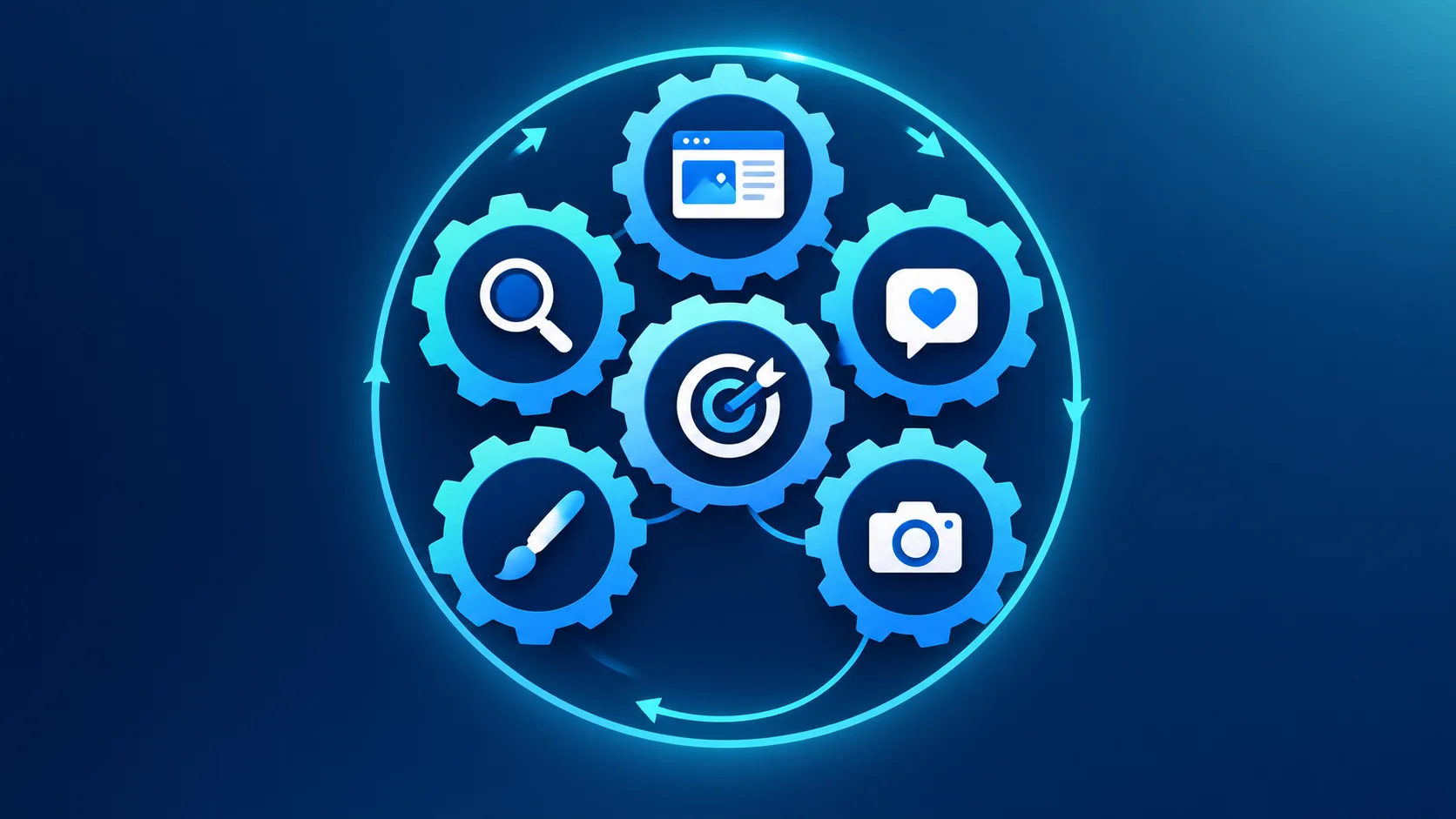
An AI marketing operating system can be viewed as a centralized framework that supports different aspects of marketing management. It combines artificial intelligence capabilities with marketing processes to assist with planning, analysis, optimization, and execution.
Unlike traditional software tools designed for a single task, an operating system approach emphasizes integration. It brings together different marketing functions so that information can move more effectively between research, strategy, campaigns, and reporting.
Key components often include:
Data Analysis and Insights
Data is one of the most valuable resources in modern marketing. However, collecting information alone does not create business value. Organizations need systems that can interpret data and transform it into useful insights.
AI technologies can analyze large datasets, identify behavioral trends, and highlight patterns that may not be immediately visible through manual review. This helps marketers understand audience preferences, campaign effectiveness, and potential areas for improvement.
Automated Marketing Processes
Automation has become an important part of improving operational efficiency. Repetitive tasks such as reporting, audience segmentation, and performance monitoring can require significant time when handled manually.
By automating selected processes, marketing teams can focus more attention on creative development, strategic planning, and customer engagement. Automation also helps create consistency across campaigns by reducing human errors and improving workflow management.
Strategic Decision Support
Successful marketing requires more than collecting metrics. Businesses must determine which actions will have the greatest impact based on their objectives.
An AI-driven system can support decision-making by evaluating information from different sources and providing recommendations based on identified patterns. While human expertise remains essential, AI can help marketers make decisions with greater confidence.
How AI Marketing OS Changes Business Marketing Strategies
The introduction of AI into marketing operations affects how organizations approach planning and execution. Rather than relying only on historical performance data, businesses can use predictive insights to anticipate future trends and customer needs.
Moving From Reactive to Proactive Marketing
Traditional marketing strategies often respond to changes after they occur. For example, a business may adjust campaigns only after noticing declining engagement or reduced conversions.
AI-supported systems allow companies to monitor signals earlier and identify potential shifts in customer behavior. This enables marketers to make adjustments before problems become significant challenges.
Improving Customer Understanding
Customer expectations continue to increase as digital experiences become more personalized. Businesses need to understand not only what customers purchase but also why they engage with specific content, channels, or messages.
AI systems can examine customer interactions across different platforms and provide deeper insights into audience behavior. These insights can help organizations develop more relevant communication strategies while maintaining consistency throughout the customer journey.
Creating More Efficient Workflows
Marketing teams often manage numerous responsibilities simultaneously, from content development and campaign management to analytics and reporting. Without organized workflows, valuable resources can be spent on administrative tasks rather than strategic activities.
A centralized marketing system helps create smoother processes by connecting different stages of marketing operations. This reduces unnecessary duplication and allows teams to manage resources more effectively.
The Role of Human Expertise in AI-Driven Marketing
Although artificial intelligence provides advanced analytical capabilities, it does not replace human judgment. Marketing remains a discipline that requires creativity, emotional understanding, ethical considerations, and strategic thinking.
AI can identify trends, process information, and automate certain activities, but humans are responsible for defining goals, interpreting insights, and creating meaningful customer experiences.
The most effective approach combines technological capabilities with human expertise. Businesses that successfully adopt AI in marketing often focus on collaboration between systems and teams rather than complete automation.
Benefits of Adopting an Integrated Marketing System
Businesses that implement an integrated approach to marketing may experience several operational advantages.
Better Resource Allocation
Marketing resources are limited, and organizations must decide where to invest time and budget. AI-supported analysis can help identify which channels, campaigns, and strategies are producing meaningful results.
This allows businesses to prioritize activities based on evidence rather than assumptions.
Faster Decision-Making
The ability to quickly analyze information can improve responsiveness. In competitive markets, organizations that recognize changing customer behavior and market trends earlier may have an advantage.
AI-powered systems help reduce the time required to gather and interpret information, allowing teams to make adjustments more efficiently.
Consistent Marketing Performance
Consistency is important for building strong customer relationships. When marketing activities are managed across disconnected systems, maintaining alignment can become difficult.
An integrated platform helps ensure that strategies, messaging, and performance tracking remain connected across different marketing functions.
Challenges and Considerations for Businesses
Despite the potential advantages, adopting AI-based marketing systems requires careful planning. Organizations must consider factors such as data quality, privacy, employee training, and strategic alignment.
Poor-quality data can lead to inaccurate insights, while unclear objectives may prevent businesses from gaining meaningful value from AI technologies. Companies also need to establish responsible practices for managing customer information.
Additionally, successful adoption depends on employee understanding. Teams must learn how to work alongside AI tools and interpret their outputs effectively.
The purpose of implementing an AI marketing framework is not simply to introduce new technology. The goal is to create a stronger foundation for making informed marketing decisions.
The Future of Marketing Management
Marketing continues to evolve as technology changes how businesses communicate with customers. AI represents one of the most significant developments because it affects how organizations collect information, plan strategies, and evaluate outcomes.
Future marketing environments are likely to involve greater integration between automation, analytics, and creative processes. Businesses that understand how to balance technological capabilities with human insight will be better positioned to adapt.
An AI marketing operating system reflects a broader movement toward smarter marketing management. Instead of focusing on individual tools, organizations are increasingly looking for connected solutions that support long-term growth and operational improvement.
Conclusion
The development of AI-powered marketing systems marks a significant shift in how businesses approach strategy and execution. By connecting data analysis, automation, and decision support, these systems provide a more organized way to manage modern marketing challenges.
The value of an AI marketing operating system extends beyond efficiency. It encourages businesses to develop more informed strategies, understand customers more deeply, and create adaptable marketing processes.
As digital environments continue to change, organizations that combine advanced technology with human expertise will have stronger opportunities to build sustainable marketing practices.
FAQs
What is an AI Marketing OS?
An AI Marketing OS is an integrated framework that uses artificial intelligence to support marketing activities such as data analysis, workflow management, campaign optimization, and strategic decision-making.
How does an AI Marketing OS improve marketing efficiency?
It improves efficiency by automating repetitive processes, organizing marketing information, and helping teams identify insights faster. This allows marketers to spend more time on strategic and creative tasks.
Can AI replace marketing teams?
No. AI is designed to support marketing professionals rather than replace them. Human creativity, strategic thinking, and customer understanding remain essential for effective marketing.
What types of businesses can use an AI marketing system?
Businesses of different sizes and industries can benefit from AI-based marketing systems. The most suitable applications depend on business goals, available data, and marketing requirements.
What should companies consider before adopting AI marketing technology?
Companies should evaluate their objectives, data quality, privacy requirements, team readiness, and how the technology aligns with their existing marketing processes.