Distal femur fractures can be difficult to manage because of the complex anatomy of the lower femur, limited space for screw placement, and the forces acting across the knee joint. In these cases, stable fixation is important for maintaining alignment and supporting fracture healing. Variable-angle distal femur plates have become a useful option because they allow surgeons greater flexibility when positioning locking screws according to the fracture pattern and available bone.
Understanding Variable-Angle Distal Femur Plates
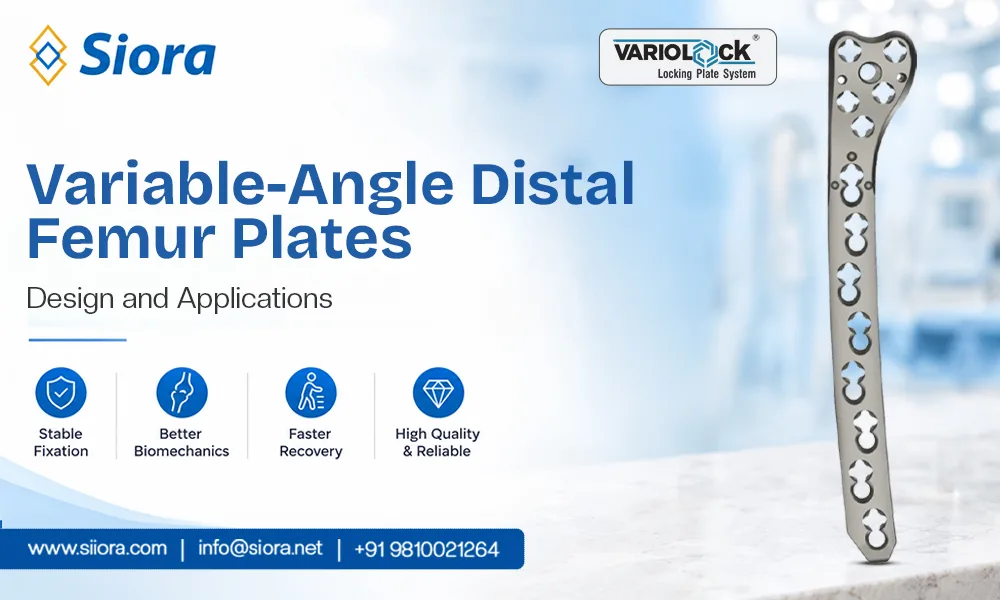
A variable-angle distal femur plate is a locking plate designed specifically for fractures around the distal femur. Unlike conventional fixed-angle locking systems, its screw holes allow the surgeon to select the trajectory of individual locking screws within a defined angular range.
This flexibility can be particularly useful when treating fractures with multiple fragments. Instead of placing every screw along a predetermined path, the surgeon can adjust screw direction to target stronger areas of bone or avoid important structures and previously placed implants.
The plate itself is contoured to follow the anatomy of the distal femur. This helps provide close contact with the bone while maintaining the desired position during fixation.
Key Design Features of Variable Angle Distal Femur Plates
Variable-Angle Locking Holes
The main feature is the variable-angle locking mechanism. It permits controlled changes in screw trajectory while still providing angular stability after the screw is locked into the plate. This can give the surgeon more options for constructing a stable fixation pattern.
Anatomical Contouring
Distal femur plates are designed around the shape of the lateral femur. Proper contouring can help reduce soft-tissue irritation and support accurate plate positioning. The design also considers the broader distal portion of the femur, where several screws may be required to capture smaller fracture fragments.
Multiple Screw Options
The distal section commonly provides several screw positions. This is important in comminuted fractures, where fixation may need to be distributed across different parts of the distal fragment. Variable trajectories can also help achieve better purchase when the available bone stock is limited.
Applications in Distal Femur Fractures
Variable-angle distal femur plates may be used for several fracture situations, including complex intra-articular fractures, extra-articular distal femur fractures, comminuted fractures, and some periprosthetic fractures, depending on the patient's condition and the surgeon's treatment plan.
For osteoporotic bone, locking fixation can be especially useful because the plate and screws work together as a fixed-angle construct after locking. The ability to alter screw direction may further help the surgeon select suitable areas of remaining bone for fixation.
These plates can also be considered in revision procedures where existing screw tracks, previous implants, or altered anatomy make standard screw trajectories less practical.
Advantages of Variable-Angle Fixation
The major benefit is flexibility. Surgeons can adapt screw placement to the individual fracture rather than being restricted to one fixed trajectory.
Other potential advantages include:
- Better options for targeting available bone stock
- Greater flexibility in complex fracture patterns
- Ability to avoid certain anatomical structures or previous fixation sites
- Stable locking fixation when the screws are properly engaged
- Support for customised fixation strategies
Conclusion
Variable-angle distal femur plates combine anatomical plate design with adaptable locking technology. Their ability to accommodate different screw trajectories can be valuable when conventional fixed-angle fixation does not provide enough flexibility. However, successful treatment depends on careful fracture assessment, appropriate implant selection, accurate reduction, and sound surgical technique.
If you are looking to get a high-quality and patient-centric variable-angle locking plate system or other trauma implants, visit booth N35.H78 at the upcoming World Health Expo Dubai 2027.