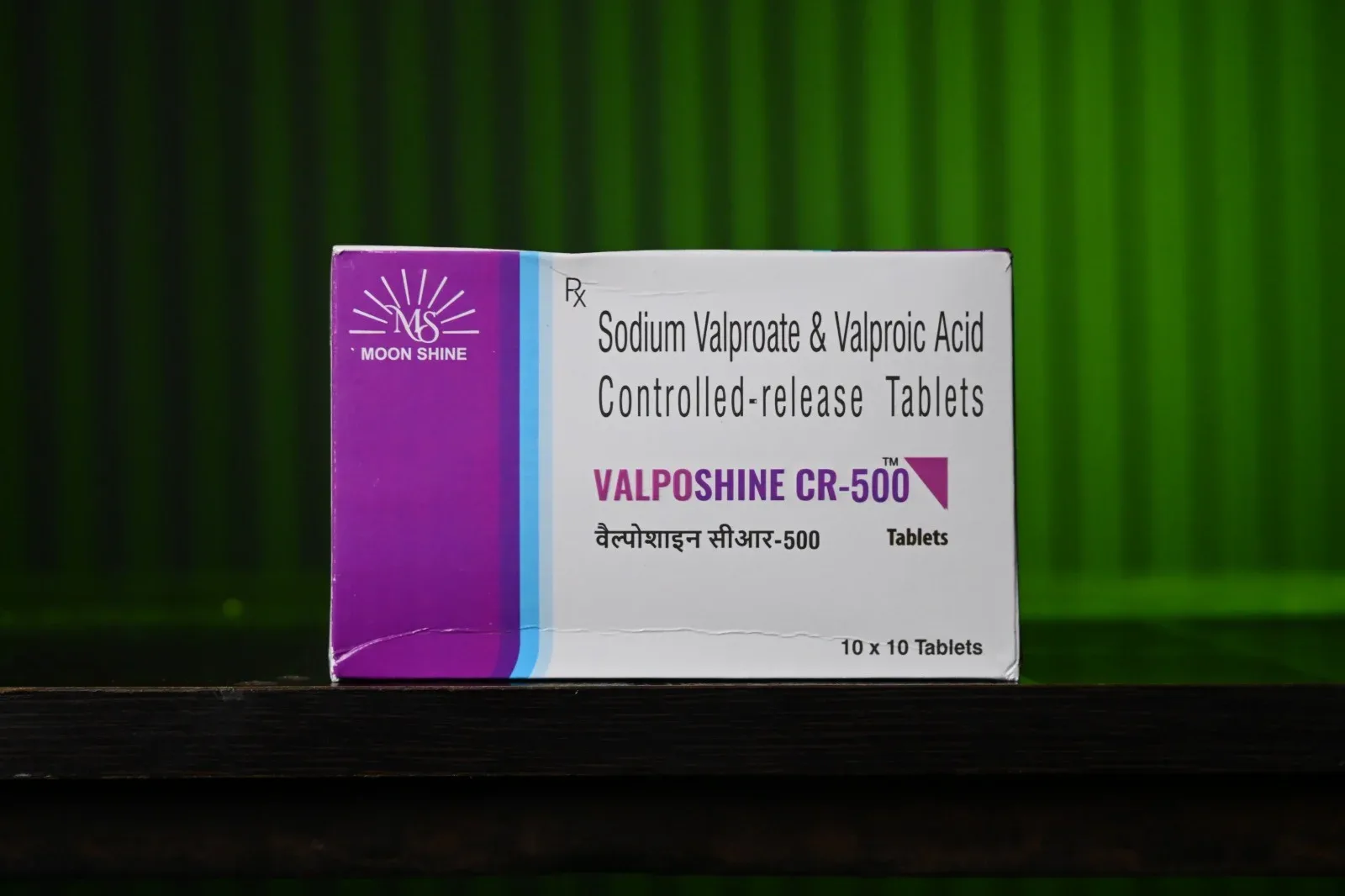
Sodium valproate and valproic acid-containing medicines are used in neurology; however, the wording "controlled release" printed on the package might confuse the patients. Knowing the meaning of such formulations and importance of following prescription can help patients discuss these aspects more openly during consultations with healthcare specialists.
For example, VALPOSHINE CR-500 is a controlled-release formulation, which contains sodium valproate and valproic acid. It is helpful for patients to know about differences between controlled-release and conventional medicine formulations.
What Is Controlled Release?
Controlled-release tablets are designed to slowly release the active substance in a particular period of time, not instantly.
That is why it is important for patients to know the peculiarities of the medicine formulation and the way the drug releases its active ingredient as this information affects the way of taking the drug.
Patients should take a controlled-release tablet according to the directions of the doctor, pharmacist, and product information, and not change the way of taking the tablet themselves.
About Sodium Valproate and Valproic Acid
Sodium valproate and valproic acid are active pharmaceutical substances that are found in the prescription medicines used for specific neurological disorders.
Proper use of medicines requires individual prescription by a health care professional. He/She may take into consideration several aspects, such as the disease to be treated, patient’s age, his/her medical history, other medications and individual patient’s response to treatment.
That is the reason why general product information available on the Internet cannot substitute an individual medical consultation.
Importance of Medical Prescription
There are specific considerations about the medicines containing valproate since they may be associated with various adverse effects and contraindications including serious risks during pregnancy.
All patients that are pregnant, potentially could get pregnant or want to become pregnant should consult their doctor regarding the valproate therapy. Patients must not abruptly stop any prescribed medicines without a consultation from their doctor.
Why This Formulation Should Not Be Modified
Many people believe that tablets can be crushed, divided or chewed to make taking easier. However, this belief can pose problems with some types of controlled release medications.
Modifying a controlled release tablet will influence the release process of active substances contained. For this reason, patients are advised to consult the recommended instructions or a pharmacist prior to crushing, dividing or altering a tablet.
The same concerns dosage adjustments. Taking more, less or different dosages without medical consultation will interrupt a treatment regime prescribed for a patient.
Reading Pharmaceutical Product Information
When searching for an information about prescription drug on the Internet, one should separate the information aimed at education and information regarding a pharmaceutical product itself.
Some useful information includes active substance list, dosage form, manufacturing company information, warnings and instructions for use. Information regarding VALPOSHINE CR-500 and its formulation can be found on the product page at Moonshine Biotech.
Pharmaceutical product information can assist patients to understand a composition of the medication, however, any concerns related to appropriateness of usage, dosage, interactions or side effects should be addressed to a doctor or pharmacist.
Take Home Message
One of the most crucial lessons learned from the paper is that controlled release medications must be used according to the recommended dosages and not according to assumptions about other medications.
When it comes to the medications that contain sodium valproate and valproic acid, it is necessary to consult with medical specialists to get an understanding of the medication formulation, read the accompanying information and reveal the medications taken by the patients.