When a print business produces booklets regularly, the finishing stage can have a major effect on productivity. Printing the pages is only part of the job. Those pages may still need to be arranged, folded, and secured before they become a finished product that can be handed to a customer.
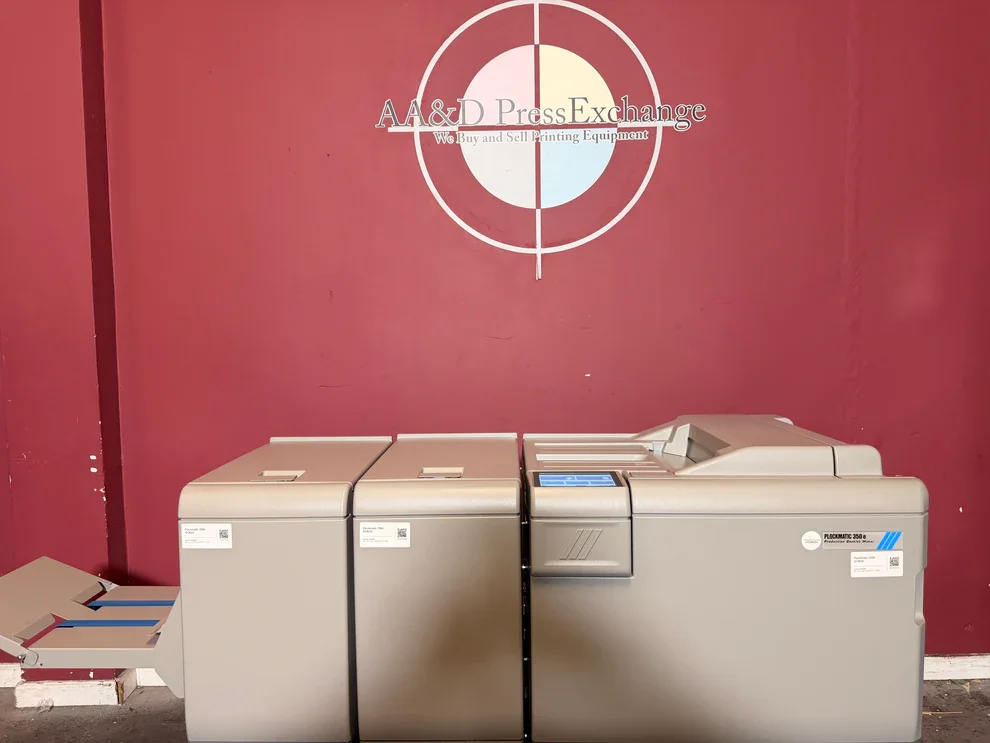
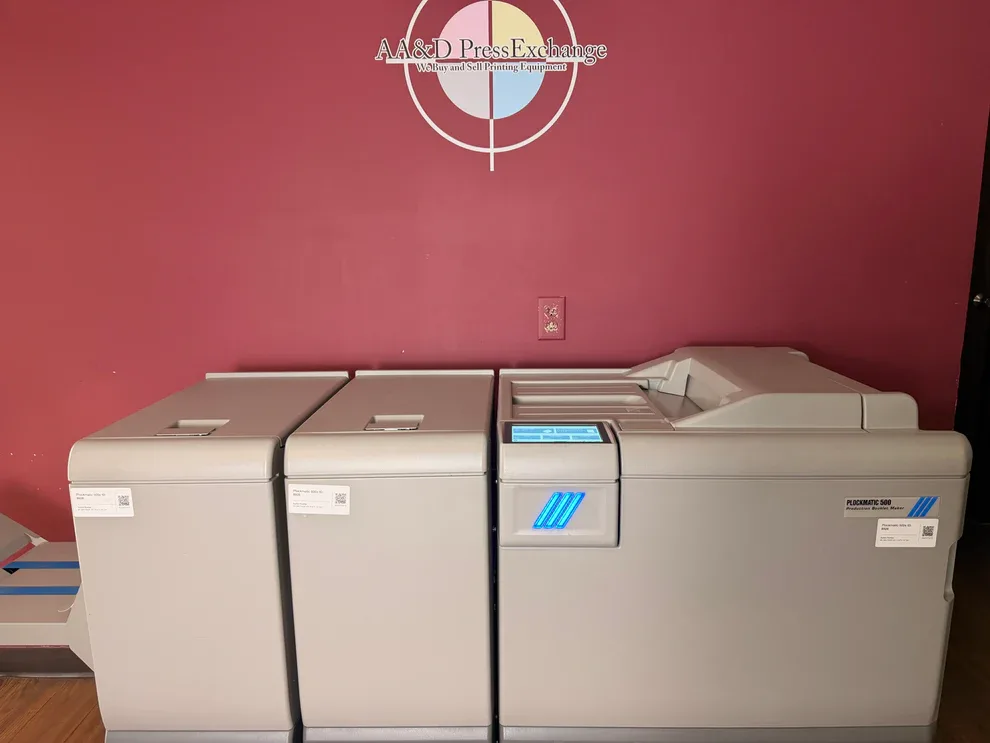
For businesses looking to improve that part of their operation without taking on the cost of brand-new production equipment, a Used Plockmatic 500e Production Booklet Maker for Sale can be worth investigating.
The Plockmatic 500e is designed for professional booklet production, making it relevant to commercial printers, digital print departments, copy centers, and other organizations that handle recurring booklet work. Buying used equipment can also make it possible to add production capability while keeping the initial investment under control.
However, purchasing used machinery should involve more than finding the lowest price. The machine's condition, configuration, compatibility, maintenance history, and intended workload all deserve careful consideration.
This guide explains what to look for when evaluating a used Plockmatic 500e, how it can fit into a print workflow, and why production finishing equipment can be an important investment for a growing print operation.
What Is the Plockmatic 500e?
The Plockmatic 500e is a production-oriented booklet-making system intended for professional print finishing.
Its purpose is to take printed sheets and help convert them into completed booklets. Depending on the equipment configuration, booklet production can involve functions such as sheet gathering, folding, and stapling.
The important distinction is that this machine belongs to the finishing side of printing.
A digital printer or production press creates the printed pages. The booklet maker then helps transform those loose sheets into a structured finished document.
Think of it as the final assembly station in a small manufacturing line. The printer creates the individual pieces, while the finishing system puts those pieces together into something ready for use.
This type of equipment is particularly useful when a print department has more booklet work than employees can comfortably handle by hand.
Why Consider a Used Production Booklet Maker?
New production equipment can represent a significant expense. For businesses that want to increase their finishing capabilities without committing to the cost of new machinery, the used-equipment market can provide another route.
A used Plockmatic 500e may offer several advantages.
The most obvious is the potential for a lower purchase price compared with comparable new equipment. A business may then be able to allocate part of its equipment budget toward other needs, such as printing, paper handling, software, or additional finishing tools.
Used equipment can also make sense when a company wants to test whether bringing booklet production in-house will generate enough value to justify a larger investment.
That said, used does not automatically mean better value. The condition and configuration of the individual machine are critical.
How Booklet Production Fits Into a Print Job
It helps to understand where a production booklet maker sits in the overall workflow.
Imagine a company needs 1,000 copies of a multi-page training booklet.
First, the document is prepared digitally. The pages are then printed onto the selected paper. At this point, the job may consist of many loose sheets.
Those sheets still need to become booklets.
This is where the finishing stage begins.
The booklet-making equipment handles the appropriate finishing steps so the printed pages emerge in a more useful form. Depending on the setup, that can include gathering pages into sets, folding the sets, and securing them.
Without automated finishing, employees may need to repeat these tasks manually.
For a small number of copies, that might be manageable. At production volume, however, the amount of labor can become considerable.
The Value of Automated Booklet Finishing
Manual booklet assembly is straightforward but repetitive.
An employee has to repeatedly pick up sheets, make sure they are correctly arranged, fold them, and staple them. Doing this for dozens of booklets is one thing. Doing it for hundreds or thousands is very different.
Automated finishing changes the nature of that work.
Instead of assigning people to perform the same physical actions over and over, the equipment handles much of the repetitive process.
This can help a print business use its employees more effectively. Staff can spend more time on file preparation, quality checks, customer service, scheduling, packaging, or other activities that require attention and decision-making.
The equipment therefore has value beyond the physical folding or stapling itself.
Who Might Benefit From a Plockmatic 500e?
A production booklet maker can be useful in several environments.
Commercial print shops
Commercial printers frequently handle different types of customer orders. Booklets can be an important part of that mix.
A dedicated finishing system can help a print shop handle booklet production more efficiently instead of relying heavily on manual assembly.
Digital print departments
Businesses that operate digital production presses may produce short and medium-length print runs regularly.
Adding booklet finishing can allow more of those jobs to be completed internally.
Copy and document centers
Print and copy businesses often serve customers who need finished documents rather than simply printed pages.
Booklet production can be another service that these businesses provide.
Corporate print rooms
Large organizations sometimes produce training materials, internal publications, employee guides, and event documents in-house.
A production finishing system can make recurring booklet work easier to manage.
Educational organizations
Schools, colleges, and training providers can produce programs, course materials, instructional documents, and other multi-page publications.
Whether a production booklet maker is economical depends on the organization's workload, but recurring print requirements can make automated finishing useful.
What Makes a Used Machine Different?
When buying new equipment, the buyer generally starts with the manufacturer's specifications and chooses the configuration that fits the intended application.
With used machinery, there is another layer to the decision: the condition of the actual unit being offered.
Two machines of the same model may have had very different working lives.
One could have been used lightly and maintained carefully. Another may have operated heavily for years.
That is why purchasing a Used Plockmatic 500e Production Booklet Maker for Sale requires more investigation than simply checking the model number.
The individual machine matters.
Check the Equipment's Condition
Before purchasing used production equipment, ask about its current operating condition.
Ideally, the machine should be tested rather than judged only by photographs.
A proper evaluation can help identify issues involving feeding, paper movement, folding, stapling, or other finishing functions.
Look for signs of excessive wear or damage. Cosmetic marks are not necessarily a major problem on used production equipment, but physical condition can sometimes provide clues about how the machine was handled.
More importantly, ask whether the machine has been operated recently and whether its functions have been tested.
Ask About Maintenance History
Maintenance history can provide useful insight into a used machine.
Ask whether routine servicing was performed and whether major components have been replaced.
If records are available, they can help establish how the equipment was maintained during its previous service life.
This is similar to buying a used car. Mileage alone does not tell the entire story. A well-maintained vehicle can be a better purchase than one with fewer miles but poor maintenance.
The same principle applies to professional print-finishing equipment.
Understand the Configuration
Production finishing equipment can be configured in different ways.
Before buying a used Plockmatic 500e, determine exactly what is included with the unit.
Do not assume that every machine with the same model name comes with identical accessories, modules, or capabilities.
Ask for a clear equipment list.
This should help you determine whether the machine will perform the jobs your business actually receives.
A lower-priced machine may not be the better deal if it requires additional components before it can be integrated into your production line.
Check Compatibility With Your Existing Equipment
This is one of the most important considerations.
A booklet maker is part of a larger workflow. It needs to work appropriately with the equipment feeding it.
Before purchasing, confirm compatibility with your printer or production press and make sure the intended paper sizes, document formats, and output arrangements are suitable.
Think of it like purchasing a trailer for a vehicle. The trailer might be excellent by itself, but it still needs to connect properly to the vehicle you already own.
The same principle applies to print-finishing equipment.
Consider Your Typical Paper
Paper choice can affect finishing.
A print shop might use lightweight sheets for newsletters, heavier stock for covers, or different media for specialty applications.
Before buying used equipment, identify the paper types you regularly run.
Then verify that the particular configuration is appropriate for those materials.
This is especially important if your business expects to produce different booklet formats rather than repeating one standard job.
Production Volume Matters
Your workload should influence your buying decision.
If your company produces a few dozen booklets every month, a high-production system may provide more capacity than you actually need.
On the other hand, if booklet jobs arrive every day, manual finishing may become a serious productivity limitation.
A useful way to evaluate the investment is to look at the time your staff currently spend finishing booklets.
Suppose employees spend several hours each week assembling booklets manually. Over a year, those hours become substantial.
Automated finishing can potentially turn that repetitive labor into machine-assisted production.
The actual return depends on your workload and operating costs, but calculating the time involved can help make the decision more objective.
Reducing Repetitive Labor
One of the strongest reasons to consider a Plockmatic 500e booklet maker is the potential reduction in repetitive manual work.
Manual finishing is not simply about time. It can also be tiring.
Repetitive folding and stapling can become monotonous, particularly when employees are expected to perform the same actions for long periods.
Automated equipment can take over much of this repetitive activity.
That does not mean employees become unnecessary. Instead, their role can shift toward monitoring production, checking quality, preparing jobs, and handling tasks that require greater attention.
Creating More Consistent Booklets
A professional print customer generally expects consistency.
If a customer orders 500 copies of the same booklet, the finished products should look substantially alike.
Hand-finishing can introduce small variations. Fold positions may differ slightly, staples may not always be placed identically, and page handling mistakes can occur.
Automated finishing is designed to make repeated production more consistent.
This can be particularly valuable for commercial printers where the final appearance of the product affects customer satisfaction.
Common Uses for Finished Booklets
A production booklet maker can support a wide variety of applications.
Marketing publications
Businesses can use booklets for product information, sales materials, company presentations, and promotional campaigns.
Training documents
Employee training materials can be easier to distribute when multiple pages are combined into a single booklet.
Event programs
Schools, conferences, performances, and community organizations often need printed programs containing schedules and other information.
Instructional material
Multi-page instructions can be organized into a booklet that users can keep nearby while working.
Newsletters
Organizations that distribute regular updates may choose booklet formats when they need more space than a simple flyer provides.
Short-run publications
Digital printing has made shorter production runs increasingly practical. A finishing system can complement that flexibility by allowing those printed pages to become finished products without extensive manual work.
Used Equipment Can Support Business Growth
Buying used machinery is not necessarily about buying less.
For some companies, it is a strategy for adding capability while managing capital.
A print business might use the savings from a used machine to improve another part of its workflow.
For example, instead of putting the entire budget into a new finishing system, a company may choose a suitable used machine and use the remaining funds for additional paper-handling equipment, maintenance, marketing, or production capacity.
The right choice depends on the business's priorities.
What Should You Ask the Seller?
Before committing to a used machine, gather as much information as possible.
Useful questions include:
- What is the machine's current operating condition?
- Has it been tested recently?
- What is included with the machine?
- Is maintenance documentation available?
- Which components have recently been replaced?
- What paper sizes and types has it been running?
- What production environment was it previously used in?
- Is service support available?
- Does it include all components required for your intended setup?
- Can the equipment be demonstrated before purchase?
These questions can help distinguish a genuinely useful machine from an inexpensive piece of equipment that may require substantial additional investment.
Why the Seller Matters
The condition of the machine is important, but so is the reputation and transparency of the seller.
A professional equipment seller should be able to provide meaningful information about the machine instead of simply listing a model number and price.
Buyers should look for clear descriptions, realistic equipment details, and information about testing or servicing where available.
For businesses researching used print equipment, AA&D PressExchange is one marketplace source that can be considered when comparing production and finishing machinery.
Planning for Installation
Buying the equipment is only one part of the process.
Consider how the machine will reach your facility and where it will be installed.
Production equipment can be substantial and may require appropriate access through doors, loading areas, or elevators.
The installation area should also provide enough room for operators to work comfortably and for maintenance personnel to access the equipment.
Planning these details in advance can prevent unpleasant surprises after purchase.
Training the Operator
A used machine may have a learning curve, particularly if employees have only worked with manual finishing before.
Operators should become familiar with the machine's controls, setup procedures, acceptable materials, routine maintenance, and basic troubleshooting.
Good training can make production smoother and help prevent avoidable errors.
It also gives operators the confidence to recognize when a problem requires attention instead of continuing to run a job and potentially creating more waste.
Maintenance Is Part of the Investment
The purchase price should not be the only number considered.
A production machine has ongoing operating costs.
These can include consumables, routine servicing, replacement parts, labor, and potential repairs.
When comparing a used machine with a new one, consider the complete ownership picture.
A machine with a slightly higher purchase price but a strong maintenance history could potentially be more economical than a cheaper unit that needs immediate attention.
Is a Used Plockmatic 500e Right for Your Business?
There is no universal answer.
A used production booklet maker may make sense if your business already has recurring booklet work, enough print volume to justify automation, suitable feeding equipment, and a need to reduce manual finishing.
It may be less appropriate if booklet jobs are extremely rare or if your current production volume does not justify owning dedicated finishing equipment.
The best approach is to start with your actual workload.
Count the number of booklet jobs you complete. Estimate the labor involved. Consider how much time is spent on manual finishing. Then compare those figures with the cost of acquiring, operating, and maintaining the equipment.
That gives you a much stronger basis for making a purchase decision.
Conclusion
A Used Plockmatic 500e Production Booklet Maker for Sale can be an appealing option for print businesses that want professional booklet-finishing capabilities without automatically committing to the expense of new equipment.
The machine's value, however, depends on much more than the model name. Buyers should examine the condition of the specific unit, confirm its configuration, investigate maintenance history, check compatibility with existing printing equipment, and consider the types and quantities of booklets they expect to produce.
When those factors line up, used production equipment can help a print operation reduce repetitive work, improve workflow efficiency, and expand the range of finished products it can produce internally.
The smartest purchase is not simply the machine with the lowest asking price. It is the machine that matches your workload, materials, existing equipment, budget, and long-term production goals. With careful evaluation, a used booklet-making system can become a practical addition to a professional print environment.