Reimagining Education Through Advanced Strategies: A New Dawn
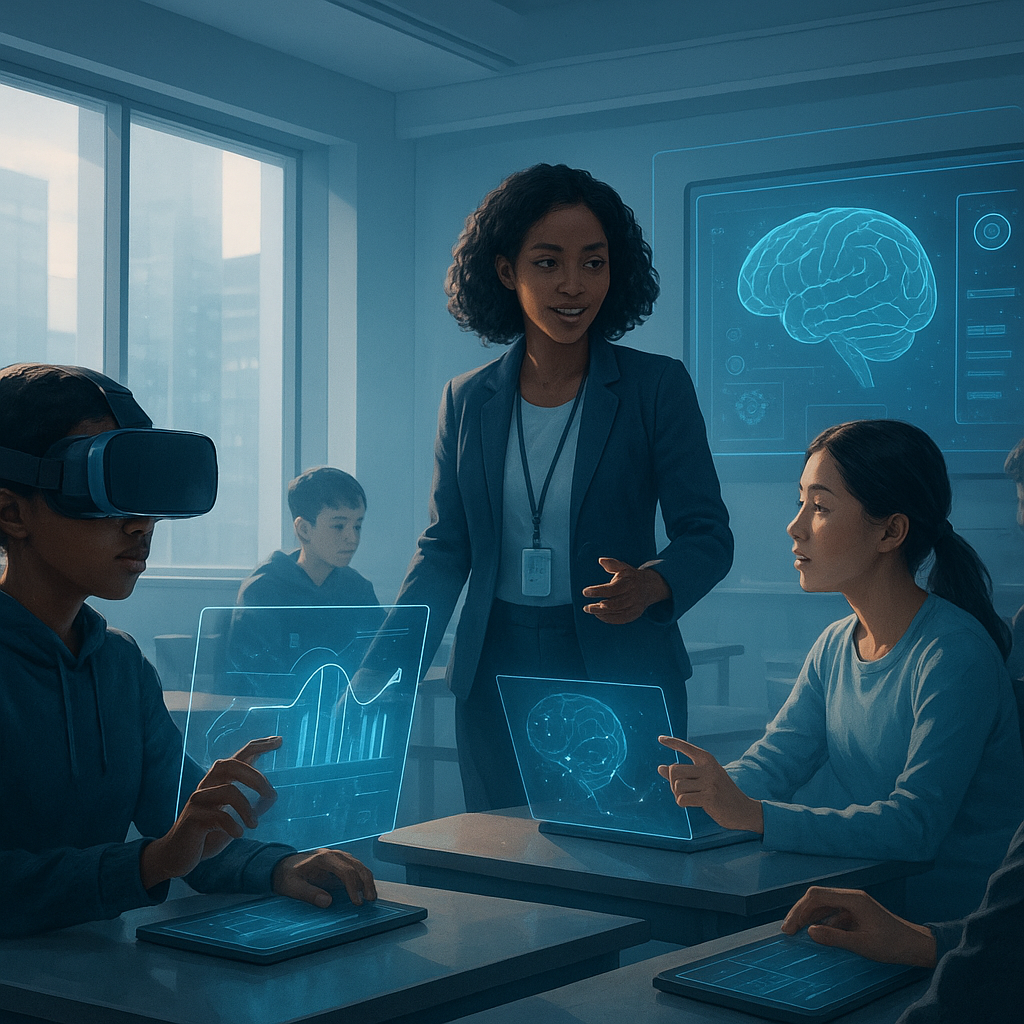
At a bustling urban high school in Chicago, a classroom hums with an unusual energy. Instead of traditional lectures, students engage with interactive AI tutors, collaborate on virtual reality projects, and analyze real-time data from global simulations. This scene is not a distant vision but a rapidly evolving standard in 2026, reflecting how advanced strategies are reshaping education across all levels. According to the National Center for Education Statistics, schools integrating adaptive learning technologies have reported a 20% increase in student engagement and a 15% improvement in standardized test scores since 2023. This shift underscores a broader transformation—education is no longer confined to rote memorization or passive reception but is becoming a dynamic, personalized experience driven by cutting-edge methods.
Yet, the path to this transformation is layered with complexity, requiring educators, policymakers, and technologists to rethink traditional frameworks fundamentally. As classrooms worldwide embrace these innovations, understanding the nuances of these advanced strategies becomes imperative for unlocking each student’s potential effectively.
From Foundations to Frontiers: How Education Evolved to Embrace Complexity
The journey toward advanced educational strategies is rooted in decades of pedagogical experimentation and technological advancement. Historically, the industrial-era model dominated, emphasizing uniformity, discipline, and standardized testing. However, the dawn of the digital age in the early 21st century challenged this paradigm. By the 2010s, blended learning models combined face-to-face instruction with online components, offering flexible pathways but still limited personalization.
The real turning point came with the proliferation of big data analytics and artificial intelligence around the early 2020s. These technologies enabled educators to analyze granular student data, identifying learning gaps and preferences at an unprecedented scale. Simultaneously, global demands for skills such as critical thinking, creativity, and digital literacy pushed curricula beyond traditional content delivery.
By 2025, institutions began adopting multi-dimensional frameworks, integrating socio-emotional learning (SEL), competency-based education, and immersive technologies such as augmented reality (AR) and virtual reality (VR). This historical context reveals how education shifted from a one-size-fits-all approach to a multifaceted ecosystem tailored to diverse learner profiles and future workforce needs.
Core Pillars of Advanced Educational Strategies: Data, Personalization, and Integration
At the heart of advanced education strategies in 2026 lie three core pillars: data-driven insights, personalized learning pathways, and systemic integration of technology and pedagogy. These pillars interact symbiotically to create responsive, engaging educational experiences.
Data-Driven Insights
Modern classrooms leverage real-time analytics platforms that aggregate data from student interactions, assessments, and even biometric feedback. According to the Education Innovation Consortium, schools employing AI-driven analytics have reduced learning disparities by 25% over three years. Educators use this data to tailor instructional strategies, identify at-risk students early, and adjust pacing.
Personalized Learning Pathways
Adaptive learning platforms now customize content sequences based on individual performance and learning styles. For example, platforms like NuLearn and IntelliPath utilize machine learning algorithms to offer diverse resources, from videos to interactive simulations, adapting dynamically as the student progresses. This personalization enhances motivation and retention, fostering deeper conceptual understanding.
Systemic Integration
Advanced strategies also emphasize seamless integration across curriculum design, teaching methods, and assessment. Competency-based education frameworks allow students to advance upon mastery rather than seat time, while interdisciplinary projects promote critical skills. Schools increasingly blend human facilitation with AI assistance, ensuring technology amplifies rather than replaces teacher expertise.
- Key benefits include:
- Improved student engagement through relevant and adaptive content
- Enhanced teacher effectiveness via data-informed decision-making
- Greater equity by addressing diverse learner needs
- Development of 21st-century skills through real-world problem-solving
"The fusion of data analytics and pedagogy allows us to meet students where they are, not where we expect them to be," says Dr. Helen Rivas, Chief Innovation Officer at EdTech Solutions.
2026 Trends: Cutting-Edge Practices Shaping Contemporary Classrooms
The current educational landscape is marked by rapid adoption of technologies and pedagogies that were once experimental. One prominent trend is the rise of hybrid immersive learning environments combining AR/VR with AI tutors. For instance, the Global Learning Institute reports that over 40% of tertiary institutions in North America and Europe have integrated AR modules for STEM subjects, resulting in a 30% increase in conceptual mastery rates.
Moreover, social-emotional learning has gained renewed emphasis, supported by AI tools that monitor students' emotional wellbeing through natural language processing and facial expression analysis. These insights enable timely interventions, creating a holistic approach to education that balances cognitive and emotional development.
Another notable development is the widespread use of blockchain technology for credentialing and academic records. This innovation enhances security, transparency, and portability of qualifications, facilitating lifelong learning and mobility in the global job market.
Additionally, micro-credentialing and modular courses are disrupting traditional degree structures. According to the International Association of Universities, the number of learners pursuing stackable credentials increased by 60% between 2023 and 2026, reflecting a shift toward flexible, skills-based education aligned with labor market demands.
- Top 2026 education innovations:
- AI-powered personalized tutors and assessment tools
- Immersive AR/VR learning experiences
- Blockchain-based academic credentials
- Micro-credentialing and competency-based pathways
- Integrated socio-emotional learning analytics
“Education in 2026 is a convergence of technology and empathy, creating ecosystems where every learner’s journey is unique and supported,” remarks Prof. Marcus Lee, Director of the Center for Educational Technology.
Expert Insights: Impact on Educators, Students, and Institutions
Experts across academia and industry emphasize that advanced strategies are not merely about technology but transforming the entire educational ecosystem. Dr. Amina Patel, a leading educational psychologist, highlights that “strategic implementation must prioritize teacher empowerment; technology should augment human connection, not supplant it.” This perspective stresses professional development as critical to success. In 2026, over 75% of schools now mandate ongoing training in educational technologies and data literacy, reflecting this priority.
From the student perspective, advanced strategies foster agency and self-regulation. A 2025 survey by the Student Learning Alliance found that 68% of students felt more motivated and confident when learning personalized content versus traditional curricula. This shift supports not only academic achievement but lifelong learning habits.
Institutions benefit by improving outcomes, reducing dropout rates, and aligning programs with workforce needs. For example, the University of Helsinki’s pilot program integrating competency-based learning and AI analytics reported a retention improvement of 22% within two years, alongside increased employer satisfaction.
However, challenges remain, including data privacy concerns, equity of access to technology, and the risk of over-reliance on automated systems. Stakeholders advocate for robust ethical frameworks and inclusive policies to ensure that advanced strategies serve all learners effectively.
Looking Ahead: What to Watch in Education’s Next Frontier
As we move deeper into the decade, several emerging trends warrant close attention. First, the maturation of quantum computing could revolutionize educational data processing, enabling unprecedented personalization and predictive analytics. Early research institutions are already exploring quantum algorithms to optimize curriculum design and learning pathways.
Second, the rise of neuroeducation—leveraging brain-computer interfaces and cognitive neuroscience—promises to deepen understanding of learning processes and tailor interventions more precisely. Pilot studies in Europe and Asia are underway to integrate neurofeedback into classroom settings.
Third, the democratization of education through decentralized autonomous organizations (DAOs) may redefine governance and funding models. This community-driven approach could empower learners and educators to co-create curricula and resource allocation, enhancing transparency and responsiveness.
Finally, ongoing global challenges such as climate change and social inequities will shape educational priorities, demanding curricula that promote sustainability, empathy, and critical global citizenship. Schools adopting holistic, project-based learning models aligned with these goals are likely to lead the field.
- Future focus areas for advanced education strategies:
- Quantum-enhanced learning analytics
- Neuroeducation and brain-computer interface applications
- Decentralized governance models in education
- Curricula addressing global challenges and sustainability
For readers interested in deeper explorations of innovation in education, articles like Mastering Online Learning: Proven Strategies for Exceptional Digital Education and Rethinking University: Advanced Strategies to Excel and Innovate provide further insights into evolving best practices and institutional shifts.