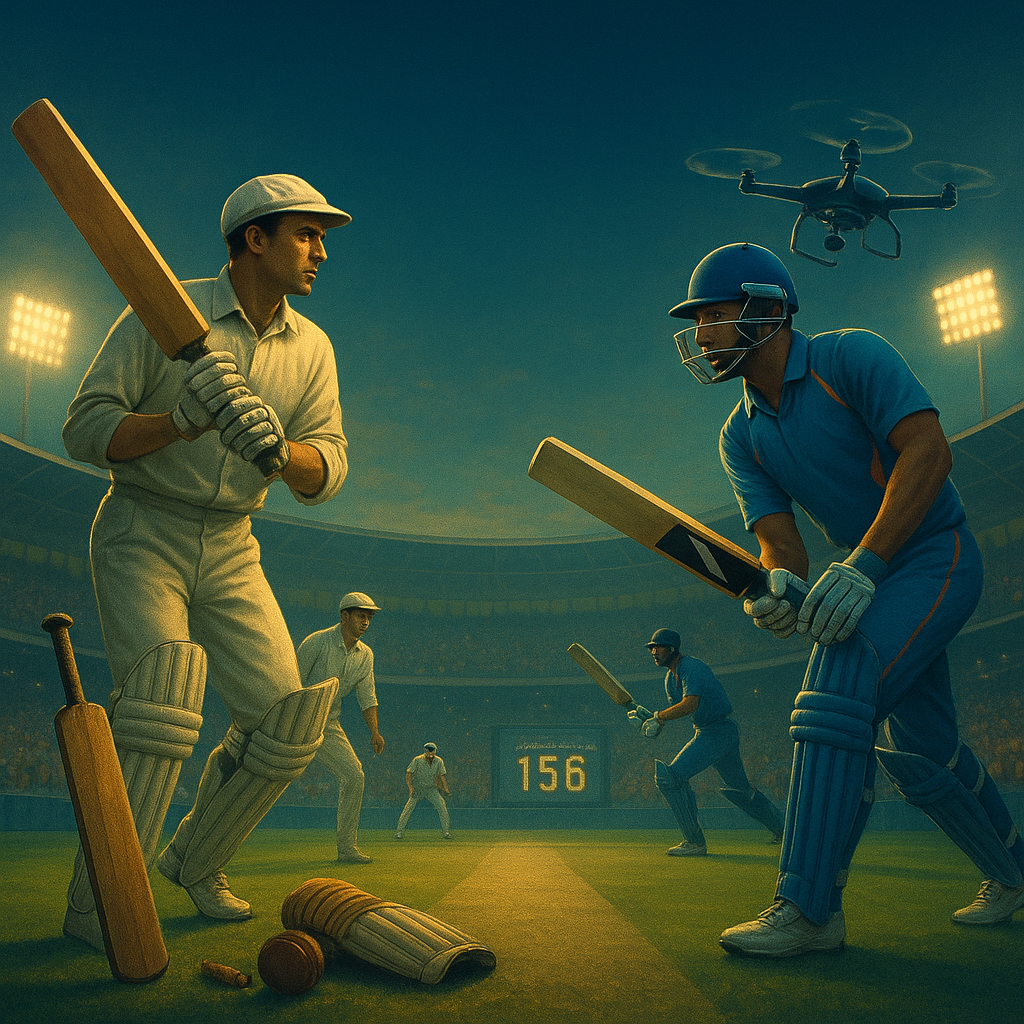

Setting the Scene: Cricket’s Enduring Allure
Imagine a sun-drenched afternoon, the crack of willow against leather echoing across a sprawling green field, thousands of spectators holding their breath as the bowler runs in, the batsman poised to strike. Cricket, a sport woven deeply into the cultural fabric of many nations, continues to captivate millions worldwide. Despite its rich history and complex rules, cricket remains accessible to newcomers willing to invest time in understanding its fundamentals.
In 2026, cricket’s global audience is estimated to exceed 2.5 billion, spanning traditional powerhouses like India, Australia, and England, as well as emerging markets in the United States and parts of Europe. This surge reflects the sport's evolving formats, technological integrations, and strategic innovations, which make it both a classic contest of skill and a modern spectacle.
This guide aims to demystify cricket for beginners, providing a comprehensive overview from the origins of the game to practical insights on rules, gameplay, and current trends. Whether you are stepping onto the pitch for the first time or seeking to enhance your understanding, this article breaks down cricket’s complexities into digestible parts.
Tracing Cricket’s Journey: From Village Greens to Global Arenas
The roots of cricket stretch back to 16th-century England, where it began as a pastime among rural children. By the 18th century, it had become England’s national sport, with formalized rules introduced by the Marylebone Cricket Club (MCC) in 1787. The sport’s expansion coincided with the British Empire’s reach, taking cricket to India, Australia, the Caribbean, and beyond.
Modern cricket evolved through multiple formats, from the traditional five-day Test matches to One Day Internationals (ODIs) introduced in the 1970s, and the revolutionary Twenty20 (T20) format launched in the early 2000s. Each format caters to different audiences, balancing tradition and entertainment.
Notably, the establishment of international governing bodies like the International Cricket Council (ICC) standardized competition rules and fostered global tournaments such as the Cricket World Cup and the ICC T20 World Cup. These events have played a pivotal role in cricket’s rise, drawing billions of viewers and driving investments into player development and infrastructure.
Understanding this historical context helps beginners appreciate how cricket’s structure and culture developed, shaping how the game is played and enjoyed today.
Fundamentals of Cricket: Rules, Roles, and Gameplay
At its core, cricket is a bat-and-ball game played between two teams of eleven players each. The objective varies slightly depending on the format, but fundamentally it involves scoring more runs than the opponent.
Basic Terminology and Roles
- Batting: The batting team tries to score runs by hitting the ball and running between the wickets.
- Bowling: The bowling team aims to dismiss the batsmen by hitting the wickets or inducing mistakes.
- Fielding: Fielders support the bowlers by catching the ball, stopping runs, and effecting dismissals.
- Umpires: Officials who enforce the rules, make decisions on dismissals, and ensure fair play.
The Playing Field
The game is played on an oval-shaped ground with a 22-yard pitch at the center. At each end of the pitch are three wooden stumps topped by two bails, collectively called the wicket.
How Runs Are Scored
Runs are the currency of cricket. Batsmen score runs by running between the wickets after hitting the ball or by striking the ball to the boundary. A ball reaching the boundary after bouncing scores four runs, while one crossing the boundary without bouncing earns six runs.
Dismissals (Ways a Batsman Can Be Out)
- Bowled: The ball hits the stumps and dislodges the bails.
- Caught: The ball is caught by a fielder before it touches the ground.
- Leg Before Wicket (LBW): The ball hits the batsman’s leg in front of the stumps, preventing a probable hit.
- Run Out: A fielder hits the stumps with the ball before the batsman reaches the crease during a run.
- Stumped: The wicketkeeper removes the bails while the batsman is out of the crease.
Match Formats and Durations
- Test Cricket: Played over five days with two innings per team; emphasizes endurance and technique.
- One Day Internationals (ODIs): 50 overs per side, completed in a day; balances strategy and pace.
- Twenty20 (T20): 20 overs per side; fast-paced and entertainment-focused.
Each format demands different skills and tactics, offering varied experiences for players and fans alike.
2026 Spotlight: Innovations and Trends Shaping Cricket Now
The year 2026 marks a pivotal moment in cricket’s evolution. Recent technological and strategic advances have reshaped how the game is played, coached, and consumed globally.
One major development is the widespread adoption of AI-driven analytics in player performance and game strategy. Teams now analyze vast datasets on player biomechanics, pitch conditions, and opposition tendencies to optimize tactics. This data-centric approach has enhanced precision in bowling plans and batting strategies, evident in improved strike rates and bowling economy metrics across formats.
Another notable trend is the rising influence of franchise-based leagues beyond the IPL and Big Bash. The newly launched Global Cricket Super League (GCSL), featuring teams from North America, Europe, and Asia, has expanded cricket’s footprint, attracting diverse talent and global sponsors.
Broadcasting innovations, including immersive virtual reality (VR) viewing experiences and real-time interactive stats, have deepened fan engagement. The ICC also introduced rule tweaks to speed up the game, such as strict time limits on overs and fielding changes, enhancing the spectator experience.
"The integration of technology and data analytics is transforming cricket from an art to a science," notes Dr. Priya Menon, sports scientist and cricket analyst.
These developments reflect cricket’s dynamic nature and its commitment to balancing tradition with innovation.
Learning from Legends: How Icons Shaped the Game’s Core Principles
Understanding cricket’s fundamentals is enriched by studying the careers of legendary players who exemplified skill, strategy, and sportsmanship. The likes of Sir Donald Bradman, Sachin Tendulkar, and Muttiah Muralitharan have left indelible marks not only through records but by influencing how cricket is played.
Bradman’s unparalleled batting average of 99.94 in Tests remains a benchmark for excellence, showcasing the importance of technique and mental toughness. Tendulkar’s adaptability across formats and longevity demonstrated how evolving with the game is crucial for sustained success. Muralitharan’s mastery of spin bowling highlighted strategic innovation and the value of understanding pitch conditions.
Modern players continue to draw inspiration from these legends, integrating classical techniques with contemporary training methods. For beginners, studying these icons provides insights into the balance between physical skill and tactical awareness essential to cricket.
"Cricket is as much a mental contest as a physical one," said former captain Steve Waugh, emphasizing the psychological depth of the sport.
To explore more about these influential figures, refer to our detailed feature on Top 10 Cricket Legends Who Redefined the Game Forever.
Practical Tips for Beginners: Getting Started on the Pitch
Stepping onto the cricket field for the first time can be daunting, but a structured approach eases the learning curve. Here are key steps to build foundational skills:
- Learn the Basic Rules: Familiarize yourself with cricket’s format-specific rules, scoring methods, and common terminologies.
- Practice Batting Technique: Focus on grip, stance, and shot selection. Start with simple drives and defensive strokes.
- Develop Bowling Skills: Experiment with different bowling styles—pace, spin, swing—to find your strength.
- Fielding Fundamentals: Work on catching, throwing accuracy, and ground fielding drills.
- Understand Game Strategy: Observe matches to see how captains set fields and rotate bowlers.
Joining local cricket clubs or academies is highly recommended to receive structured coaching and match practice. Many regions now offer beginner-friendly leagues emphasizing learning and enjoyment over competition.
Additionally, wearable tech and mobile apps provide beginners with instant feedback on batting speed, bowling accuracy, and fitness levels, accelerating skill development.
For a broader understanding of how cricket’s strategic evolution enhances gameplay, our analysis on How Cricket’s Strategic Evolution Is Redefining Its Global Reach offers valuable insights.
Looking Ahead: The Future of Cricket for Newcomers
As cricket continues to evolve, beginners in 2026 face a landscape rich with opportunities and challenges. The sport’s growth into new markets means increased accessibility to facilities, coaching, and competitive leagues, making it easier than ever to start playing.
Technological advancements will further personalize training, with AI coaches providing tailored feedback and virtual reality simulations offering immersive practice environments. These tools promise to reduce barriers to entry and fast-track skill acquisition.
However, with cricket’s increasing commercialization, newcomers should also stay aware of the sport’s traditional values of fairness, respect, and teamwork, which remain central to its spirit.
- Key future trends for beginners:
- Integration of augmented reality in training and fan engagement
- Expansion of grassroots programs in non-traditional cricket countries
- Greater emphasis on mental health and sports psychology support
- Hybrid formats blending cricket with other sports for broader appeal
Embracing these trends while grounding oneself in cricket’s core principles will prepare beginners to enjoy the game fully and contribute to its vibrant future.