
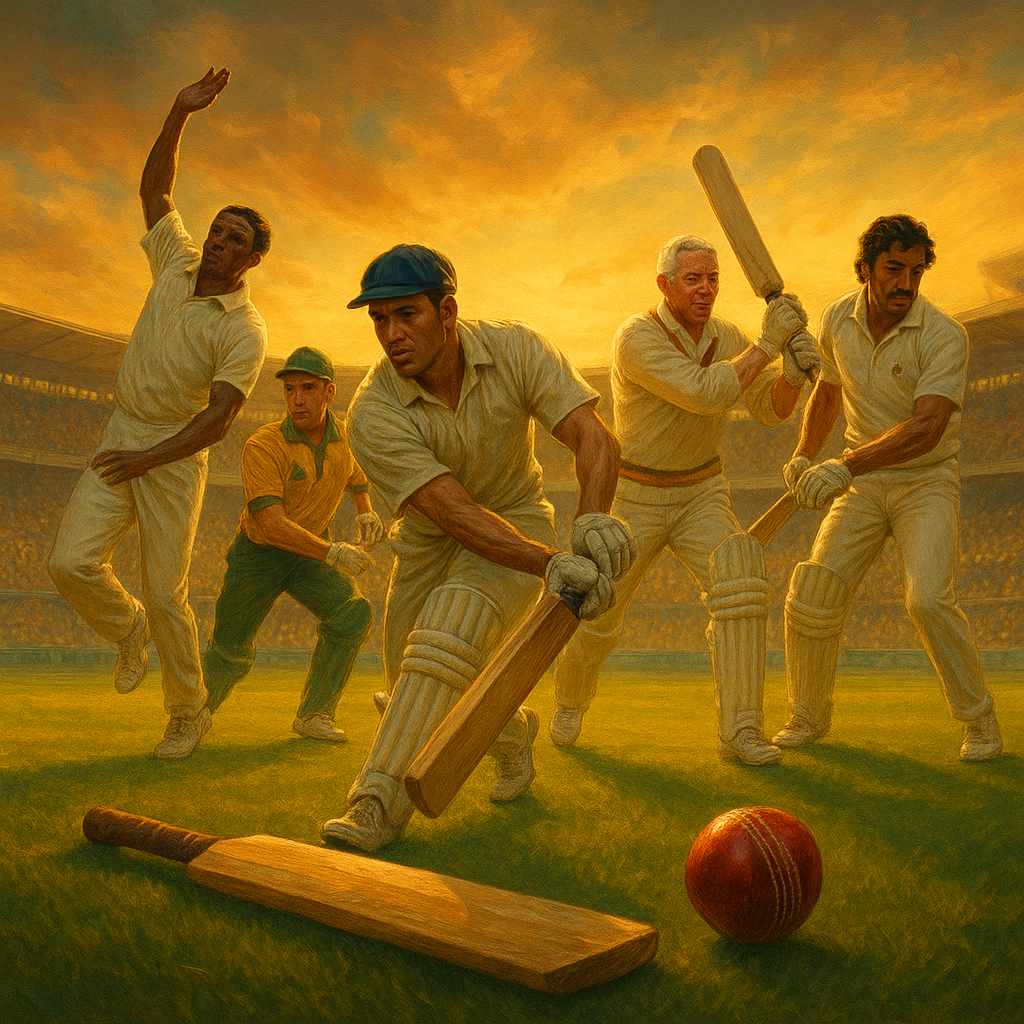
The Resonance of Cricket's Greatest Icons
Cricket has been a sport of passion, strategy, and unforgettable moments for over a century. From the dusty pitches of village greens to the glittering stadiums hosting packed crowds, few sports have woven themselves so deeply into the fabric of global culture. As of 2026, the game continues to evolve, but the legacy of its top players remains a central pillar of its enduring appeal. Today, we explore the top 10 cricket legends—figures whose performances, leadership, and innovations have shaped cricket’s trajectory and inspired generations.
One cannot overstate the impact these players have had. Their records, moments of brilliance, and contributions to cricket’s global reach still echo in commentary boxes, coaching manuals, and fan discussions worldwide. Their stories provide a prism through which to view cricket’s past and present, and offer insights on how the sport might unfold in coming years.
“Great players don’t just break records; they change the way the game is played and perceived.” — TheOmniBuzz editorial insight
Tracing the Path: How Cricket’s Legends Came to Define the Sport
The history of cricket is rich with transformative figures, but the emergence of the game’s most iconic players coincided with key developments that expanded cricket’s global footprint. The 20th century saw the rise of international competitions, televised broadcasts, and the professionalization of the sport, all of which elevated prominent players into household names.
Early legends like Sir Donald Bradman set unparalleled standards, with his unmatched batting average becoming a benchmark for excellence. As cricket spread beyond England to colonies and later independent nations, players such as Garry Sobers and Imran Khan embodied the game's expanding diversity and skill.
The late 20th and early 21st centuries witnessed the advent of limited-overs cricket and the explosive popularity of T20 formats, demanding new skills and styles. Players like Sachin Tendulkar and Brian Lara became synonymous not just with technical mastery but with the evolving entertainment value of cricket. Their influence was both statistical and cultural, inspiring young players globally.
This rich heritage laid the groundwork for today’s legends, who combine the traditional virtues of technique and resilience with modern athleticism and strategic acumen. The journey of cricket legends is inseparable from the game’s broader evolution, a theme we explore in depth in How Cricket’s Strategic Evolution Is Redefining Its Global Reach.
Analyzing the Top 10 Legends: Stats, Skills, and Legacy
Determining the top 10 cricket legends involves a nuanced evaluation of statistics, influence, and context. The list below reflects an aggregation of expert analyses, fan polls, and cricket historians’ assessments as of 2026.
- Sir Donald Bradman (Australia)
With a staggering Test batting average of 99.94, Bradman remains the gold standard. His dominance in the 1930s and 1940s shaped batting technique and mental toughness benchmarks. - Sachin Tendulkar (India)
Known as the 'Master Blaster', Tendulkar holds records for most international runs and centuries, bridging the gap between traditional and modern cricket eras. - Jacques Kallis (South Africa)
One of the greatest all-rounders, Kallis’s consistency with both bat and ball set new standards for balance and endurance. - Muttiah Muralitharan (Sri Lanka)
The highest wicket-taker in Test cricket history, Muralitharan revolutionized spin bowling with his unique action and variety. - Brian Lara (West Indies)
Famed for his flamboyant style and record-breaking innings, Lara redefined aggressive batting with elegance and flair. - Shane Warne (Australia)
Warne’s mastery of leg spin revived a lost art and transformed limited-overs bowling strategies globally. - Imran Khan (Pakistan)
A captain and all-rounder who led Pakistan to their first World Cup victory in 1992, Imran’s leadership qualities remain exemplary. - Jacques Kallis (South Africa)
Revolutionized all-round performance by combining consistent batting averages with effective bowling spells. - Rahul Dravid (India)
Known as 'The Wall', Dravid’s technique and patience under pressure exemplified the classical approach to batting. - Ellyse Perry (Australia)
A trailblazer in women’s cricket, Perry’s all-round abilities have pushed the boundaries and elevated the sport’s global profile.
These players each contributed uniquely to cricket’s narrative, whether through unmatched statistical achievements or transformative leadership. For instance, Muralitharan’s 800+ Test wickets remain a record while Perry’s influence has been pivotal in women’s cricket’s rising prominence.
“The true greatness of a cricketer is measured not just in numbers, but in the lasting imprint they leave on the game’s spirit.” — Cricket historian Dr. Amrita Singh
Current Developments in 2026: Cricket’s Dynamic Landscape
As cricket progresses through 2026, the game continues to balance tradition with innovation. The International Cricket Council (ICC) has expanded global tournaments, with increased participation from emerging nations in formats such as the ICC World Test Championship and T20 World Cup.
Technological advancements are reshaping training, analysis, and fan engagement. AI-driven analytics platforms offer teams granular insights into player performance, strategies, and opposition weaknesses. These tools have helped current players refine skills once thought innate, bridging gaps between natural talent and scientific preparation.
The rise of women’s cricket has been particularly notable, with record-breaking attendance at major matches and lucrative franchise leagues launching worldwide. Players like Ellyse Perry have become household names beyond cricketing circles, advocating for gender parity and inspiring young athletes globally.
Furthermore, cricket's strategic evolution aligns with themes discussed in How Cricket’s Strategic Evolution Is Redefining Its Global Reach, highlighting how tactical innovation and global expansion are intertwined.
Expert Perspectives: What the Legends Teach Us Today
Industry experts emphasize that the top cricket legends provide lessons beyond runs and wickets. Legendary captaincy, sportsmanship, and adaptability are central themes. Former players turned commentators stress that leadership qualities demonstrated by Imran Khan and MS Dhoni have become case studies in managing pressure and team dynamics.
Coaches highlight Rahul Dravid’s work ethic and focus on fundamentals as key to nurturing future talent. Meanwhile, analysts observing the rise of all-rounders like Ben Stokes note the increasing demand for multi-skilled players, a trend foreshadowed by Jacques Kallis decades earlier.
From a cultural viewpoint, legends like Sachin Tendulkar and Brian Lara have transcended sport, becoming symbols of national pride and unity. This sociological impact underscores the role cricket plays in global identity and diplomacy.
“The legends of cricket are mirrors reflecting the evolution of society, technology, and the human spirit within the sport.” — Former ICC chairman, Anil Kumble
Looking Ahead: What to Watch in Cricket’s Continuing Saga
With cricket’s top legends setting a high benchmark, the future promises exciting developments. The increasing integration of data science and biomechanics will sharpen player preparation, potentially producing new all-time greats.
Moreover, the sport’s global expansion into non-traditional markets such as the USA and China suggests a broader talent pool and commercial opportunities. The rise of franchise-based leagues and women’s cricket will continue to diversify the cricketing ecosystem, making it more inclusive and vibrant.
For fans and analysts alike, understanding the legacy of cricket’s top 10 legends offers a framework to appreciate emerging stars and anticipate shifts in playing styles and strategies. The fusion of history, data, and cultural significance will shape narratives that define cricket beyond 2026.
- Watch for emerging talents who combine traditional technique with modern athleticism.
- Keep an eye on technological innovations enhancing coaching and fan experience.
- Follow the growth of women’s cricket as it increasingly commands global audiences and investment.
- Observe how cricket adapts to new markets and formats, preserving heritage while embracing change.
In sum, the stories of cricket’s top 10 legends are not merely chapters in a book but living legacies influencing every boundary scored and wicket taken. As the game continues its journey, these icons remain beacons, guiding cricket into an exciting, inclusive future.