Grasping the AI Phenomenon: A Defining Moment in Technology
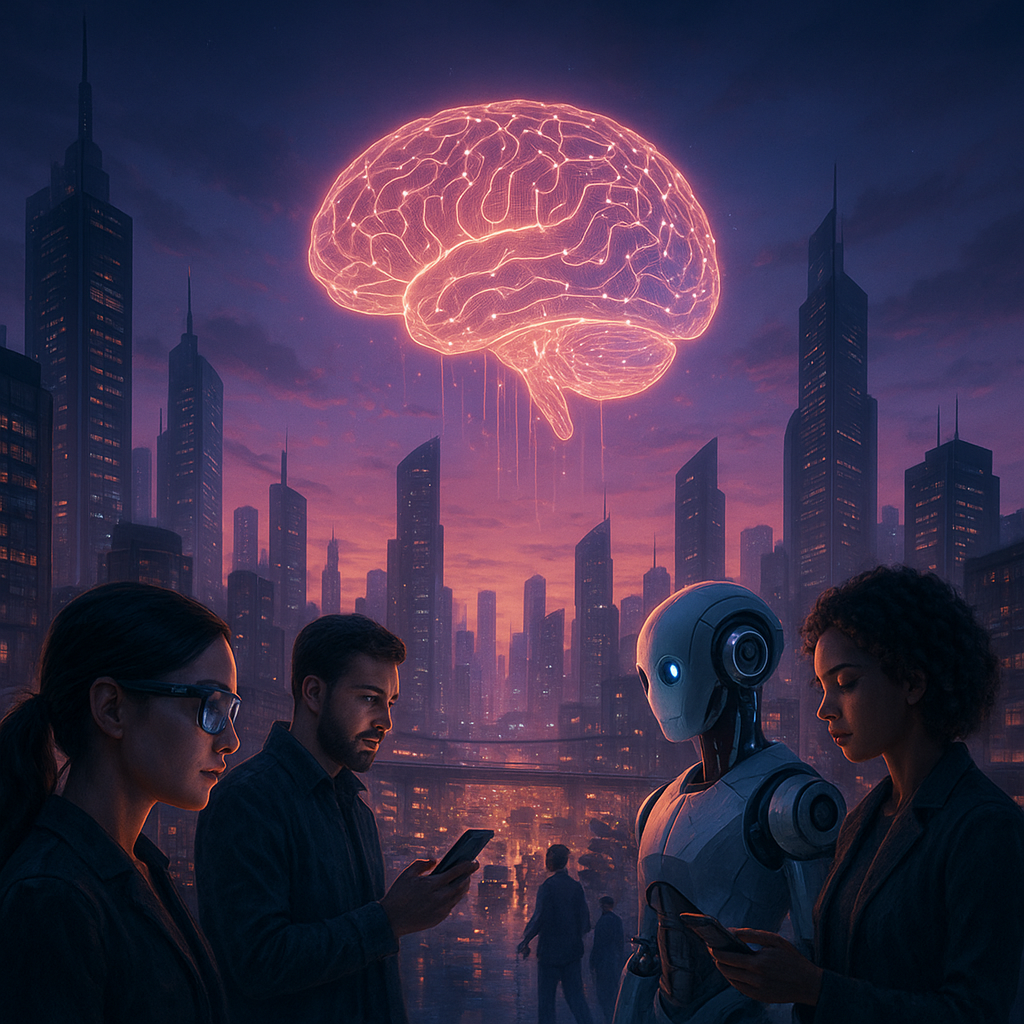
On a brisk morning in 2026, a household assistant named Ava didn't just schedule appointments or play music. Instead, it engaged in a nuanced conversation about climate change policy, synthesizing the latest global data and suggesting actionable community projects. This moment encapsulates a profound truth: artificial intelligence has evolved from a niche academic pursuit to an integral part of everyday life. Yet, beneath this familiarity lies a complex web of definitions, technologies, and ideologies that challenge even seasoned experts.
To comprehend AI today, one must start with a pivotal insight. According to recent industry estimates, over 85% of all new software developed worldwide incorporates some form of AI, spanning from simple automation to advanced decision-making systems. This widespread adoption is reshaping sectors as diverse as healthcare, finance, education, and entertainment. But what exactly is AI? How did it progress to this point, and why is understanding its nuances crucial for individuals and organizations alike?
By exploring AI’s foundational concepts, historical trajectory, current breakthroughs, and future prospects, this article aims to demystify artificial intelligence for readers eager to grasp its true essence and implications.
“Artificial intelligence is not just about machines mimicking humans; it’s about amplifying human potential and reshaping the fabric of society.” – Dr. Lina Morales, AI Research Lead
Tracing AI’s Roots: From Theoretical Dreams to Practical Realities
The story of AI begins in the mid-20th century, when pioneering scientists first asked whether machines could simulate human intelligence. Alan Turing’s 1950 paper, "Computing Machinery and Intelligence," proposed the famous Turing Test as a benchmark for machine intelligence. This conceptual breakthrough launched a wave of enthusiasm, leading to the establishment of the field of artificial intelligence in 1956 at the Dartmouth Conference.
Early AI research focused on symbolic reasoning, expert systems, and rule-based programming. These systems, while innovative, struggled with complexity and adaptability. The 1970s and 1980s saw AI winters—periods of reduced funding and interest—due to unmet expectations and technical limitations.
The resurgence emerged with advances in machine learning, particularly the rise of neural networks and deep learning in the 2010s. These methods enabled computers to learn patterns from vast datasets, revolutionizing speech recognition, image analysis, and natural language processing.
By 2026, AI has transitioned from rule-based logic to data-driven intelligence, spanning a spectrum from narrow AI, specialized in specific tasks, to increasingly capable systems bridging multiple domains. The evolution was also shaped by exponential growth in computational power and the availability of massive data repositories.
- 1956: Dartmouth Conference formalizes AI as a research discipline.
- 1980s: AI winters due to technical bottlenecks and overpromises.
- 2012: Breakthroughs in deep learning with AlexNet revolutionize image recognition.
- 2020s: Large language models and multimodal AI systems expand capabilities.
“Understanding AI’s history is crucial to appreciate its present capabilities and limitations — progress is iterative, not instantaneous.” – Prof. Hiroshi Tanaka, AI Historian
Defining AI Today: Core Concepts and Classifications
In 2026, AI is not a monolithic technology but a constellation of techniques and approaches aimed at replicating or augmenting aspects of human cognition. At its core, AI involves algorithms designed to perceive, reason, learn, and act.
Key categories of AI include:
- Narrow AI (ANI): Systems specialized in single domains, such as facial recognition or language translation. These are the most prevalent and widely deployed.
- General AI (AGI): Hypothetical systems possessing human-like cognitive flexibility and understanding across diverse tasks. AGI remains a frontier goal, with researchers debating its feasibility and timeline.
- Superintelligent AI: A speculative concept describing AI surpassing human intelligence in all respects. This raises complex ethical and safety considerations.
Technically, AI methods include machine learning, where systems improve from data; deep learning, a subset using layered neural networks; reinforcement learning, where agents learn through trial and error; and symbolic AI, based on logic and rules.
Crucial to AI’s function is data — its quality, quantity, and diversity shape outcomes. Algorithms trained on biased or incomplete data risk perpetuating inequalities. Thus, transparency and fairness have become central topics within AI research and deployment.
Understanding these distinctions helps demystify headlines and marketing claims, providing a realistic lens on what AI can and cannot do.
For readers interested in the technical nuances and evolution of AI methodologies, The Three Ages of Data Science offers an excellent deep dive into machine learning’s trajectory.
The State of AI in 2026: Breakthroughs and Challenges
The year 2026 marks a watershed for AI, with multiple sectors witnessing transformative impacts. Natural language processing models now routinely comprehend and generate human-level text, enabling sophisticated virtual assistants, real-time translation, and personalized education platforms.
Healthcare has benefited from AI-driven diagnostics, drug discovery, and patient monitoring. For instance, a collaboration between several biotech firms has accelerated the development of targeted therapies for rare diseases using AI simulations, cutting years off traditional timelines.
In finance, AI underpins fraud detection, risk assessment, and automated trading, contributing to more resilient markets. Meanwhile, autonomous vehicles have expanded beyond pilot programs to regulated urban deployment in select cities, promising to reshape transportation.
However, these advancements come with challenges:
- Bias and Ethics: AI systems sometimes reinforce societal biases embedded in training data, posing risks of discrimination.
- Regulatory Oversight: Governments worldwide are grappling with frameworks to ensure AI safety, privacy, and accountability.
- Energy Consumption: Training large AI models demands significant computational resources, raising sustainability concerns.
- Security: AI-generated deepfakes and misinformation campaigns threaten public trust and democratic processes.
Industry leaders emphasize the need for interdisciplinary collaboration to address these issues. Notably, the AI Ethics Consortium, founded in 2024, has grown into a global forum shaping best practices and standards.
Current AI trends and breakthroughs are also explored in depth in Rethinking Intelligence: What Exactly Is Artificial Intelligence?, which provides a nuanced perspective on AI’s evolving capabilities.
Insights from Experts: AI’s Role in Society and Industry
Leading AI researchers and executives agree that AI’s impact extends beyond technology—it is a societal force that demands informed stewardship. Dr. Kavita Shah, CTO of a major AI firm, asserts that “AI is not a replacement for human intelligence but a complementary tool that enhances creativity, decision-making, and problem-solving.”
Corporations across sectors are integrating AI to optimize operations and innovate products. For example, in manufacturing, AI-driven predictive maintenance has reduced equipment downtime by up to 40%, according to industry reports. In education, adaptive learning platforms customize curricula to individual student needs, improving engagement and outcomes.
However, experts caution against unchecked AI deployment without robust governance. The potential for job displacement requires proactive workforce reskilling and social safety nets. Ethical AI design necessitates transparency, explainability, and community involvement.
“The future of AI hinges on balancing innovation with responsibility, ensuring technologies serve humanity’s collective good.” – Dr. Emily Chen, AI Ethics Advocate
Governments, academia, and industry are increasingly collaborating to establish ethical AI frameworks, emphasizing inclusivity and human rights. The recent Global AI Summit in Geneva underscored the importance of international cooperation in shaping AI’s trajectory.
Looking Ahead: What to Watch in AI’s Next Chapter
As AI continues to mature, several key trends and developments warrant close attention:
- Advances in Explainable AI: Efforts to make AI decision-making more transparent will be critical for trust and regulatory compliance.
- Integration with Quantum Computing: Quantum algorithms may unlock new AI efficiencies and capabilities, potentially revolutionizing fields like cryptography and materials science.
- AI in Climate Action: Deploying AI for environmental monitoring, carbon capture optimization, and sustainable agriculture could be pivotal in addressing global warming.
- Human-AI Collaboration: Emerging interfaces will enhance seamless interaction, empowering humans rather than replacing them.
- Regulatory and Ethical Evolution: Policies will evolve to address emerging risks, including data privacy, AI weaponization, and misinformation.
For individuals and organizations, staying informed and adaptable will be key. Embracing AI thoughtfully can unlock unprecedented opportunities while mitigating risks.
“The AI revolution is not a distant future—it’s unfolding now, demanding our engagement and wisdom.” – Prof. Samuel Ortiz, Futurist
To deepen your understanding of AI’s transformative potential and challenges, you might enjoy exploring more on TheOmniBuzz’s Artificial Intelligence category, which regularly features expert analyses and real-world applications.