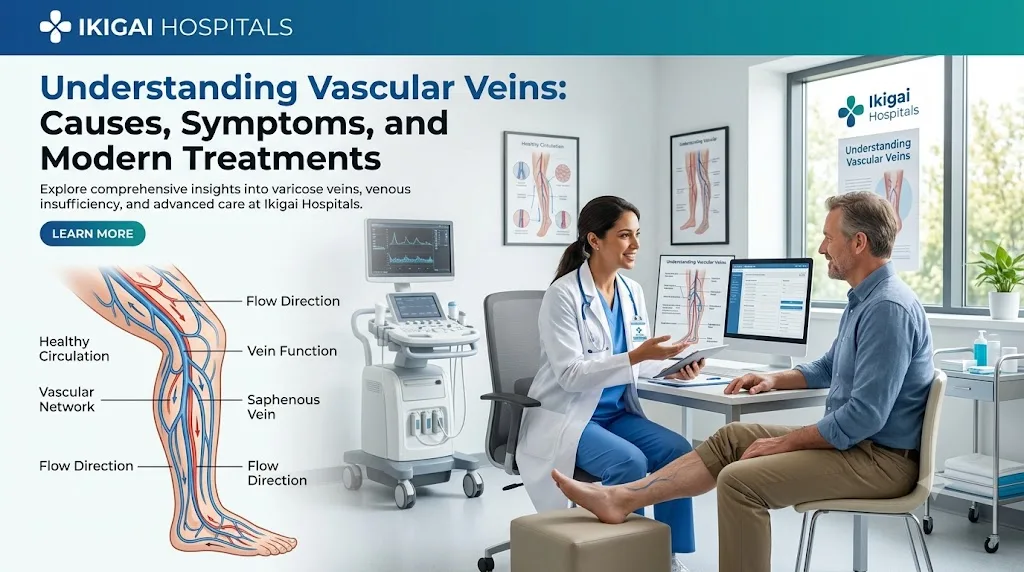
The human circulatory system is a complex network of blood vessels responsible for keeping us healthy and energized. While arteries carry oxygen-rich blood from the heart to the rest of the body, vascular veins perform the critical job of returning deoxygenated blood back up toward the heart.
Because veins in the lower legs must pump blood upward against gravity, they rely on a series of tiny one-way valves. When these valves function properly, blood flows smoothly. However, if the valves become weak or damaged, blood can pool backward, causing veins to stretch, bulge, and become visibly distorted. This common condition is known as varicose veins or chronic venous insufficiency.
What Causes Vascular Vein Problems?
Venous weakness can develop due to several contributing factors, including:
- Genetics: A family history of varicose veins or circulatory issues significantly increases risk.
- Prolonged Standing or Sitting: Sitting or standing for long hours reduces healthy leg movement, making it harder for calf muscles to pump blood upward.
- Age and Hormonal Changes: As we age, vein valves naturally lose elasticity. Pregnancy, menopause, and hormonal shifts can also weaken vein walls.
- Lifestyle & Weight: Excess body weight puts added pressure on leg veins, hindering optimal circulation.
Recognizing Common Symptoms
Vascular vein issues are often perceived as purely cosmetic concerns, but they can cause noticeable discomfort and physical distress. Common symptoms include:
- Visible Swelling: Bulging, twisted, or rope-like dark blue and purple veins on the calves or thighs.
- Leg Heaviness & Fatigue: A persistent, aching feeling in the lower legs, particularly towards the end of the day.
- Swelling (Edema): Mild to moderate swelling in the lower legs, ankles, or feet.
- Skin Changes or Discoloration: Itching, dryness, or brownish darkening of the skin surrounding affected veins.
- Non-Healing Ulcers: In advanced stages, poor blood flow can lead to slow-healing sores near the ankles.
Modern Options for Varicose Vein Treatment
Fortunately, vascular medicine has evolved far beyond traditional, highly invasive surgical stripping. Today, patients can benefit from virtually painless, outpatient, minimally invasive procedures with minimal recovery time.
- Laser & Radiofrequency Ablation: These advanced treatments use mild thermal energy inside the diseased vein to seal it closed. The body naturally redirects blood flow to neighboring healthy veins.
- Foam Sclerotherapy: A specialized liquid or foam solution is injected into smaller varicose or spider veins, causing them to safely collapse and disappear over time.
- Compression Therapy: Specialized stockings apply gentle gradient pressure to assist leg muscles in moving blood back toward the heart efficiently.
Early evaluation by a specialist ensures effective management and prevents potential complications such as leg ulcers or deep vein issues.
If you are experiencing persistent swelling, pain, or visible vein bulge in your legs, seeking a professional consultation is the most reliable step toward relief. For comprehensive care, Ikigai Hospitals offers expert vascular assessments and modern, patient-focused solutions for Varicose Vein Treatment in Kondapur, Hyderabad, helping you restore leg comfort and overall vascular health.