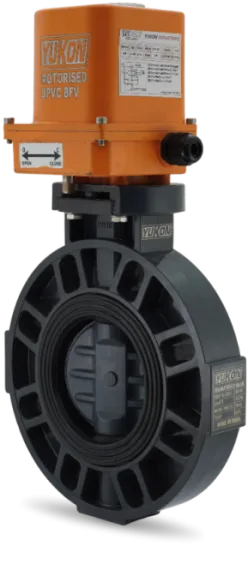
Effective flow control is essential for maintaining the performance of industrial piping systems. Water treatment facilities, irrigation networks, and various process industries require valves that can regulate or isolate fluid flow according to system requirements. A UPVC butterfly valve is one option used in compatible applications because of its lightweight construction, corrosion resistance, and compact design.
Understanding how these valves work and where they are suitable can help engineers, maintenance teams, and purchasing professionals make better equipment decisions. Yukon Industries provides a point of contact for buyers evaluating plastic valve solutions for their fluid-handling requirements.
What Is a UPVC Butterfly Valve?
A UPVC butterfly valve is a quarter-turn valve that controls flow using a circular disc positioned inside the valve body. When the valve is operated, the disc rotates to allow, restrict, or stop the movement of fluid through the pipeline.
UPVC stands for unplasticised polyvinyl chloride. This material is used in piping systems where its chemical resistance, rigidity, and lightweight characteristics are appropriate for the service conditions.
Butterfly valves are often selected when a compact arrangement is preferred. However, the suitability of a particular valve depends on its design, sealing materials, pressure rating, temperature range, and the fluid being handled.
How Does a UPVC Butterfly Valve Work?
The valve disc rotates around a shaft. In the open position, the disc is aligned to permit flow through the pipeline. As the disc turns, it increasingly restricts the passage until the valve reaches its closed position.
Depending on the valve design, operation may be manual or automated. Buyers should confirm the available operating mechanism and whether it meets the control requirements of their installation.
Correct installation is also important. The valve must be compatible with the pipeline dimensions and connection arrangement, and it should be operated within the limits specified by the manufacturer.
Common Applications of UPVC Butterfly Valves
1. Water Distribution Systems
UPVC butterfly valves may be used in suitable water distribution networks where corrosion resistance and practical flow isolation are important considerations.
2. Irrigation Systems
Agricultural and landscaping installations may use compatible UPVC butterfly valves to control water movement through pipelines. The selected model should match the system pressure and water conditions.
3. Water Treatment Facilities
Certain water treatment applications use plastic valves to manage flow between process stages. Material selection must account for the chemicals used during treatment and the required operating conditions.
4. Industrial Fluid Handling
Some industrial systems handling compatible fluids may use UPVC butterfly valves for isolation or flow control. A suitability assessment is essential when the fluid contains chemicals or operates at elevated temperatures.
Benefits and Selection Considerations
UPVC butterfly valves can offer several practical advantages in suitable applications:
- Corrosion resistance: UPVC can resist many substances, subject to chemical compatibility.
- Lightweight construction: Plastic valves can be easier to handle than many comparable metal valves.
- Compact design: Butterfly valves generally require less installation space than some other valve arrangements.
- Practical operation: The quarter-turn mechanism allows straightforward opening and closing.
Before purchasing, buyers should verify pressure and temperature ratings, disc and seal materials, connection standards, pipeline size, and installation requirements. They should also confirm whether the valve is intended for isolation, throttling, or another specific operating purpose.
Why Consider Yukon Industries?
Yukon Industries supplies plastic valve solutions for different fluid-handling needs. Businesses evaluating a UPVC butterfly valve can contact the company to confirm available sizes, valve configurations, technical specifications, and compatibility with their intended application.
Sharing the pipeline dimensions, working pressure, operating temperature, and fluid details can help narrow down the appropriate options. Product suitability should always be confirmed using the relevant technical documentation.
Conclusion
UPVC butterfly valves can play a useful role in compatible industrial piping, water distribution, irrigation, and treatment systems. Their compact construction and material characteristics make them worth considering when the operating conditions are suitable. By checking pressure ratings, chemical compatibility, connection details, and installation requirements, buyers can make a more informed selection. Yukon Industries can be contacted to discuss UPVC butterfly valve options and confirm which products meet specific application needs.