Indoor air quality has become an increasingly important topic as people spend more time inside homes and offices. Air purifiers play a vital role in maintaining a cleaner and healthier environment, particularly in spaces exposed to dust, allergens, and airborne particles. Among various systems available, Alpine units are widely recognized for their functional design and reliability. For users of these systems, understanding how to maintain them properly—especially through the use of a Replacement filter for Alpine 150—is essential for long-term performance.
This article explores how filters function, when to replace them, and how they relate to broader components such as Alpine air purifiers and supporting parts.
The Role of Air Purifier Filters
Air purifier filters are designed to capture contaminants such as dust, pollen, smoke particles, and sometimes even microorganisms. Over time, these filters accumulate debris, which reduces their efficiency and airflow. This makes regular replacement necessary, not only to maintain effectiveness but also to prevent strain on the device.
In systems like Alpine air purifiers, filters are engineered to work in combination with internal components such as ionizers and fan motors. When the filter becomes clogged, airflow is restricted, causing the unit to work harder than intended. This can eventually impact other components like the Fan Motor for all Alpine EcoQuest Living Air air purifiers.
Understanding the Alpine 150 System
The Alpine 150 is designed for compact yet effective air purification in residential and small commercial settings. Like other Alpine products, it integrates filtration with additional purification technologies to enhance indoor air quality.
Key features of such systems typically include:
- Multi-stage filtration
- Ionization capabilities
- Compact and user-friendly design
- Compatibility with replaceable components
To keep these systems operating efficiently, routine maintenance—particularly timely filter replacement—is crucial.
Signs That a Filter Needs Replacement
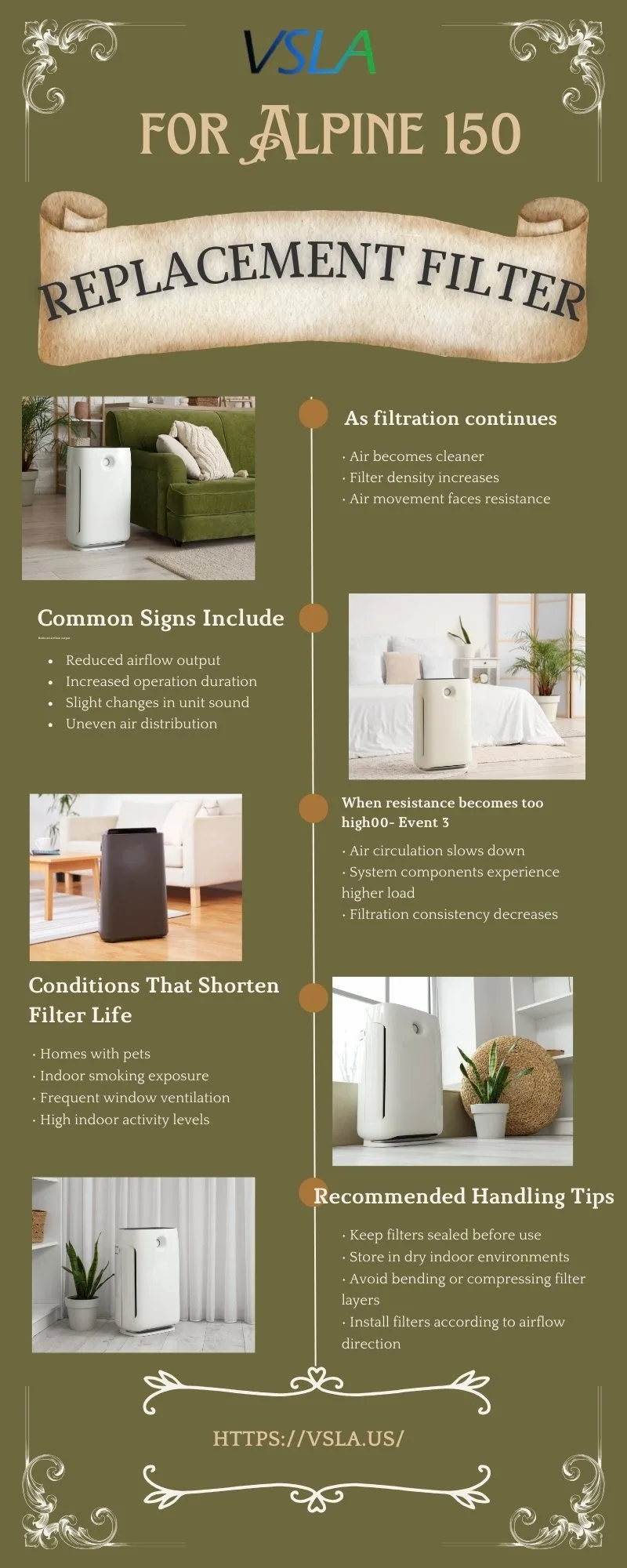
Recognizing when a filter should be replaced can prevent performance issues and extend the life of your air purifier. Some common indicators include:
Reduced Airflow
If you notice weaker airflow from the unit, it may indicate that the filter is clogged and restricting air movement.
Increased Noise
When airflow is blocked, internal components like the fan motor may work harder, leading to unusual or louder noise.
Persistent Odors
Filters also help trap odor-causing particles. If unpleasant smells linger, it may be time for a replacement.
Visible Dust Accumulation
A visibly dirty or discolored filter is a clear sign that it has reached the end of its usable life.
Replacing the filter at the right time ensures the system continues to function efficiently without unnecessary strain.
How Often Should Filters Be Replaced?
The replacement frequency depends on several factors:
- Indoor air quality conditions
- Frequency of usage
- Presence of pets or smoke
- Environmental dust levels
In general, most filters in Alpine systems should be checked every 2–3 months and replaced as needed. Using a Replacement filter for Alpine 150 at appropriate intervals helps maintain consistent performance and ensures cleaner indoor air.
Compatibility and Component Integration
Air purifiers are systems made up of multiple interconnected parts. While filters are a major component, other elements such as motors and internal mechanisms also contribute to overall functionality.
For instance, the Fan Motor for EcoBox Fresh Air Box and similar components are responsible for maintaining airflow through the system. If the filter is not replaced regularly, these parts may experience additional stress, potentially reducing their lifespan.
Similarly, compatibility between filters and specific models is essential. Using the correct Replacement filter for Alpine 150 ensures that the unit operates as intended without compromising efficiency.
Benefits of Timely Filter Replacement
Replacing filters regularly provides several practical benefits:
Improved Air Quality
Clean filters capture airborne particles more effectively, resulting in fresher indoor air.
Enhanced Efficiency
A new filter allows air to pass through easily, reducing energy consumption and improving performance.
Longer Equipment Lifespan
Proper maintenance minimizes wear and tear on components like fan motors and internal systems.
Reduced Maintenance Costs
Preventive care, such as timely filter replacement, can help avoid costly repairs or part replacements.
Choosing the Right Replacement Filter
When selecting a filter, several factors should be considered:
Model Compatibility
Ensure the filter is specifically designed for your unit. Not all filters are interchangeable, even within similar product lines.
Filtration Type
Different filters offer varying levels of filtration, from basic dust removal to advanced particle capture.
Build Quality
A well-constructed filter provides better durability and consistent performance over time.
Environmental Needs
Consider your indoor environment. Homes with pets or higher pollution levels may require more frequent replacement.
Selecting the correct Replacement filter for Alpine 150 ensures optimal functionality and avoids compatibility issues.
Maintenance Tips for Better Performance
In addition to replacing filters, a few maintenance practices can help improve overall performance:
- Clean external vents and surfaces regularly
- Inspect internal components periodically
- Avoid placing the unit in obstructed areas
- Follow manufacturer guidelines for usage
Maintaining a balance between filter replacement and general upkeep ensures that Alpine air purifiers continue to operate efficiently.
The Role of Supporting Components
While filters are central to purification, supporting components also play a significant role. For example:
- Fan motors regulate airflow
- Internal purification elements assist in particle breakdown
- Structural design ensures even distribution of clean air
Components like the Fan Motor for all Alpine EcoQuest Living Air air purifiers work in tandem with filters. Neglecting one part can impact the entire system, highlighting the importance of comprehensive maintenance.
Environmental Considerations
Proper disposal of used filters is also an important aspect of responsible usage. Since filters collect pollutants, they should be disposed of according to local waste management guidelines.
Some users also consider eco-friendly options where available, choosing filters made from recyclable or sustainable materials. This approach contributes to both cleaner air and reduced environmental impact.
Common Mistakes to Avoid
When maintaining air purifiers, certain mistakes can reduce efficiency:
- Delaying filter replacement beyond recommended intervals
- Using incompatible or low-quality filters
- Ignoring signs of reduced performance
- Neglecting other components such as motors
Avoiding these issues helps ensure that the system continues to deliver consistent results over time.
Maintaining indoor air quality requires consistent attention to the components that make purification possible. Filters, in particular, play a crucial role in capturing airborne particles and ensuring efficient operation. Choosing the correct Replacement filter for Alpine 150, along with proper maintenance practices, can significantly improve performance and longevity.
Understanding how filters interact with other elements—such as Alpine products and internal components like fan motors—provides a more complete picture of system care. With regular upkeep and timely replacements, users can ensure that their air purification systems continue to function effectively.